

The Modern Solution for Small Spaces
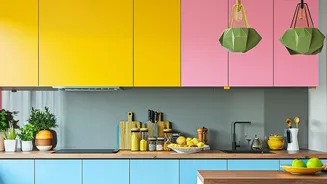
The days of believing that small rooms must be painted plain white are long gone. While light colours do reflect light, modern interior design embraces more dynamic strategies. Colour-blocking, a technique that uses distinct, contrasting blocks of solid
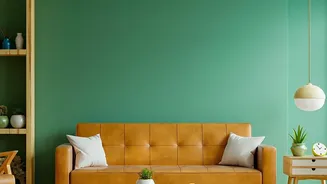
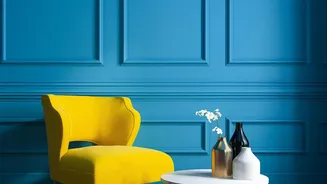
colour, has emerged as a favourite among designers for its ability to create visual structure and personality. Instead of making a room feel chaotic, this disciplined use of colour can organise a space, drawing the eye to create focal points, the illusion of height, or even separate functional zones within a single open-plan room. This makes it perfectly suited for the typical Indian apartment, where the living room often doubles as a dining area or a workspace.
Defining Zones Without Building Walls
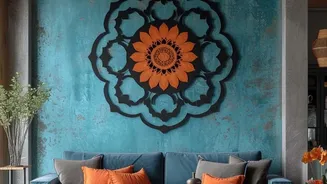
One of the most practical applications of colour-blocking with wallpaper is its ability to delineate space. In a studio or a one-bedroom flat where the living area flows into other zones, a strategically placed panel of wallpaper can act as a visual partition. For example, applying a bold geometric or botanical print to the wall behind your sofa instantly establishes the living 'zone'. This creates a cosy, contained feeling for the seating area, separating it from a nearby dining table or study nook without constructing a single wall. The trick is to create a clear boundary that the eye registers as a separate space, making the entire floor plan feel more intentional and organised.
Creating the Illusion of Space
Beyond zoning, colour-blocking with wallpaper is a master of illusion. Vertical patterns, for instance, are a classic designer trick for making low ceilings feel taller by drawing the eye upward. Consider a wallpaper with elegant vertical stripes or a climbing vine motif on the main wall of your living room. This simple addition can dramatically alter the perceived proportions of the room. Conversely, a horizontal block of colour or pattern can make a narrow room feel wider. Even using a dark, rich wallpaper on a single accent wall can create a sense of depth, as the deep colour makes the wall appear to recede.
Choosing Your Palette and Pattern
Success with colour-blocking lies in a considered choice of colours and patterns. Generally, it's best to stick to a limited palette of two or three colours plus a neutral to avoid a 'busy' look. When selecting a pattern, think about scale. A large, chunky sofa might demand a wallpaper with a bold, large-scale pattern to feel balanced, while slender furniture pairs better with finer designs. In small spaces, patterns with some 'breathing room'—where motifs are spaced out—prevent the wall from feeling cluttered. For a cohesive look in an open-plan layout, ensure the wallpaper shares at least one colour with the adjacent area, like the kitchen or dining space.
Practical Tips for Application
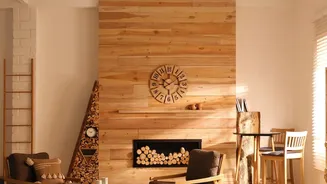
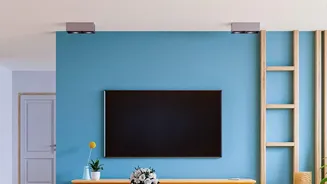
To get the most out of this trend, placement is everything. The wall behind the sofa or the television is a natural focal point and an excellent candidate for a wallpaper accent. If your room lacks a clear feature wall, you can create one by wallpapering an alcove or nook. Don’t be afraid to think vertically; using wallpaper on the ceiling can draw the eye up and make a room feel surprisingly expansive. For those in rented homes or who are hesitant to commit, peel-and-stick wallpapers offer a low-risk way to experiment with the technique. They provide the same visual impact but can be easily removed or repositioned, making them ideal for a high-visibility space like the living room.