







What Makes These Skies So Special?
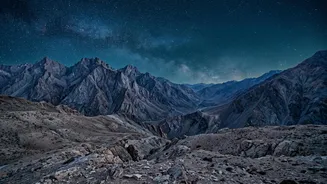
The secret to Spiti's celestial theatre lies in a combination of geography and conservation. Nestled high in the Himalayas, this cold desert sits at altitudes often exceeding 12,500 feet. At this height, you are above a significant portion of the Earth's
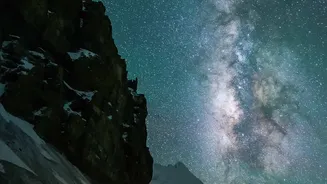
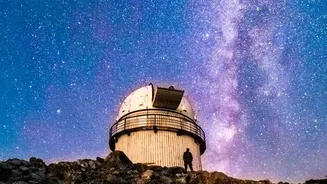
atmosphere, which means less dust, moisture, and turbulence to blur the view. The region is also in a rain shadow, resulting in over 250 clear nights a year. Compounding this natural advantage is the formal protection against light pollution. While the officially designated Hanle Dark Sky Reserve is in nearby Ladakh, the entire Spiti region benefits from similar conditions, with villages like Langza and Kibber boasting some of the darkest skies in Asia. These areas are rated as Bortle Class 1 or 2, a scale where 1 is a pristine, naturally dark sky and 9 is a light-drenched inner city where only the moon and brightest planets are visible. In a Bortle Class 2 sky, the Milky Way is so bright it can cast a faint shadow.
The Power of the Humble Binocular
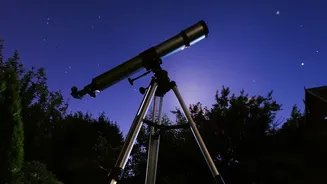
When we think of astronomy, we usually picture massive telescopes. But for many of the sky's most impressive sights, a good pair of binoculars is actually the better tool. Why? It comes down to field of view. Telescopes are designed for high magnification, zeroing in on small targets like planets or distant galaxies. Binoculars, on the other hand, offer a much wider perspective. Many deep-sky objects, like nebulae and large star clusters, are visually enormous. The Andromeda Galaxy, for instance, is six times wider than the full moon in the night sky. A telescope's narrow view would only show you a small piece of it, but a pair of 10x50 binoculars can frame the entire galaxy, revealing its faint, elongated glow against the blackness. This wide field is perfect for sweeping across the star-dense regions of the Milky Way and spotting the fuzzy patches of light that signify nebulae and distant star systems.
What Faint Nebulae Can You See?
With a standard pair of binoculars from a location like Spiti, you’re not going to see the vibrant colours you see in NASA photographs, which are the result of long-exposure cameras. Those faint smudges of grey light are, however, breathtaking in their own right. One of the most rewarding targets is the Orion Nebula (M42), a stellar nursery where new stars are being born. Through binoculars, it appears as a fuzzy, glowing patch in the 'sword' of the Orion constellation. Another prime target is the Andromeda Galaxy (M31), the closest major galaxy to our own. On a moonless night in Spiti, it is visible to the naked eye as a faint smudge, and binoculars clearly resolve it into a distinct oval shape. Other accessible objects include the Pleiades star cluster, which binoculars reveal to be a glittering gathering of dozens of stars, far more than the six or seven visible to the naked eye.
Planning Your Spiti Stargazing Trip
To make the most of Spiti's skies, timing is everything. The best season for stargazing is from May to October, when the roads are accessible and the skies are reliably clear. September is often considered the best month, offering a perfect balance of clear, dry air and thinning tourist crowds. Plan your trip around the new moon, as a full moon will wash out the fainter objects just like city lights do. Once you're there, patience is key. It takes about 20 to 30 minutes for your eyes to fully adapt to the darkness and achieve their maximum night vision. Avoid looking at your phone or using a bright torch; a red-light headlamp is essential for preserving your night vision while moving around. Recent initiatives have also seen the launch of community-run stargazing facilities in towns like Kaza, where trained local guides offer tours of the cosmos using high-powered telescopes, blending scientific knowledge with local culture.