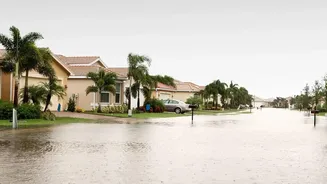







A 'very severe cyclonic storm' named Arnab began making landfall along India's eastern coast early on October 28, forcing authorities to halt operations at major ports, evacuate tens of thousands, and issue widespread safety alerts.
The Storm's Path and Intensity
Cyclone Arnab crossed
the Andhra Pradesh coast near Yanam early on Wednesday, October 28, as a very severe cyclonic storm. The India Meteorological Department (IMD) reported that the system made landfall with maximum sustained wind speeds of 125-135 kmph, gusting up to 150 kmph. The storm, which formed over the Bay of Bengal, prompted red alerts for extremely heavy rainfall in several districts of Andhra Pradesh and southern Odisha. After making landfall, the cyclone began to weaken into a 'severe cyclonic storm' and is expected to move northwest, gradually losing intensity as it travels further inland over the next 48 hours. However, heavy rains and strong winds continue to affect the region.
Ports Halt Operations
In anticipation of the storm's fury, major ports along the vulnerable coastline suspended operations as a precautionary measure. Authorities issued cautionary signals, and all fishing operations were ordered to be suspended, with boats returning to shore. Shipping and port activities in areas including Visakhapatnam, Kakinada, and surrounding hubs were halted to prevent damage to infrastructure and ensure the safety of personnel. Such shutdowns are a standard, critical procedure during cyclones to secure cargo, protect cranes and other equipment from high winds, and ensure vessels are moved to safer anchorages to avoid breaking from their moorings and causing catastrophic damage.
Economic and Logistical Ripple Effects
The closure of ports, even for a few days, has significant economic consequences. These maritime gateways are crucial for India's trade, handling a vast amount of the country's imports and exports. Halting operations leads to immediate delays in supply chains, affecting the movement of everything from essential goods to industrial raw materials. The disruption extends beyond the ports themselves. Indian Railways cancelled dozens of train services in Andhra Pradesh and Odisha as a precautionary measure. Flight operations at airports like Visakhapatnam, Vijayawada, and Rajahmundry were also suspended, causing widespread travel disruption. This combined shutdown of sea, rail, and air transport can create logistical bottlenecks that take days or even weeks to clear, potentially impacting consumers and industries far from the coast.
Mass Evacuations and Public Safety Measures
State governments in Andhra Pradesh and Odisha have undertaken massive efforts to prevent loss of life. In Andhra Pradesh, authorities reported that nearly 89,000 people were evacuated from low-lying and vulnerable areas to over 2,000 cyclone shelters. The National Disaster Response Force (NDRF) deployed 31 teams across Andhra Pradesh, Odisha, and neighbouring states to assist in rescue and relief efforts. State Disaster Response Force (SDRF) teams are also on the ground. Authorities have been using mobile alerts to warn millions of residents in the storm's path. Schools in several districts in Andhra Pradesh and neighbouring states were ordered to close as a precautionary measure. Officials have focused on moving pregnant women, the elderly, and children to safety and have medical teams on standby.
While Cyclone Arnab has started to weaken after landfall, its impact is far from over. The IMD has warned of continued heavy rainfall, which could lead to widespread flooding in coastal and inland districts. Uprooted trees and electricity poles have already caused power outages and blocked roads in several areas, particularly the hard hit Konaseema district in Andhra Pradesh. Restoration of power and clearing of debris will be a primary focus for disaster response teams once the winds subside. Residents are advised to remain indoors, stay away from damaged structures and fallen power lines, and continue to follow all official advisories from the IMD and local disaster management authorities.