

The Invisible Storm of Space
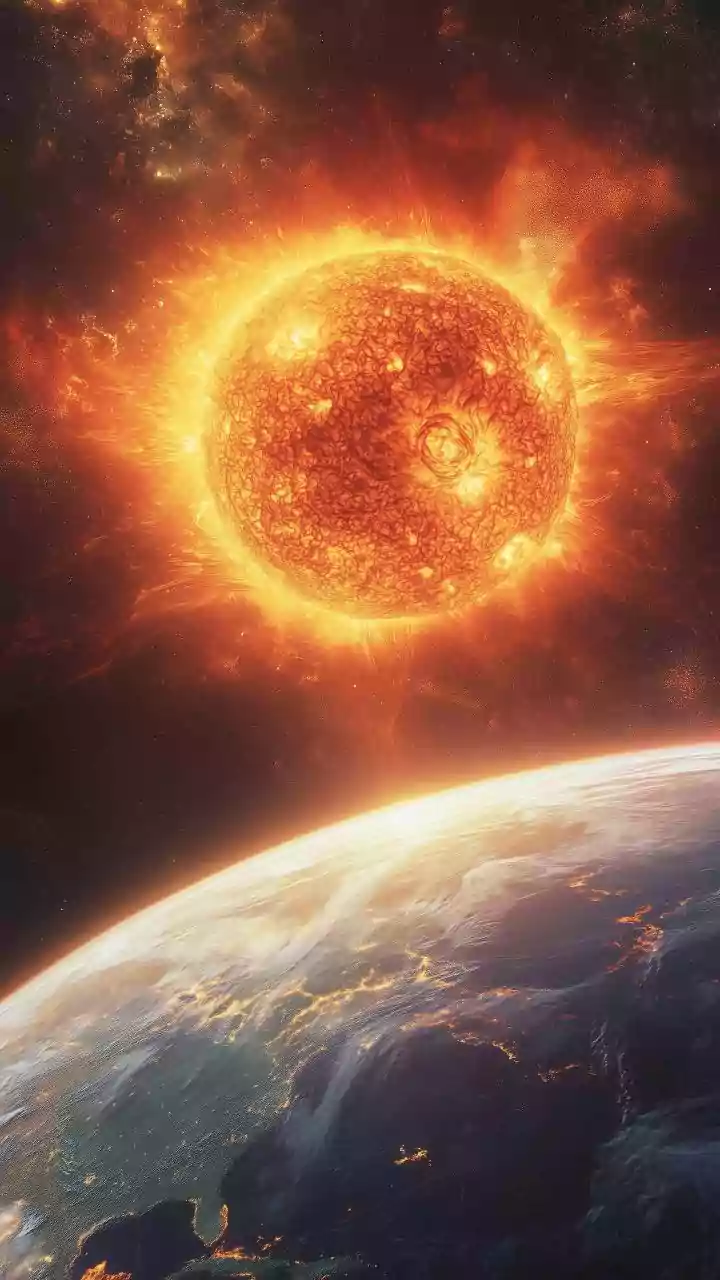
Beyond the protective blanket of Earth’s atmosphere and magnetic field lies a sea of radiation. This isn't a gentle tide; it's a volatile storm. The primary threats come from two sources: the solar wind, a continuous stream of charged particles from the Sun,
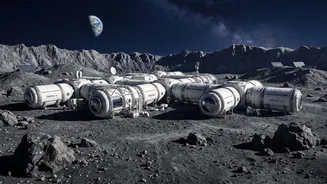
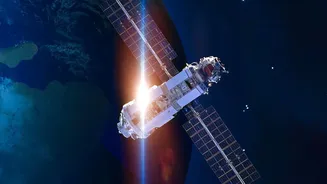
and galactic cosmic rays (GCRs), which are high-energy particles originating from outside our solar system. During solar flares or coronal mass ejections (CMEs), the Sun can unleash massive bursts of radiation that are powerful enough to damage satellite solar arrays, disrupt GPS communications, and cause phantom commands in onboard computers. For astronauts, especially on long-duration missions to the Moon or Mars, this radiation poses a significant health risk, increasing the danger of radiation sickness and long-term illnesses.
Earth's Built-in Force Field
Fortunately, our planet has a natural, invisible shield: the magnetosphere. Generated by the movement of molten iron in Earth’s core, this magnetic field extends tens of thousands of kilometers into space, creating a protective bubble. When the solar wind hits this field, most of its harmful charged particles are deflected, flowing around the planet like water around the bow of a ship. Some particles become trapped in doughnut-shaped regions known as the Van Allen radiation belts. Studying the complex physics of how this field interacts with solar particles—how it absorbs, traps, and repels energy—provides a crucial blueprint. It is, in effect, a perfectly functioning, planet-sized laboratory for radiation defence.
From Planetary Physics to Practical Engineering
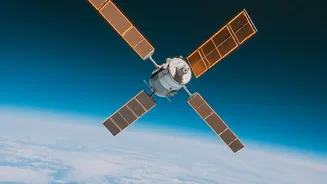
This is where physics and engineering meet. By sending missions like the European Space Agency's Cluster spacecraft, scientists can create detailed, 3D maps of our magnetosphere and observe its processes in real-time. They study how the field's strength varies, how particles are accelerated or lost, and how different types of electromagnetic waves interact with the plasma. This data is invaluable for engineers. It allows them to understand precisely what their spacecraft will face. Instead of just knowing 'there is radiation,' they learn about the energy levels, types of particles, and their likely trajectory. This detailed threat assessment allows for the creation of much more efficient shielding.
Improving 'Passive' Shields
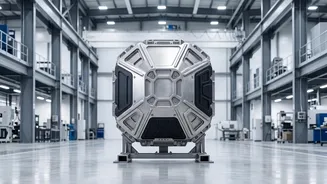
Most spacecraft today rely on 'passive shielding', which is essentially putting a dense physical barrier between the sensitive components and the radiation source. This can be layers of aluminum or innovative new materials. The problem is that mass is incredibly expensive to launch into orbit. Magnetosphere research helps refine this approach. By understanding exactly how high-energy particles interact with materials, engineers can select or design materials—like hydrogen-rich polymers—that are better at absorbing and fragmenting incoming radiation without creating a shower of equally dangerous secondary particles. This means creating lighter, more effective shields that don't come with a massive weight penalty.
The Holy Grail: Active Shielding
The ultimate goal, inspired directly by the magnetosphere, is 'active shielding'. This technology aims to generate a powerful magnetic or electric field around a spacecraft to deflect charged particles before they even make contact. In essence, it's about creating a personal, portable mini-magnetosphere. The engineering challenges are immense, as it requires generating incredibly strong fields using superconducting magnets, all while managing power consumption and ensuring the field doesn't interfere with the crew or onboard instruments. However, by studying the dynamics of our own planetary shield, scientists gather the fundamental knowledge needed to turn this science-fiction concept into a viable technology for protecting the next generation of deep-space explorers.