






A deadly high-speed train collision in Spain has sent shockwaves through the global rail community, raising urgent questions in India about the safety of its own ambitious bullet train project. How do our safeguards stack up against this tragic failure?
A System Failure in Europe
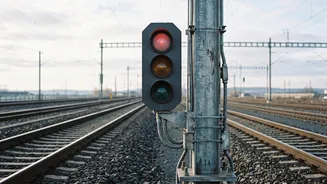
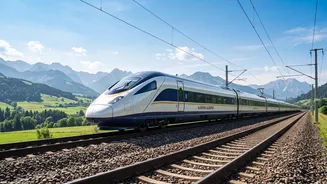
In late October 2026, a high-speed train operated by Spain's state company Renfe crashed into a stationary train south of Madrid, resulting in dozens of fatalities. Reports indicate the catastrophe began with the failure of an automatic safety system. A control center then manually authorised the moving train to proceed, unaware the other train was still on the track. This devastating mix of technical failure and human error on a modern, respected network has served as a sobering reminder that even advanced rail systems are not infallible. It also highlights the absolute necessity of multi-layered safety protocols, which is why attention has quickly turned to India's own high-profile project.
India's Bullet Train Dream
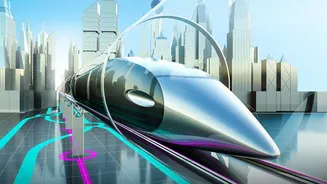
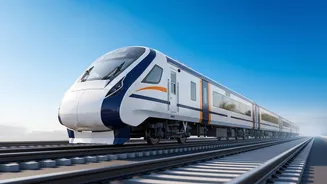
The Mumbai-Ahmedabad High-Speed Rail (MAHSR) corridor is one of India's most prestigious infrastructure projects. Spanning approximately 508 kilometres, it aims to connect the two major economic hubs in about two hours, a journey that currently takes several hours by conventional rail. The project is being built with significant technical and financial assistance from Japan, a country synonymous with high-speed rail excellence. But as the Spanish incident shows, simply having high-speed technology isn't enough; the safety architecture underpinning it is what truly matters for the millions of passengers who will one day use the service.
Learning from the Shinkansen Gold Standard
The MAHSR is adopting the Japanese Shinkansen system, renowned for its unparalleled safety record: zero passenger fatalities due to collisions or derailments in over 50 years of operation. This record is built on two core principles: a completely dedicated track and a sophisticated Automatic Train Control (ATC) system. Unlike European systems that sometimes share tracks with conventional trains, the Shinkansen network is a closed loop, eliminating the risk of collision with slower or freight trains. The ATC, meanwhile, is the brain of the operation, controlling train speeds, braking, and spacing automatically, essentially removing the possibility of human error leading to a collision. This 'crash avoidance' philosophy is what India is importing.
Advanced Warning Systems
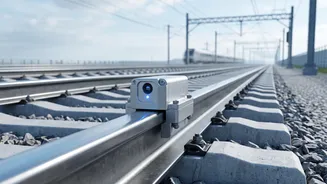
Beyond the ATC, the MAHSR corridor will be equipped with an array of advanced safety monitoring systems modeled on the Japanese network. This includes an Early Earthquake Detection System with 28 seismometers along the route that can automatically trigger emergency brakes before the most violent tremors hit. Given that the corridor passes through seismically active zones, this is a critical feature. The system will also have anemometers to monitor high wind speeds and rain gauges to watch for heavy rainfall, with data fed to a central control center that can adjust train speeds or halt services to ensure stability and safety.
What About India's 'Kavach' System?
Many are familiar with 'Kavach,' India's indigenously developed Automatic Train Protection (ATP) system. Kavach is a major safety upgrade for the existing Indian Railways network, designed to prevent collisions by automatically applying brakes if a loco pilot misses a red signal. However, it's crucial to understand that Kavach is designed for India's conventional broad - gauge network, which operates at lower speeds and in a mixed - traffic environment. The bullet train corridor, with its 320 kmph operational speed, requires the more comprehensive and proven Shinkansen system, including its unique track technology and centralised control, which is fundamentally different from Kavach's architecture.