


A New Visual Toolkit on Campus
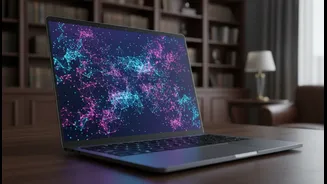
Across college campuses in India and worldwide, a quiet revolution is taking place not in the lecture halls, but on students' laptops. A new generation of AI-powered image generators has become the latest tool for everything from spicing up a PowerPoint
presentation to creating complex visuals for an architecture thesis. Instead of relying on generic clipart or copyrighted images from a web search, students are now able to generate unique, high-quality visuals tailored precisely to their needs. This shift is driven by the desire to create more engaging, professional-looking work that captures a professor’s attention and, ultimately, a higher grade. For many, it's a way to bring complex ideas to life visually in a way that was previously impossible without significant artistic skill or a budget for a graphic designer.
The Tools of the Digital Trade
The most common names in this new space are Midjourney, DALL-E 3, and Stable Diffusion. These platforms work on a simple premise: a user types a text description—known as a 'prompt'—and the AI model generates a corresponding image. The sophistication lies in the prompt itself. Crafting the right prompt is becoming a skill in its own right, as students learn to describe not just a subject, but also the style, lighting, composition, and mood. A simple prompt like "a factory" might yield a generic image, but a detailed one like "a futuristic, eco-friendly factory at dawn, with clean energy sources visible, in a hyper-realistic style" can produce a powerful and specific visual for a business or environmental science project.
The Upside: A Co-Pilot for Creativity
Proponents argue that these tools are not about replacing effort, but augmenting creativity. For students who are not naturally gifted artists, AI image generators can level the playing field, allowing them to express their ideas visually. Some educators see this as a positive development, using AI as a starting point for the creative process. For example, an art student might use an AI-generated image as a prompt for their own work, or a group of students could use AI to create a mood board for a project. The technology allows for rapid visualization and iteration, helping students refine their concepts quickly and efficiently, effectively acting as a creative co-pilot rather than a substitute for thought.
The Downside: A Shortcut to Nowhere?
Despite the benefits, the rise of AI visuals has raised significant concerns about academic integrity. The central question is where to draw the line between using a tool and committing plagiarism. Submitting an AI-generated image as one's own original work without disclosure is widely considered academic misconduct. Beyond cheating, there is a deeper worry that over-reliance on these tools could atrophy students' own creative and critical thinking skills. If an AI can generate a perfect image instantly, will students lose the ability to develop their own artistic style or solve visual problems themselves? This debate is central to the future of creative education.
The Educator's Dilemma
Universities are scrambling to keep pace with the technology. Surveys show a vast majority of students are already using these tools, forcing institutions to act. In India, the University Grants Commission (UGC) has advised universities to develop their own policies, generally permitting AI as a research assistant but not as a replacement for core intellectual work. Institutions like IIT Delhi and National Law University Delhi have introduced their own guidelines, emphasizing that any use of AI must be disclosed and that the student remains responsible for the accuracy and originality of the submitted work. This puts the onus on educators to not only detect misuse but also to teach responsible and ethical AI use, a challenging task with a technology that is constantly evolving.