






The Chalukyan Trail: Karnataka's Cradle of Architecture
This is a must-do for any history buff with a car. The circuit connecting Hampi, Badami, Aihole, and Pattadakal is a journey through the heart of the Chalukyan empire, often called the cradle of Indian temple architecture. Start your trip from Bengaluru
or Hyderabad. Your first major stop could be Hampi, the sprawling, boulder-strewn capital of the Vijayanagara Empire. Though not 'lost', its scale is so immense that entire sections feel like an abandoned world. Spend a day exploring the Virupaksha Temple, the Vittala Temple with its stone chariot, and the Royal Enclosure. From Hampi, drive to the trio of Badami, Aihole, and Pattadakal. Badami's rock-cut cave temples, carved into a sandstone cliff, are breathtaking at sunrise. Aihole, with its 120-plus temples, was an experimental ground for architectural styles, while Pattadakal, a UNESCO World Heritage site, showcases the pinnacle of this experimentation, where northern and southern temple styles blend seamlessly. Plan for at least a 3-4 day long weekend to do this circuit justice.
Bundelkhand's Hidden Gems: Orchha and Khajuraho
While Khajuraho is famous, the journey connecting it with the lesser-known town of Orchha creates a perfect road trip through the heart of Bundelkhand. Start from Delhi or Lucknow. Your first destination is Orchha, a medieval town on the banks of the Betwa River. It feels like a place frozen in time. The 'lost' part here is the sense of a grand capital city that was simply abandoned. The Orchha Fort Complex, with the Jehangir Mahal and Raja Mahal, offers spectacular views. The town is dotted with magnificent cenotaphs (chhatris) of the Bundela rulers that create a stunning silhouette at sunset. From Orchha, a 3-4 hour drive takes you to Khajuraho. Beyond the famous Western Group of Temples known for their erotic sculptures, explore the quieter Eastern and Southern groups. The real joy of this trip is the drive itself, through the rustic landscapes of Madhya Pradesh, connecting two distinct but equally mesmerizing chapters of India's medieval history.
Shekhawati's Open-Air Art Gallery: Rajasthan
This road trip is different. The marvels here aren't temples or forts, but the exquisitely painted havelis of Rajasthan's Shekhawati region. Once the homes of wealthy Marwari merchants, many of these mansions now stand abandoned, their walls covered in elaborate frescoes, turning entire towns into open-air art galleries. Plan a circuit from Jaipur or Delhi, covering towns like Mandawa, Nawalgarh, and Fatehpur. In Mandawa, you can wander through streets lined with havelis, each telling a story through its paintings—depicting everything from mythological tales to the arrival of the British, with steam trains and gramophones painted alongside gods and goddesses. Many havelis are locked up, their owners long gone, which adds to the feeling of a 'lost' golden era. Some have been converted into heritage hotels, allowing you to stay within the art itself. It's a road trip that feels like a treasure hunt, where every turn reveals another faded but beautiful masterpiece.
Gujarat's Architectural Wonders: Champaner and Patan
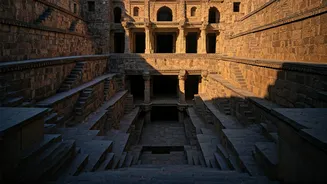
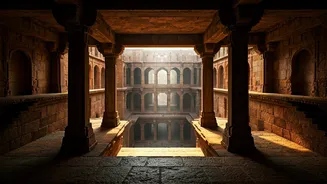
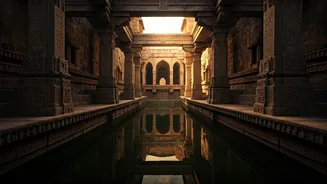
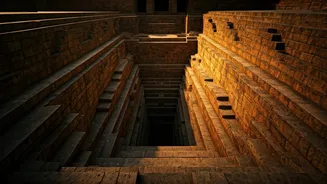
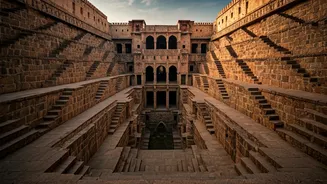
For a journey into truly unique architectural history, map a route through Gujarat. Start from Ahmedabad and head first to Champaner-Pavagadh Archaeological Park, a UNESCO World Heritage site. This is a vast, largely unexcavated pre-Mughal city. You can wander through a landscape dotted with mosques, temples, granaries, and fortifications from the 8th to 14th centuries. The Jami Masjid here is considered a prototype for later mosque architecture in India. The sense of a complete, abandoned city is palpable. From there, plan a drive to Patan to see the Rani ki Vav, an 11th-century stepwell that is one of the most intricate and stunning examples of subterranean architecture in the world. Buried by the Saraswati river and only excavated in the 1980s, it is a truly 'lost' marvel brought back to light. This road trip offers a glimpse into periods of Indian history that are often overlooked, showcasing the incredible diversity of its architectural heritage.