





Meet the Rhizome Family
Both ginger and galangal are rhizomes, which are plant stems that grow horizontally underground. They belong to the same botanical family, Zingiberaceae, which also includes turmeric and cardamom. This shared ancestry explains their knobby, root-like
appearance. Galangal is sometimes even called 'Thai ginger' or 'Siamese ginger' because of its prevalence in Southeast Asian cooking. However, despite their family ties, they are not twins. They have unique characteristics that set them apart, from their skin and flesh to their all-important flavour and aroma.
Appearance: More Than Skin Deep
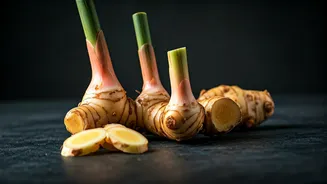
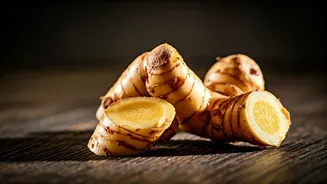
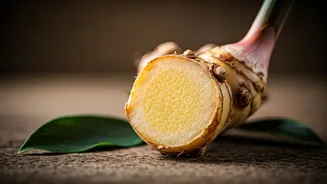
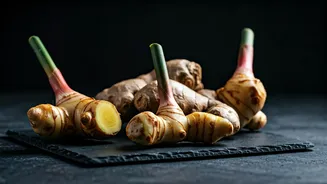
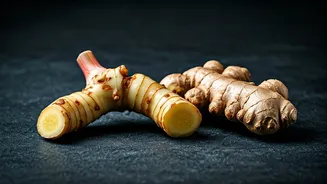
The first clues to their differences are visual. Ginger root has a familiar beige-brown, papery skin that is relatively easy to peel away with the edge of a spoon. Its flesh is a warm, pale yellow and quite fibrous, but also moist and easy to grate or mash. Galangal, by contrast, has smoother, paler skin, often with a pinkish hue. This skin is much tougher and requires a sharp knife or peeler to remove. Inside, the flesh is a denser, almost woody white or pale yellow. This firmness means galangal is typically sliced thinly rather than grated.
Flavour and Aroma: A World of Difference
Herein lies the most crucial distinction. While both are aromatic and pungent, their taste profiles are worlds apart. Ginger offers a fresh, peppery spiciness with an underlying sweetness and a distinct lemony aroma. It provides a warm kick that is invigorating but mellows as it cooks. Galangal, on the other hand, delivers a much sharper, more intense flavour. Its taste is often described as earthy, citrusy, and pine-like, with a peppery and sometimes bitter finish. The flavour is bold and doesn't fade as easily, making it a powerful component in any dish.
In the Kitchen: The Right Root for the Right Route
Because their flavours are so different, ginger and galangal are not suitable substitutes for one another. Using one in place of the other will dramatically change a recipe's intended taste. Ginger is a global kitchen staple, celebrated for its versatility. It's a cornerstone of many Indian dishes, from flavouring dals and subzis to being a key ingredient in masala chai. It's also widely used in Chinese stir-fries, marinades, baked goods, and beverages. Galangal is the hero of Southeast Asian cuisine, particularly in Thai, Indonesian, and Malaysian food. It’s an essential ingredient in iconic dishes like Thai Tom Yum soup, Tom Kha Gai, and various rich curry pastes. Its sharp, citrusy notes are perfect for cutting through the richness of coconut milk and balancing complex, spicy flavours.
A Note on Health Traditions
Both rhizomes have a long history in traditional medicine, including Ayurveda. Ginger is widely known for its digestive benefits and its ability to alleviate nausea. It's also recognized for its anti-inflammatory properties, often used to help with pain relief. Galangal has also been traditionally used for ailments like stomachaches and inflammation. Some lab studies suggest it has strong antimicrobial and antioxidant properties, though more human-based research is needed to confirm many of its traditional uses. While both share anti-inflammatory potential, their distinct chemical compounds mean they may offer different benefits.