



Meet the Habitable Worlds Observatory
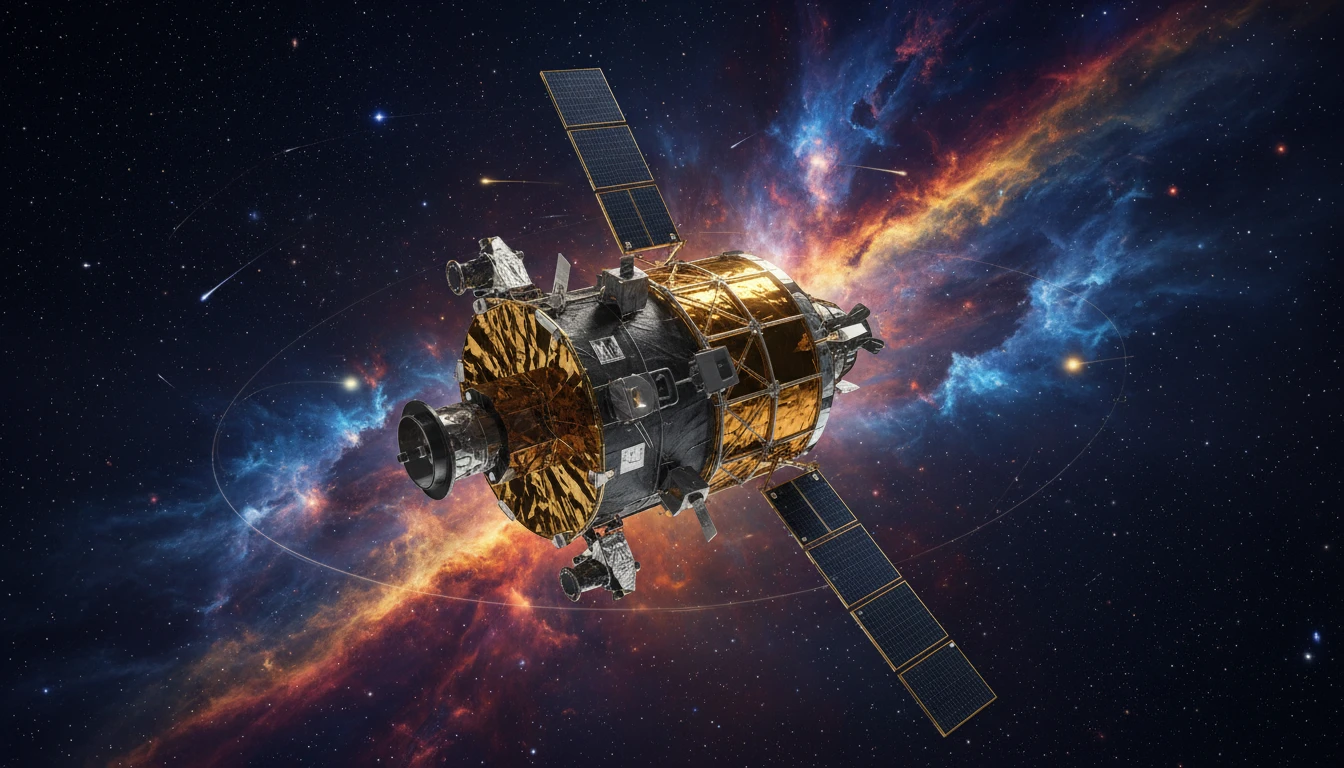
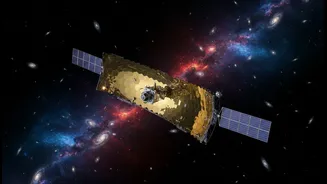
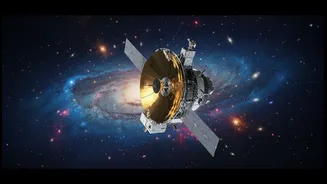
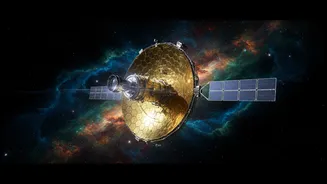
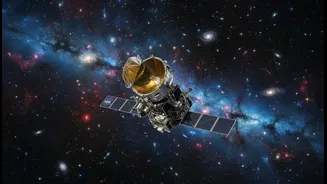
NASA's next great space observatory has a name that perfectly matches its ambition: the Habitable Worlds Observatory (HWO). Following the trailblazing paths of the Hubble Space Telescope and the James Webb Space Telescope (JWST), the HWO is poised to become
the agency's next flagship mission. Its primary goal is nothing short of revolutionary: to be the first telescope specifically designed to directly image Earth-like planets orbiting stars similar to our Sun. This ambitious project was the top-priority recommendation for a large space mission from the 2020 Decadal Survey on Astronomy and Astrophysics, a report that outlines the scientific community's consensus on what to pursue in the coming decade. The core mission is to find and closely study at least 25 potentially habitable worlds, looking for the tell-tale chemical fingerprints of life.
A New Generation of Planet Hunter
If Hubble opened our eyes to the scale of the cosmos and Webb peeled back the layers of the early universe with its infrared vision, HWO will focus on a more profound question: Are we alone?. It will operate in ultraviolet, visible, and near-infrared wavelengths, much like Hubble, but with a significantly larger mirror, estimated to be 6 to 8 meters in diameter. This gives it the power not just to find planets, but to analyze them in detail. The key difference from its predecessors is its singular focus on exoplanet characterization. While Webb can study the atmospheres of some larger, gas-giant exoplanets, HWO is being built to do something far more difficult: see a small, rocky planet right next to its incredibly bright star and parse the faint light coming from its atmosphere.
The Search for Biosignatures
HWO won't be looking for alien cities or listening for signals. Its search for life will be a chemical one. The mission will use a technique called spectroscopy to analyze the light from exoplanet atmospheres. When a planet's light passes through its atmosphere, different gases absorb specific wavelengths. HWO's instruments will be sensitive enough to detect these absorption lines, searching for a combination of gases that could indicate biological processes, also known as biosignatures. These could include gases like oxygen and methane, which on Earth are overwhelmingly produced and maintained by life. Finding these gases together in the atmosphere of a rocky planet located in the "habitable zone"—the region around a star where liquid water could exist—would be powerful evidence that life might be present.
A Technological Marvel in the Making
Directly imaging a planet just a few pixels away from its star, which is billions of times brighter, is an immense technological challenge. To achieve this, HWO will rely on an advanced coronagraph, an instrument designed to block the overwhelming glare of the host star. This requires a level of stability and precision far beyond even the James Webb Space Telescope—in some cases, more than 100 times better. The observatory's mirrors will need to be controlled with picometer precision, a scale smaller than an atom, to cancel out stray starlight. Learning from the past, HWO is also being designed to be serviceable by robots at its distant orbit a million miles from Earth. This will allow for upgrades and repairs, potentially extending its operational life for decades, much like the serviced Hubble telescope.
A Marathon, Not a Sprint
A project of this scale and complexity takes time. The Habitable Worlds Observatory is currently in the early planning and technology development phase. NASA is funding various technology maturation studies with industry partners to solve the immense engineering challenges ahead. The timeline for HWO is a long one, with a projected launch date in the early 2040s and an estimated cost of at least $11 billion. It is a generational project, building on the knowledge gained from Webb and the upcoming Nancy Grace Roman Space Telescope, which will help test some of the necessary coronagraph technology. The mission represents a long-term commitment to one of the most fundamental goals of science and exploration.