






Find Your Zone
Before buying any furniture, identify the best possible location. A corner near a window is often ideal, as natural light can boost your mood and reduce eye strain. However, be mindful of glare on your screen during certain times of day. The goal is to
choose a spot that feels slightly separate from your sleeping area. Measure the space carefully, accounting not just for the desk, but also for the chair and your ability to move around comfortably. The best placement allows you to keep essential pathways, like access to your closet and the door, completely clear. Even in a small Indian apartment, a well-chosen corner can become a dedicated and effective work hub.
The Ergonomic Foundation: Desk and Chair
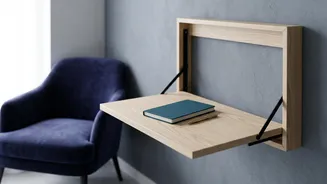
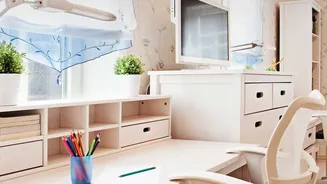
Your chair is the most critical investment for your workspace. A dining chair won't do; prolonged sitting without proper support can lead to back pain and fatigue. Look for an ergonomic chair with adjustable height and lumbar support. For the Indian climate, a chair with a breathable mesh back is often more comfortable than leather or thick upholstery. Your desk is equally important. It should be large enough to hold your essentials without feeling cluttered—a minimum width of 120 cm is a good benchmark. The height should allow you to follow the 90-90-90 rule: elbows, hips, and knees bent at roughly a 90-degree angle with your feet flat on the floor. If space is tight, consider a wall-mounted folding desk or a corner unit to maximise your floor area.
Light It Right
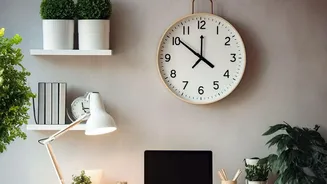
Good lighting is non-negotiable for productivity and preventing eye fatigue. While natural light is best, you can't always rely on it. A combination of lighting types works wonders. Start with the room's general ambient light, then add specific task lighting. An adjustable LED desk lamp is perfect for illuminating your work surface. To avoid shadows, place the lamp on the opposite side of your dominant hand. Consider adding bias lighting, such as an LED strip behind your monitor, to reduce the harsh contrast between your bright screen and the rest of the room. This simple addition can make long hours at the computer much more comfortable on your eyes.
Tech, Tidiness, and Tools
A comfortable setup extends to your technology. To maintain good posture, avoid working directly on your laptop for long periods. Use a laptop stand to bring the screen to eye level and an external keyboard and mouse. This prevents you from hunching over and reduces neck strain. Cable clutter is a major culprit in making a workspace feel messy and stressful. Invest in inexpensive cable management trays, clips, or sleeves to keep wires organised and out of sight. Keep your desk surface clear of everything but the essentials: your computer, a notebook, and perhaps a plant or personal item that brings you joy without creating a distraction.
Create a Mental Boundary
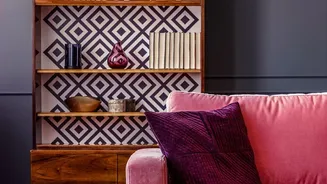
Perhaps the biggest challenge of a bedroom office is separating work life from personal life. Our brains rely on environmental cues, so when your office is in your relaxation space, it can be hard to switch off. Create a clear visual separation. This doesn't have to be a permanent wall. A simple folding screen, a curtain, or even a strategically placed bookshelf can create a psychological divide. Placing a rug under your desk area can also help to visually define the workspace. When possible, position your desk so that your bed is out of your line of sight while you work. This small change can significantly impact your ability to focus during the day and unwind at night.
The End-of-Day Shutdown
The most important ritual is the one that signals the end of your workday. Since you can't physically leave the office, you need to create a shutdown routine. This could be as simple as closing your laptop, tidying your desk, and putting away your work notebook. If you have a folding desk, pack it away. The act of clearing your workspace helps your brain transition from 'work mode' to 'rest mode'. Turn off work notifications on your phone and take a few minutes to do something completely unrelated to your job, like going for a short walk, listening to music, or simply changing your clothes. This deliberate disengagement is crucial for protecting your personal time and ensuring your bedroom remains a sanctuary for rest.