



A Welcome Addition to a Busy Route
In early August 2026, Indian Railways greenlit a new daily express train connecting Mumbai’s Chhatrapati Shivaji Maharaj Terminus (CSMT) with Sawantwadi Road in the southern Konkan region. The service, designated as Train No. 15087/15088, is a significant
step in bolstering connectivity on one of Maharashtra's most picturesque and high-demand corridors. With 22 proposed stops—including major towns like Panvel, Roha, Khed, Chiplun, and Ratnagiri—the train is poised to benefit a wide range of travellers, from tourists and students to daily commuters and local businesses. Officials have noted that the service will enhance access to the region's popular beaches, temples, and forts, providing a much-needed boost to the local economy. The announcement was met with enthusiasm, as it promises a permanent, daily travel option, unlike seasonal specials that run during peak times like the Ganpati festival.
The Reality of the Konkan Timetable
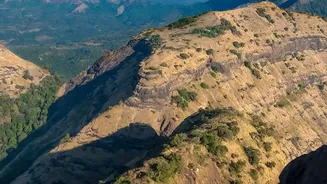
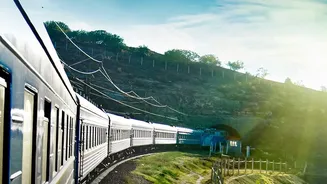
While a new train is always good news, its launch highlights a persistent challenge: the actual time it takes to travel the Konkan coast. The region's geography is both a blessing and a curse. Known for its rugged terrain and heavy rainfall, the Konkan Railway line is an engineering marvel, but also one that demands caution. A significant portion of the nearly 740-km route from Roha to Thokur is single-track, which creates bottlenecks and limits the number of services that can run simultaneously. This means trains often have to wait in loops or at stations for an oncoming train to pass, adding to the total journey duration. Premium services like the Vande Bharat Express, for instance, have a non-monsoon travel time of about 8 hours between Mumbai and Madgaon, but this extends to over 10 hours during the monsoon.
Why the Monsoon Changes Everything
From mid-June to late October, the Konkan Railway operates on a special monsoon timetable. This is a critical safety measure in a region susceptible to landslides and flash floods. During this period, train speeds are reduced, sometimes to as low as 40 km/h in areas with low visibility due to heavy rain. The frequency of some services, including the Vande Bharat and Tejas Express, is also reduced from six or five days a week to just three. While these precautions have dramatically improved safety, reducing incidents like rockfalls by over 99% since the railway's early days, they invariably increase travel time. Therefore, the celebrated launch of any new service must be viewed through this seasonal lens, as its timetable and efficiency will be dictated by the weather for nearly four months of the year.
The Long-Term Solution: Doubling the Tracks
The ultimate answer to reducing journey times and improving service frequency lies in track doubling. For years, a significant portion of the Konkan line has remained a single-track route, a major capacity constraint. Recognizing this, the government has advanced plans for track doubling on key stretches. A Detailed Project Report (DPR) is underway for doubling approximately 263 km of the line. Around 55 km of doubling has already been completed in patches, such as between Roha and Veer. In June 2026, Konkan Railway announced an ambitious Rs 4,704 crore upgrade plan that includes this track doubling, construction of new stations, and building new tunnels to replace older, deteriorating ones in Goa. This infrastructure overhaul is the real game-changer. Once completed, it will allow for smoother, faster, and more frequent services, unlocking the true potential of the Konkan route.