


Why Bodyweight Training is a Perfect Start
Bodyweight training is an ideal starting point for anyone new to fitness. The primary benefit is its accessibility; you don't need expensive gear or a gym membership to begin. These exercises are incredibly effective for building a solid foundation of
strength, stability, and endurance. Because you are working against your own resistance, you learn to control your body's movements, which can improve your awareness of proper form and reduce the risk of injury. Bodyweight workouts can simultaneously improve muscle strength and cardiovascular health by keeping your heart rate elevated. Research has shown that these exercises help build muscle effectively, independent of external weights.
The Essential Warm-Up
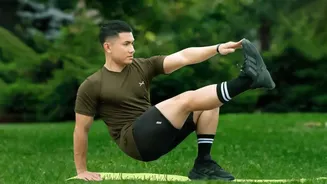
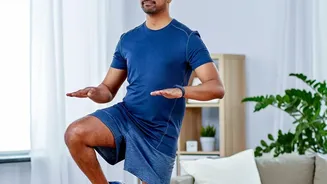
Never skip your warm-up. Preparing your muscles for a workout is crucial for preventing injury and improving performance. A good warm-up increases blood flow and delivers oxygen to your muscles. Spend five to ten minutes doing light, dynamic movements to get your body ready. Try gentle jogging in place for a minute, followed by ten arm circles in each direction. Add ten slow, controlled bodyweight squats and some leg swings to loosen up your hips and lower body. This simple routine primes your joints and nervous system for the work ahead.
The Plank for Core Stability
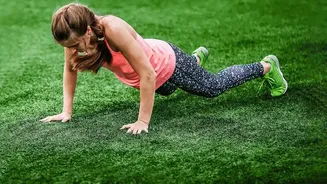
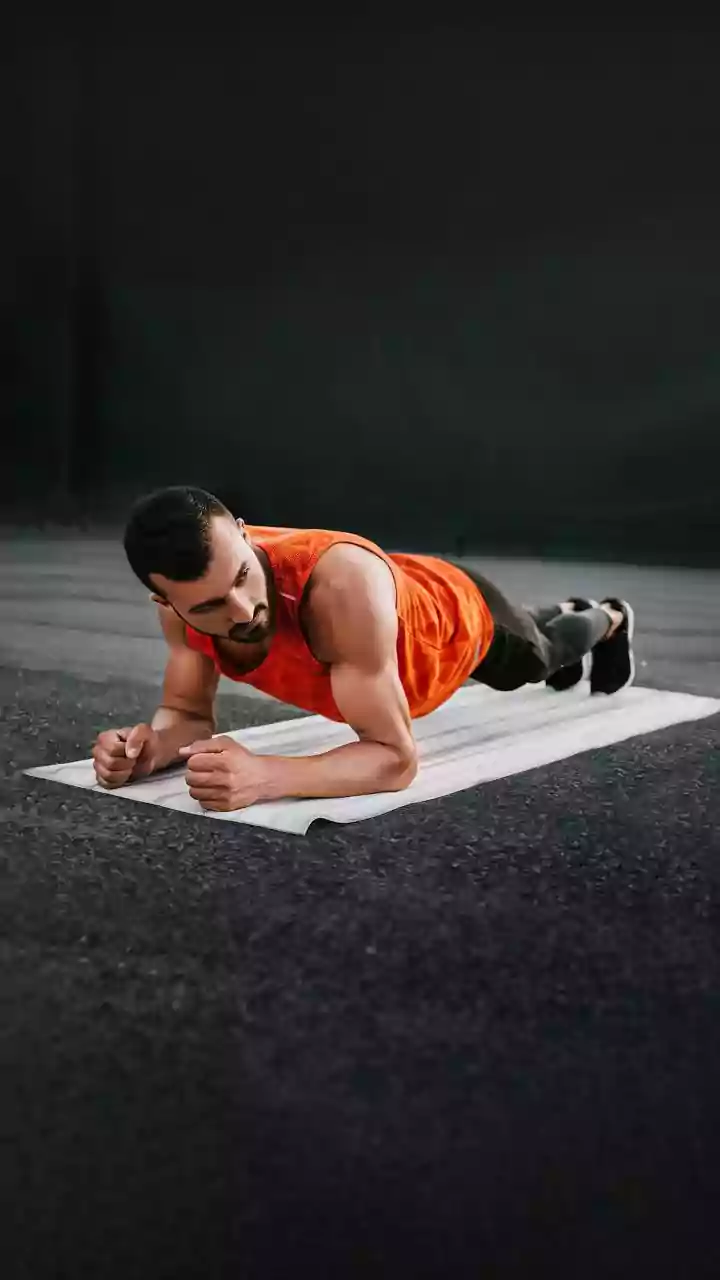
The plank is a fundamental exercise for building core strength, which is essential for good posture and overall stability. To perform a plank, start on your forearms and toes, keeping your body in a straight line from your head to your heels. Ensure your elbows are directly under your shoulders and engage your core by pulling your belly button toward your spine. A common mistake is letting your hips sag or raising them too high. Keep your neck in a neutral position by looking at the floor. Aim to hold the position for 20-30 seconds, focusing on maintaining perfect form.
Bodyweight Squats for Lower Body Strength
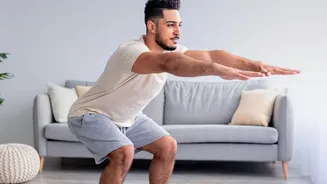
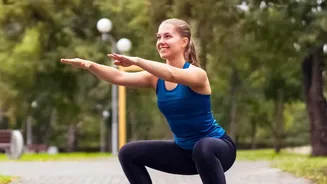
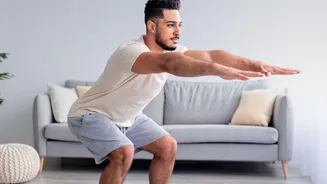
Squats are a powerhouse movement that targets your legs and glutes. Proper form is key to getting results and avoiding injury. Stand with your feet about shoulder-width apart, with your toes pointed slightly outward. Initiate the movement by pushing your hips back as if you are about to sit in a chair. Keep your chest up and your back straight as you bend your knees and lower your body. Make sure your knees track over your feet and don't collapse inward. Go as low as you comfortably can, then push through your heels to return to the starting position.
Wall Push-Ups for Upper Body Power
Standard push-ups can be too challenging for beginners, which makes the wall push-up an excellent starting point for building upper body strength. Stand about an arm's length away from a solid wall. Place your palms on the wall, slightly wider than shoulder-width apart and at chest height. Keeping your body in a straight line from your head to your heels, slowly bend your elbows and lean in until your nose is close to the wall. It's important to keep your elbows from flaring out to the sides; they should bend at about a 45-degree angle. Push back to the starting position to complete one rep.
Glute Bridges for a Stronger Backside
The glute bridge is a simple but highly effective exercise for strengthening your glutes and hamstrings, the muscles on the back of your body. Lie on your back with your knees bent and your feet flat on the floor, about hip-width apart. Your arms can rest at your sides. Engage your core and glutes as you press through your heels to lift your hips off the floor. Raise your hips until your body forms a straight line from your shoulders to your knees. Pause at the top and squeeze your glutes before slowly lowering your hips back down to the starting position.
Your First Beginner Workout
Consistency is more important than intensity when you're just starting. Here is a simple circuit you can do three to four times a week. Perform each exercise with good form and controlled movements. Aim for two to three rounds of the following: Bodyweight Squats: 10-15 repetitions. Wall Push-Ups: 10-15 repetitions. Glute Bridges: 15-20 repetitions. Plank: Hold for 20-30 seconds. Rest for 60-90 seconds between each round. As you get stronger, you can increase the number of repetitions or rounds, or decrease your rest time.