




An Unsettled Forecast
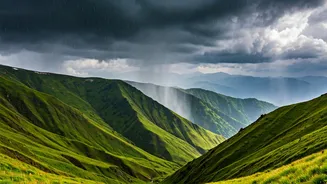
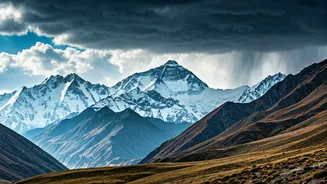
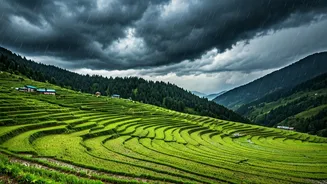
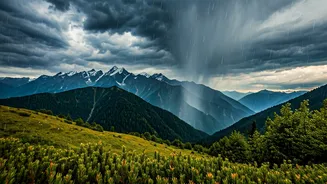
The India Meteorological Department (IMD) has forecast persistent rainfall for the hill states of Himachal Pradesh and Uttarakhand through the end of June 2026. [21, 27] While the official onset of the southwest monsoon has been slightly delayed in Himachal Pradesh from
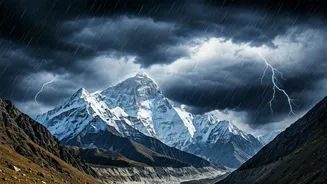
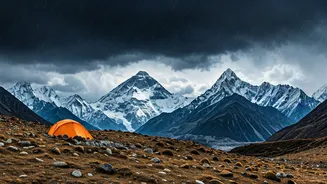
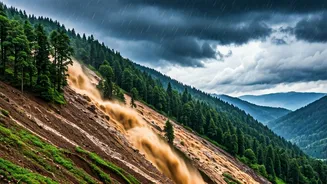
its normal date of June 25, pre-monsoon showers and an active Western Disturbance have already set a dangerous stage. [19, 22] Warnings have been issued for an increased risk of landslides, flash floods, and thunderstorms, with rainfall activity expected to intensify significantly from June 29 onwards. [21, 22] A recent flash flood in Kinnaur district, triggered by light rain, damaged infrastructure, underscoring the region's heightened vulnerability even before the peak monsoon arrives. [22] This pattern of intense, erratic rainfall is becoming the new, dangerous normal.
More Than Just Rain
To blame the weather alone is to ignore the ground truth. The Himalayas are geologically young, active, and inherently fragile. [9] This natural vulnerability is now being dangerously amplified by human activity. Reckless, unplanned construction for tourism and infrastructure has destabilised slopes. [9, 11] Roads are built without proper drainage, forests are cleared reducing the soil's ability to absorb water, and buildings are erected on unstable floodplains. [8, 14] The National Disaster Management Authority (NDMA) has highlighted that this unregulated development creates environmental challenges that amplify disaster risks. [11] Experts have long warned that extensive slope cutting, blasting, and tunnelling for projects like highways and hydropower plants are disturbing the region's delicate ecological balance. [15, 17] Each new road and hotel, built without respecting the region's ecology, adds another layer of risk.
The Climate Change Accelerator
Climate change is acting as a powerful accelerant. Global warming is making the Indian monsoon more chaotic, stronger, and more erratic. [5, 6] Studies show that for every degree Celsius of warming, monsoon rainfall is likely to increase by about 5%. [5, 6] This doesn't mean more gentle showers; it means a shift towards more extreme wet seasons and a higher frequency of short, intense rainfall spells that can trigger flash floods and landslides. [7, 10] The phenomenon of cloudbursts—where a massive amount of rain falls over a small area in a short time—is becoming more common, and has been linked to some of the most devastating recent events in the Himalayas. [28] What we are witnessing is not just a seasonal pattern, but a climate-altered system delivering more extreme and destructive weather.
A Cycle of Predictable Disaster
The result is a grimly predictable cycle of disaster. In recent years, states like Himachal Pradesh and Uttarakhand have seen thousands of landslides and dozens of cloudbursts, leading to immense loss of life and property. [11, 16] The damage isn't confined to the mountains; blocked rivers can cause further flooding downstream, and the destruction of infrastructure has a cascading economic impact. [13] It's a crisis that displaces thousands of local residents, who face the collapse of their homes and the loss of their agricultural lands. [9] While tourists may pass through and projects promise development, it is the local communities who bear the brunt of an ecological crisis they did not create, yet are forced to live with every single day. [9]