





The New Space Age: Not Just For Governments Anymore
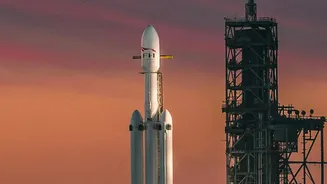
For decades, space exploration was a race between nations, dominated by government agencies like NASA and ISRO. Today, a new race is on, this one driven by private companies. Globally, names like SpaceX and Blue Origin have changed the game by making
space access cheaper and more frequent. This isn't just about billionaire joyrides; it's about creating a robust economy in orbit, encompassing everything from satellite internet constellations to in-space manufacturing and research. This shift has created a ripple effect worldwide, unlocking commercial possibilities that were once the stuff of science fiction.
India's Giant Leap: A New Ecosystem Is Born
India is not just watching this race; it's becoming a major participant. For years, the Indian Space Research Organisation (ISRO) was the sole custodian of India's space ambitions. But since the sector was opened to private participation in 2020, the landscape has transformed. The government established the Indian National Space Promotion and Authorisation Centre (IN-SPACe) to act as a facilitator and regulator, helping private companies navigate the final frontier. This policy shift has been a game-changer, with India's space economy projected to grow from around $8.4 billion today to $44 billion by 2033. The goal is to capture a larger share of the global space market, which is expected to be worth over a trillion dollars in the coming years.
Meet India's New Space Pioneers
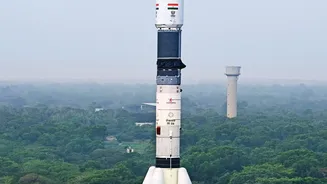
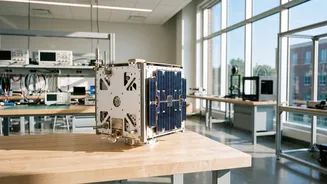
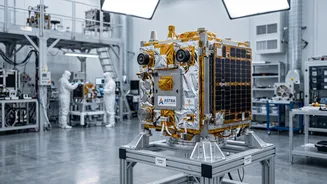
The heart of India's new space journey is its startups. Over 400 private space companies have emerged in just a few years, working on everything from building rockets to analysing satellite data. Companies like Skyroot Aerospace and Agnikul Cosmos are at the forefront of developing India's first privately-built rockets. Skyroot made history with its Vikram-S launch and is planning an orbital mission, while Agnikul has developed the world's first single-piece 3D-printed rocket engine. Others like Pixxel are building constellations of hyperspectral imaging satellites to provide valuable data, and Dhruva Space is a full-stack company that designs and manufactures satellites. These companies are not just creating technology; they are building a complete domestic ecosystem for space operations.
Your Ticket to Orbit: Unprecedented Career Opportunities
For young Indians, this boom translates directly into jobs. The popular image of a space career is limited to astronauts or rocket scientists, but the reality is much broader. The modern space economy needs aerospace engineers, but it also desperately needs software developers, data scientists, robotics engineers, mission operations specialists, and even legal and business professionals. Companies are hiring aggressively for roles in satellite data analytics, where experts use information from orbit to solve problems in agriculture, climate monitoring, and urban planning. The demand for a skilled workforce is so high that salaries are becoming increasingly competitive, with entry-level engineering roles at private firms fetching between ₹10 lakh to ₹25 lakh per annum.
More Than Tech: The Downstream Impact
The impact of the private space sector goes far beyond the launchpad. The most sustainable growth will come from 'downstream' applications—using space technology to improve life on Earth. Satellite data is already being used to monitor crop health, manage disaster response, and improve urban infrastructure. This data-driven approach is creating new business models and efficiencies in traditional sectors like agriculture, insurance, and logistics. As more satellites are launched and data becomes more accessible, the opportunities for entrepreneurs to build applications on top of this space infrastructure will multiply, fostering innovation across the entire economy. India’s strength in software and cost-efficient engineering makes it uniquely positioned to lead in this downstream market.