






More Than Just Dirt
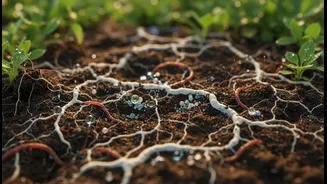
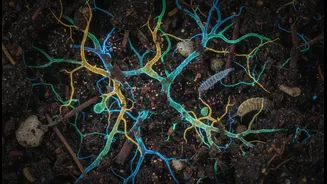
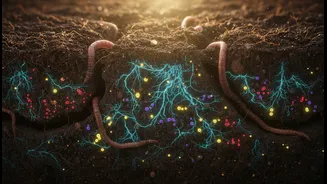
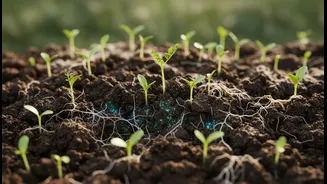
For most of us, soil is the inert brown stuff that holds up plants. But scientists are asking us to look closer. A single teaspoon of healthy soil can contain billions of microorganisms, including bacteria, fungi, and other life forms. This bustling,
invisible world is what researchers now call the soil microbiome, a complex, living ecosystem that is fundamental to the health of our planet and our food supply. For a country like India, where agriculture supports nearly half the population, understanding this hidden world is not just an academic exercise; it's a matter of national food security and economic prosperity. The health of this microscopic universe directly impacts crop yields, farmer incomes, and the long-term sustainability of the land we depend on.
The Microbial Revolution Below
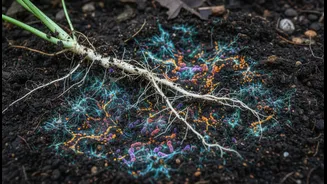
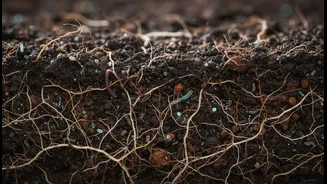
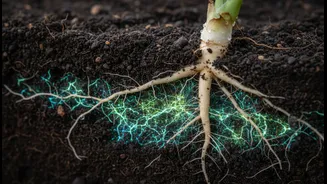
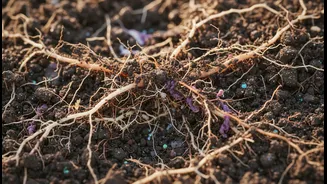
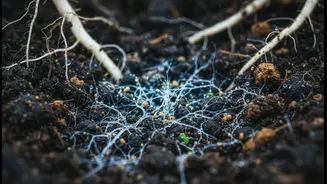
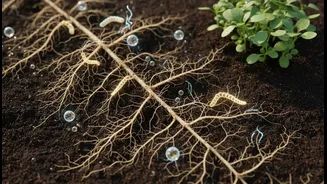
The latest scientific breakthroughs are not about finding a new chemical fertiliser, but about understanding the partnerships plants have forged with these microbes over millions of years. These tiny organisms are not passive bystanders; they are active collaborators. They break down organic matter and unlock essential nutrients like nitrogen and phosphorus, making them available for plants to absorb. Think of them as tiny, natural fertiliser factories operating 24/7. Some fungi, called mycorrhizae, form symbiotic relationships with plant roots, effectively extending the root system to gather more water and nutrients from farther away. Other bacteria can even protect plants from diseases by outcompeting harmful pathogens or producing natural antibiotics. This microbial workforce enhances plant immunity, making crops more resilient to stresses like drought and pests.
Unlocking Nature's Fertiliser
The heavy reliance on chemical fertilisers since the Green Revolution has had significant downsides, including high costs for farmers and environmental degradation. In India, studies have shown that a vast majority of soil is deficient in key nutrients and organic carbon, a sign of declining soil health. The new science of the soil microbiome offers a path to reduce this dependency. By fostering a healthy and diverse microbial community, farmers can leverage nature's own nutrient cycling processes. Recent research has even uncovered how specific bacteria can help plants, like soybeans and tomatoes, thrive in salty soil—a growing problem driven by climate change and irrigation patterns. These microbes help strengthen the plant's physical structure, enabling it to grow in conditions that would normally be impossible. This could be a game-changer for reclaiming degraded lands in India and ensuring crop yields in an uncertain climate.
From Lab to Land in India
The challenge now is to translate these scientific insights into practical, affordable solutions for farmers. The good news is that progress is already underway. Scientists are developing microbial 'cocktails' or 'probiotics for plants' that can be applied to seeds or soil to boost crop performance. In India, institutions like ICAR and ICRISAT are developing microbial consortia to improve soil fertility. The government's PM-PRANAM scheme has already seen success in encouraging states to reduce chemical fertiliser use. Furthermore, sustainable practices that naturally boost soil life are gaining traction. Techniques like crop rotation, using cover crops, and reduced tillage all help to feed and protect the soil's microbial population. Adopting these methods not only improves soil structure and water retention but can also help farmers participate in burgeoning carbon credit markets by storing more carbon in the soil.