







From Digital Libraries to Smart Tutors
For years, e-learning platforms were essentially digital bookshelves—vast repositories of PDFs and videos. The 'learning' part was still largely up to the student's own discipline and comprehension skills. If you didn't understand a concept in a dense
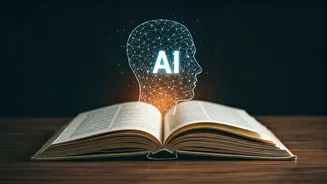
academic paper or a complex chapter, you were on your own. But a new generation of advanced platforms is fundamentally changing this dynamic. They are deploying sophisticated AI, not just to host content, but to actively help you understand it. Think of it as evolving from a silent librarian into a personal tutor who has read every book in the library and is ready to explain it to you in simple terms.
How AI 'Simplifies' a Book
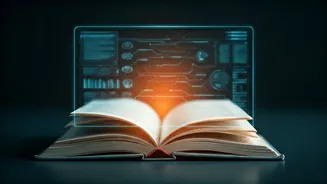
When we say AI 'simplifies' a book, it's not just about creating a shorter version. The technology at play, often built on Large Language Models (LLMs) similar to what powers ChatGPT, performs several key tasks. First, it can generate concise summaries of entire books, chapters, or even specific sections, pulling out the core arguments and key takeaways. Second, it can act as a 'chat' companion. Stuck on a paragraph about quantum mechanics or Mughal economic policy? You can highlight it and ask the AI, "Can you explain this to me like I'm a first-year student?" or "What are the three most important facts here?" The AI can also extract key terminology and definitions, create flashcards, and even generate practice questions based on the text, transforming a static book into an interactive learning module.
The New Tools on the Block
This isn't science fiction; it's already here. Platforms like Perplexity AI and Elicit allow users to upload documents or point the AI towards academic papers and ask direct questions about the content. They provide answers complete with citations, so you can check the source. Mainstream study platforms like Quizlet are integrating 'Q-Chat', an AI tutor that creates a personalized study experience from their vast library of content. In India, where millions of students prepare for grueling competitive exams like the UPSC, JEE, and NEET, these tools represent a paradigm shift. They offer a way to quickly get the gist of vast syllabi, clarify complex topics on-demand, and supplement traditional coaching with a tireless, 24/7 digital assistant.
The Promise of Personalized Learning
The most significant benefit of this technology is its potential for hyper-personalization. A student struggling with a specific formula in a physics textbook can get multiple explanations until one clicks, while a classmate who grasps it quickly can move on. This AI-driven approach can help bridge knowledge gaps and cater to different learning speeds in a way a single teacher in a classroom of 60 simply cannot. For students in remote areas without access to quality coaching centres, these platforms can be a great leveller, providing access to high-quality explanatory tools for a fraction of the cost of private tuition. It also helps break down the language barrier, allowing students to get explanations of complex English texts in a more familiar or simpler vocabulary.
Is There a Risk of 'Shallow Learning'?
However, educators and critics raise a valid concern: does making things too easy discourage the development of critical thinking? The intellectual struggle of wrestling with a difficult text is what builds deep understanding and analytical skills. If students only ever engage with AI-generated summaries, they may never learn to read critically, identify biases, or synthesize information on their own. Furthermore, AI models are not infallible. They can 'hallucinate' or misinterpret information, providing answers that sound plausible but are factually incorrect. Relying solely on an AI summary for a high-stakes exam or a medical diagnosis could be disastrous. The key is to treat these platforms as powerful assistants, not replacements for the brain.