






Mastering Low-Cost Transport
India's transport network is the lifeblood of budget travel, offering a trade-off between time and money that every savvy traveller can use. For long distances, nothing beats the economic brilliance of an overnight journey. Sleeper buses are a mainstay,
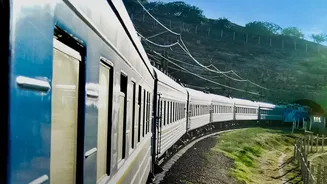
transforming a travel day into a travel night while also saving you the cost of a hotel room. These buses, with dedicated berths, are often cheaper and easier to book at the last minute than trains, making them perfect for impromptu trips. Modern booking platforms like redBus and AbhiBus have simplified the process, allowing you to compare operators and choose your berth online. Trains, the backbone of Indian travel, offer unparalleled reach. While booking in advance is always wise, especially for popular routes, there are tricks for last-minute travel. The IRCTC's 'Chart/Vacancy' feature, available about four hours before departure, shows unclaimed seats that can be booked online or by coordinating with the on-board Ticket Examiner (TTE). For the truly budget-conscious, Sleeper Class (SL) offers the most affordable option for long journeys, while Second Class (2S) is ideal for shorter day trips.
The Art of the Flexible Stay
The other half of the equation is accommodation that adapts to your fluid plans. The rise of quality hostel chains has revolutionized budget travel in India. Brands like Zostel and goSTOPS offer clean, safe, and social environments with dorm beds often priced between ₹400 and ₹900. These are not just places to sleep; they are community hubs where you can meet other travellers and get reliable local advice. The key advantage is flexibility. Unlike traditional hotels, hostels are accustomed to backpackers who extend their stay one night at a time. This allows you to arrive in a city, get a feel for it, and then decide how long you want to remain without being locked into a lengthy booking. For those who prefer more privacy, platforms like Booking.com and MakeMyTrip are invaluable for finding last-minute deals on guesthouses and budget hotels. Some platforms, like MiStay, even offer hotels by the hour, perfect for travellers who arrive at an odd time and just need a few hours to rest and refresh before heading out again.
Syncing Your Journey and Stay
The magic happens when you combine these two elements. The most effective strategy is to treat your overnight transport as part of your accommodation. By booking an overnight sleeper bus or train, you effectively cover your transit and lodging for one night in a single, low-cost transaction. This approach means you arrive in a new city in the morning with a full day ahead of you. A common tactic is to book just one night's stay at your destination hostel in advance. This secures you a landing spot. Upon arrival, you can leave your main luggage in the hostel's locker, explore the city, and then decide if you wish to extend your stay. If you love the place, you can book more nights directly; if not, you're free to book your onward journey for that very evening. This approach minimizes financial risk and maximizes your freedom to follow where the journey takes you.
Essential Apps and Tools
A few key apps on your smartphone can make managing this travel style seamless. For transport, redBus and AbhiBus are essential for comparing and booking intercity buses. The IRCTC Rail Connect app is a must-have for train travel, especially for using the 'Chart/Vacancy' feature for last-minute seats. For accommodation, MakeMyTrip, Goibibo, and Booking.com offer a wide range of hotels, guesthouses, and increasingly, hostels. Hostel-specific platforms like Hostelworld can also be useful. To navigate new cities, ride-hailing apps like Uber and Ola offer fixed, fair pricing, while Google Maps' offline feature is a lifesaver in areas with poor connectivity. For managing shared expenses on group trips, Splitwise is an excellent tool to track who paid for what without any hassle.