



The Staggering Difference in Cost
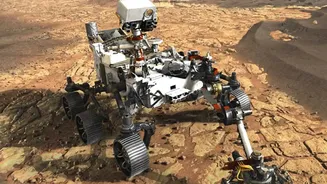
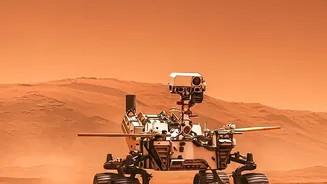
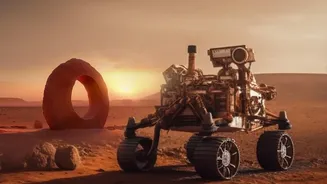
The most striking contrast between robotic and human missions is the price tag. NASA's highly successful Perseverance rover, which landed on Mars in 2021, cost approximately $2.7 billion. While a massive investment, it pales in comparison to the projected
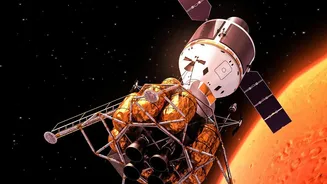
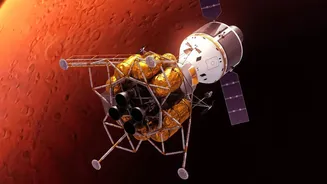
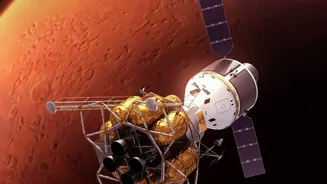
cost of sending astronauts. Estimates for a single crewed Mars campaign vary widely, but many analyses place the figure anywhere from $100 billion to as high as half a trillion dollars. This astronomical difference stems from the immense complexity of keeping humans alive. Robotic missions are often one-way trips and don't require food, water, or breathable air. A human mission, however, must include life support systems, radiation shielding, round-trip capability, and extensive safety measures, all of which add enormous mass and, therefore, cost.
Complexity and the Human Factor
Beyond cost, the logistical hurdles for a human mission are monumental. Astronauts must be protected from the harsh realities of deep space, including intense solar and cosmic radiation, which can increase cancer risk and damage the central nervous system. The months-long journey in a confined space also presents significant psychological challenges, including isolation and communication delays of up to 22 minutes each way. Furthermore, a crewed mission must account for medical emergencies and the physiological effects of prolonged exposure to reduced gravity, such as muscle and bone density loss. In contrast, a robot's 'health' is a matter of mechanics and power. While not without their own risks of failure, robots can operate for years in hazardous environments without fatigue or the need for a return ticket.
Scientific Return: Speed and Adaptability
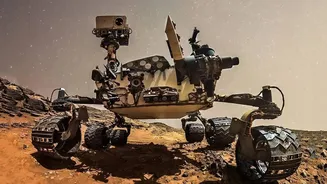
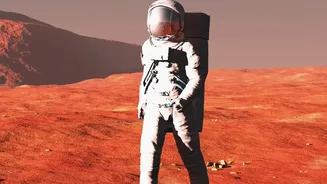
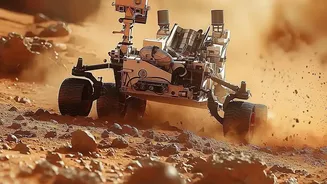
This is where the argument for human exploration gains its strongest footing. While rovers like Curiosity and Perseverance are marvels of engineering, they are incredibly slow. What a rover might accomplish in a Martian day, or 'sol', a human geologist could potentially do in minutes. Humans offer unparalleled adaptability and on-the-spot decision-making. An astronaut can observe an unexpected geological formation, pivot from the mission plan to investigate, and use intuition to select the most promising samples for collection. Robots, constrained by communication delays, must follow carefully pre-planned instructions. The Apollo missions returned 382 kg of lunar samples, a feat that would be impossible for current robotic systems. This ability to react, improvise, and apply expertise in real-time could dramatically accelerate the pace of discovery on Mars.
A Symbiotic Future: Robots as Scouts
Ultimately, the debate over robots versus humans is not a zero-sum game. The two approaches are increasingly seen as complementary. Robotic missions are the essential precursors to human exploration. They map terrain, analyze the atmosphere, identify potential landing sites, and test key technologies. For example, the MOXIE experiment aboard the Perseverance rover successfully demonstrated that oxygen can be produced from the Martian atmosphere, a crucial step for enabling future human habitats. Programs like NASA's Artemis, which aims to establish a sustained human presence on the Moon, are explicitly designed as a proving ground for the technologies and procedures needed to eventually send astronauts to Mars. Robots will continue to serve as scouts, partners, and heavy lifters, performing dangerous or repetitive tasks long after humans arrive.