





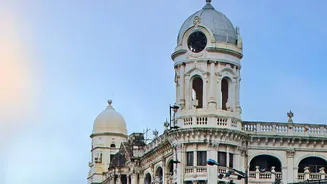
Kolkata has many titles, but few are as evocative as the 'London of India'. This grand comparison wasn't a formal decree, but an informal nickname born from a unique blend of power, architecture, and intellect that shaped the city's identity.
The Empire's Second City
The most
direct parallel between London and Kolkata stems from the latter's role as the capital of British India from 1772 until 1911. For over a century, Calcutta, as it was then known, was the administrative and economic nerve centre of the British Empire's most valuable territory. Just as London was the heart of a global empire, Calcutta was the seat of power from which the subcontinent was governed, making it, in effect, the empire's second city. This status meant that decisions of immense political and commercial importance were made within its walls, mirroring the function of London. The city was home to the Governor-General, the highest administrative offices, and the headquarters of the powerful British East India Company. This concentration of power alone drew natural comparisons to the imperial capital on the Thames.
An Architectural Echo
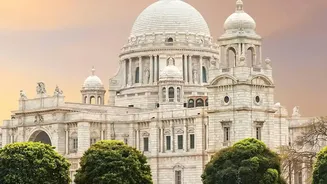
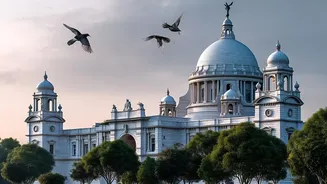
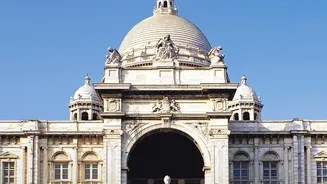
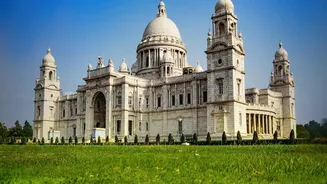
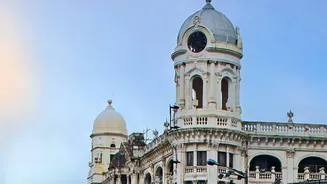
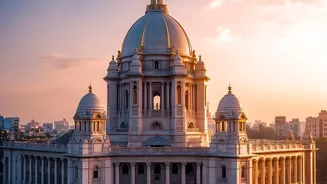
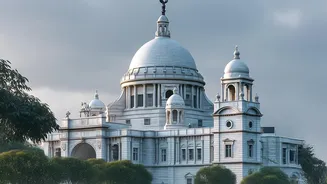
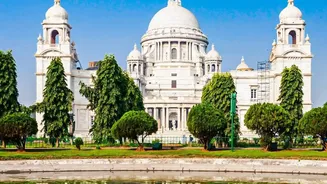
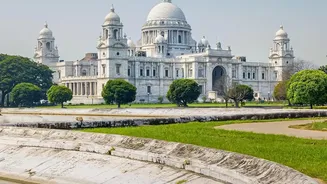
A walk through central Kolkata is a journey through European architectural history. The British constructed a city that reflected their own tastes and projected their authority. Grand neoclassical, Gothic Revival, and Victorian buildings rose from what were once villages and marshland. Structures like the Writers' Building, the Calcutta High Court, and the magnificent Victoria Memorial were designed to impress, using architectural language directly imported from Europe. The city earned another nickname, 'The City of Palaces', due to the sheer number of palatial mansions built by both wealthy British officials and the aspiring Bengali elite, known as Babus. This deliberate construction of a European-style metropolis on the banks of the Hooghly River created a visual landscape that strongly resembled parts of London, making the comparison an easy and obvious one for residents and visitors alike.
A River Runs Through It
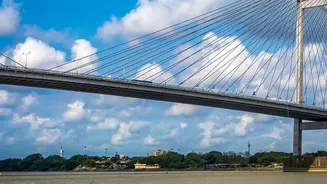
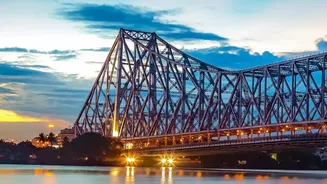
The geography of both cities provided another point of comparison. London's development and status as a global hub are inextricably linked to the River Thames. Similarly, Kolkata's existence and growth are owed to the Hooghly River. The British established their trading post here precisely because of the river's strategic access to the Bay of Bengal, which facilitated trade with Europe and the rest of Asia. The river became a bustling artery for commerce, with goods flowing in and out, funding the city's expansion and the empire's coffers. The presence of a major river as the city's economic lifeline created a functional and visual parallel to London, further cementing the 'London of India' moniker in the popular imagination.
The Crucible of Ideas
Beyond governance and architecture, Kolkata mirrored London as a formidable intellectual and cultural centre. The 19th century saw the city at the forefront of the Bengal Renaissance, a period of profound social, cultural, and artistic awakening. Kolkata became a melting pot where Indian philosophies and European traditions fused, creating a vibrant intellectual environment. Institutions like the University of Calcutta, founded in 1857, became crucibles for modern thought, producing some of India's greatest thinkers, reformers, and artists, including Nobel laureate Rabindranath Tagore. This reputation as the 'Cultural Capital of India' paralleled London's own status as a global epicentre for arts, literature, and debate, adding another layer of meaning to the nickname.
A Legacy of Two Minds
Today, the 'London of India' nickname is viewed with a certain complexity. For some, it is a reminder of a glorious and architecturally rich past when Kolkata was a city of global importance. For others, it is a colonial relic, a name that tethers the city's identity to its former rulers. In 2001, the city's name was officially changed from the anglicised 'Calcutta' to the Bengali 'Kolkata', a move to reclaim its indigenous identity. While modern Kolkata is a bustling, vibrant metropolis defined by its own unique culture, from its 'adda' sessions to Durga Puja festivities, the echoes of its colonial past remain. The grand buildings still stand, and the tram system, unique in India, adds to an oldrd world charm that hints at a European connection. The nickname, though informal and rooted in history, speaks to a foundational chapter of its story.