



Galaxies That Shouldn't Exist
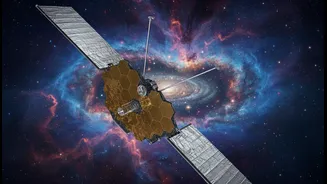
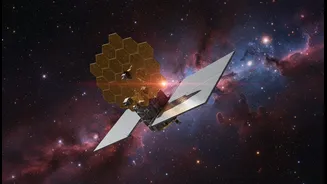
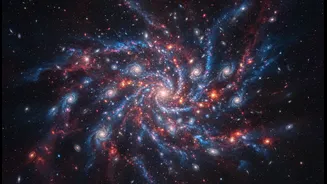
One of the biggest shocks has come from the JWST's glimpses into the cosmic dawn, the period just a few hundred million years after the Big Bang. According to our long-held models of cosmology, the first galaxies should have been small, faint, and simple.
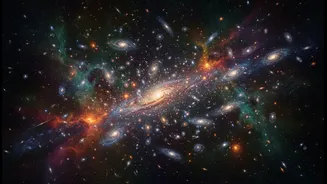
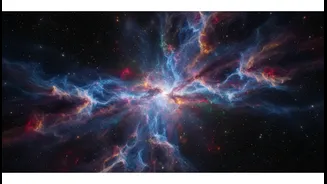
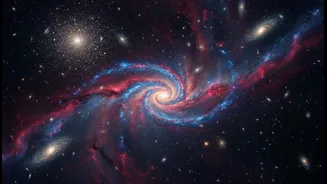
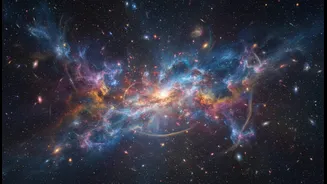
Instead, the JWST is finding galaxies that are astonishingly large, bright, and complex. In January 2026, astronomers announced the discovery of a collision of at least five galaxies that occurred just 800 million years after the Big Bang, a level of complexity not expected for another billion years. These findings challenge our fundamental understanding of how quickly structure could form in the early universe. Scientists are now grappling with a major puzzle: how did these galaxies get so big, so fast? It has forced a wave of new theories, but for now, the data from the early universe simply doesn't square with what our best models predicted.
The 'Little Red Dots' Mystery
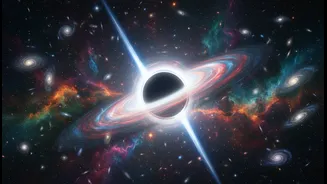
Scattered among these early galaxies are other perplexing objects that astronomers have nicknamed "little red dots." At first, they were thought to be small, young galaxies packed with stars. However, closer inspection is revealing something far more extreme may be hiding inside them: rapidly growing supermassive black holes. New data suggests these objects are cocooned in thick gas and dust, which would explain their reddish color. This raises a new set of questions. Are these a new type of cosmic object entirely, perhaps a 'black hole star'? Or are they a missing link that could finally explain how some black holes managed to grow to billions of times the mass of our sun so quickly after the Big Bang—a major unanswered question in astrophysics. The discovery of dozens of ancient quasars in 2026 has only deepened this mystery, showing that such massive objects were already in place when the universe was just 5% of its current age.
The Crisis in Cosmic Expansion
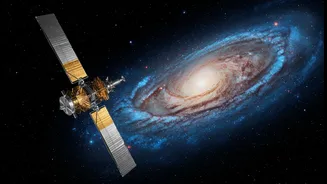
It’s not just the early universe that’s causing headaches. There's a growing crisis right in our cosmic backyard known as the "Hubble Tension." In simple terms, scientists have two primary ways of measuring how fast the universe is expanding, and they don't agree. Measurements of the nearby universe, using stars and supernovae, give a faster rate of expansion (around 73 km/s/Mpc). But measurements based on the leftover glow from the Big Bang, the Cosmic Microwave Background, suggest a slower rate (around 67 km/s/Mpc). For years, astronomers wondered if the discrepancy was due to measurement errors. But recent, more precise observations, including from the JWST, have only confirmed that the disagreement is real. This isn't a minor detail; the tension suggests that our standard model of cosmology, the very framework for understanding the universe's evolution, might be incomplete or even wrong.
A Universe of Unknowns
These are just a few of the new puzzles. Astronomers are also investigating mysterious radio signals from space called Fast Radio Bursts, trying to understand why the Sun's outer atmosphere is millions of degrees hotter than its surface, and grappling with the fact that about 95% of the universe is made of dark matter and dark energy—substances we know almost nothing about. Even within our own solar system, JWST recently found hints of a mysterious, unknown molecule on Pluto and Saturn's moon Titan, a substance not seen anywhere else. Each new discovery seems to pull back a curtain only to reveal a more complex stage behind it. Far from having all the answers, we may just be learning how to ask the right questions.