



The Artemis Program: A New Era on the Moon
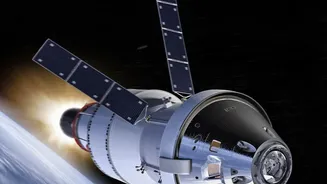
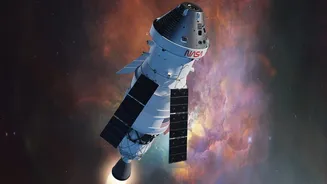
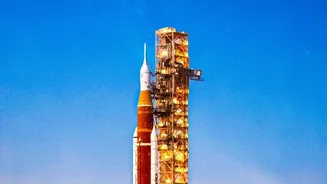
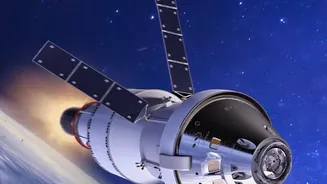
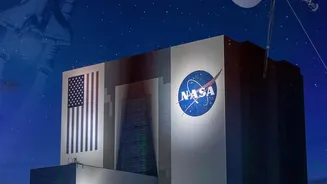
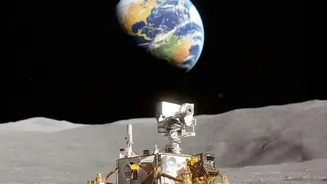
Forget the black-and-white images of the past; humanity is going back to the Moon, and this time, we plan to stay. The Artemis program is NASA's ambitious plan to establish a sustainable human presence on the lunar surface. After the successful uncrewed
Artemis I flight in 2022 and the crewed Artemis II lunar flyby in April 2026, all eyes are on the next steps. Artemis III is planned as a low-Earth orbit test of the lander systems in 2027, with the first crewed landing, Artemis IV, now targeted for 2028. Why it matters for India: The connection is becoming stronger than ever. In August 2026, NASA officially invited ISRO to join its planned Moon Base program, a permanent outpost near the lunar South Pole. This builds on India signing the Artemis Accords and the hugely successful NASA-ISRO Synthetic Aperture Radar (NISAR) satellite collaboration. For students, this signals a future of international cooperation, creating potential pathways for Indian researchers and engineers to contribute to humanity's next giant leap.
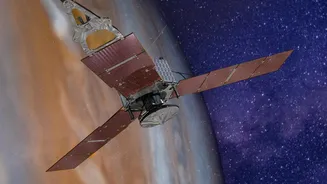
Europa Clipper: The Search for Life's Ingredients
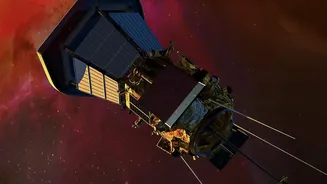
Is there life beyond Earth? NASA's Europa Clipper mission is one of our best shots at finding out. Launched in October 2024, this massive spacecraft is on a long journey to Jupiter's icy moon, Europa. Scientists believe a vast, salty ocean lies beneath Europa's frozen crust, potentially holding the chemical ingredients for life. The Clipper isn't looking for aliens directly; instead, it will perform dozens of close flybys to analyze the moon's surface, potential plumes of water vapor, and determine if the hidden ocean is habitable. Why it matters for India: This mission represents the pinnacle of astrobiology and planetary science. Indian students passionate about biology, chemistry, and geology can follow the data and discoveries from this mission, which will redefine our understanding of where life can exist. The spacecraft is scheduled for a crucial Earth gravity assist in December 2026, using our planet's momentum to slingshot itself towards Jupiter for its 2030 arrival. Following its journey is a real-time lesson in orbital mechanics and deep-space exploration.
Dragonfly: A Nuclear-Powered Drone on Titan
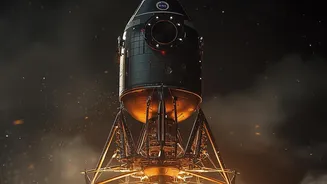
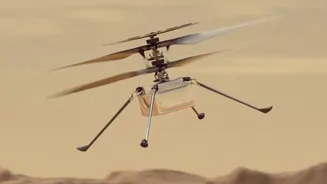
Imagine a car-sized, nuclear-powered drone flying through the thick, hazy atmosphere of another world. That's the incredible reality of the Dragonfly mission, set to launch no earlier than July 2028. Its destination is Saturn's largest moon, Titan, a bizarre world with lakes and rivers of liquid methane and ethane. Dragonfly will fly from one location to another, landing to sample surface materials and study the complex organic chemistry that is happening there. It will investigate how far prebiotic chemistry—the building blocks of life—has progressed on this unique moon. Why it matters for India: Dragonfly is a mission straight out of science fiction, pushing the boundaries of robotics and autonomous exploration. For students in engineering, computer science, and aeronautics, it’s a source of immense inspiration. The technologies developed for Dragonfly—from its rotorcraft design to its ability to operate in an environment four times denser than Earth's—will inform future robotic missions, including those ISRO may one day send to other planets. Its journey to Titan will take until 2034, meaning today's students could be the very scientists analyzing its groundbreaking data.
Opportunities for Students to Get Involved
Beyond just following along, NASA provides numerous avenues for international students to engage directly. Programs like the Human Exploration Rover Challenge (HERC) are open to teams from around the world, including India, challenging them to design and build rovers for simulated extraterrestrial terrain. The NASA Space Apps Challenge is another global event where coders, scientists, and designers collaborate to solve real-world problems in space and on Earth. Why it matters for India: These programs offer hands-on experience and a direct connection to NASA's work. For a generation of Indian students inspired by ISRO's successes, participating in these challenges is a way to build skills, network with international peers, and contribute to the global culture of space exploration. They are practical steps that can turn a passion for space into a tangible part of one's education and future career, whether at ISRO, a private startup, or an international agency.