

The Agonizing Walk and the Great Disappearance
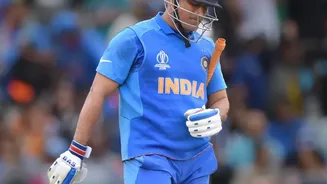
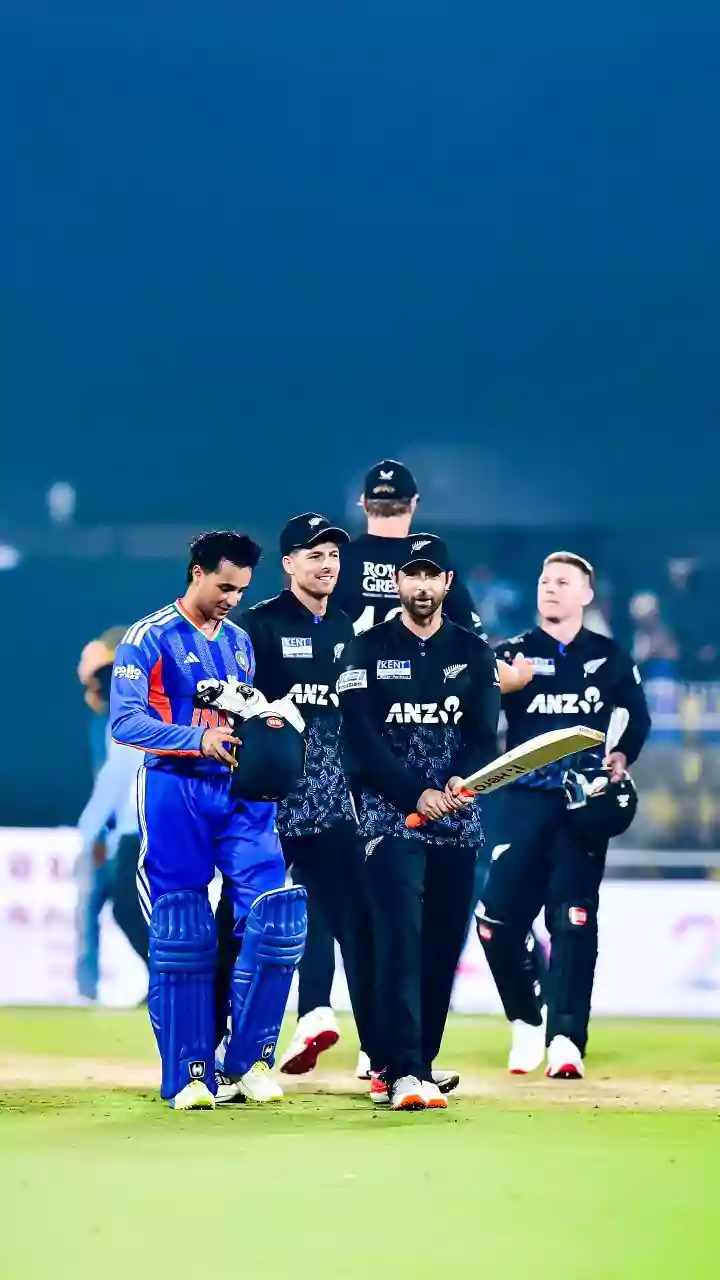
July 10, 2019. Old Trafford, Manchester. It's a date etched in the memory of Indian cricket fans. Chasing 240 in a World Cup semi-final, India’s hopes rested on MS Dhoni. But a stunning direct hit from Martin Guptill found him short of his crease. As
Dhoni walked off, head bowed, it felt like the end of a chase, and perhaps, the end of an era. What followed wasn't a press conference or a farewell tour, but a profound silence. Dhoni, the master of the unpredictable, simply disappeared from the international circuit. For 403 days, speculation was rampant. Would he return for the T20 World Cup? Was he quietly phasing himself out? Every public appearance was scrutinized, every quote analyzed, but the man at the center of it all remained characteristically quiet. This period of absence only magnified the legend, turning his retirement from a question of 'when' to a national obsession of 'how' and 'why'.
An Unconventional Exit for an Unorthodox Captain
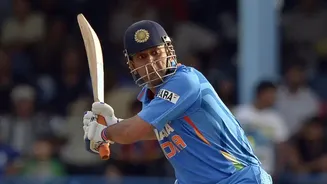
To understand the 403-day wait, one must understand Dhoni himself. His entire career was a masterclass in defying convention. From his 'helicopter shot' to his out-of-the-box field placements, he played cricket on his own terms. His leadership style was defined by a profound calmness and an almost unnerving ability to stay detached from the chaos around him, earning him the moniker 'Captain Cool'. His major career decisions were similarly abrupt and personal. He retired from Test cricket in the middle of a tour to Australia in 2014, another move that shocked the establishment. Therefore, the long hiatus before his ODI and T20I retirement wasn't out of character; it was quintessentially Dhoni. He was never one for grand farewells or drawn-out goodbyes. The quiet period allowed him to step away from the emotional high of the World Cup loss and make a decision free from external pressure, just as he had always played the game.
The Significance of the Date and Time
When the announcement finally came on August 15, 2020, it was not through a BCCI press release but via a simple Instagram post. The caption was brief: "Thanks a lot for ur love and support throughout. from 1929hrs consider me as Retired." The choice of date was no coincidence. August 15 is India's Independence Day, a day of immense national pride. For Dhoni, an honorary Lieutenant Colonel in the Indian Territorial Army and a deeply patriotic individual, announcing his departure on this day was a powerful statement. Adding to the symbolism, his teammate and close friend Suresh Raina revealed a personal calculation: Dhoni's jersey number is 7, Raina's is 3. Together, they make 73. On August 15, 2020, India was celebrating its 73rd year of independence. It was a planned, poetic exit, transforming a personal career decision into a tribute to the nation he represented for over 15 years.
Master of His Own Narrative
In a later revelation, Dhoni admitted that, in his heart, he had retired the day he was run out in Manchester. "To me, that was the last day I played cricket for India. I took retirement a year later, but the fact is that, that day I had retired," he said. So why the public delay? The 403 days served a crucial purpose. It allowed the team to move on and for the public to gradually accept his absence. It prevented his retirement from becoming a media circus that could overshadow the team's transition. By the time he made it official, the initial shock had dissipated, replaced by a year of quiet acceptance. He controlled the narrative until the very end, ensuring his departure was as he had lived his career: on his own terms, without fanfare, and with a quiet dignity that set him apart. The wait was not a period of indecision, but a deliberately crafted final chapter by a man who was always several steps ahead of the game.