

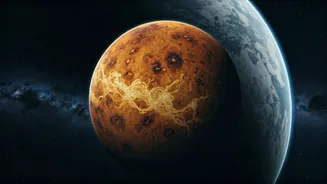



Introducing Shukrayaan: India's Next Big Leap
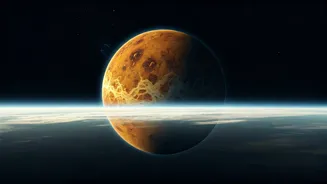
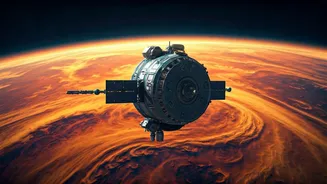
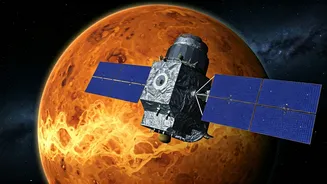
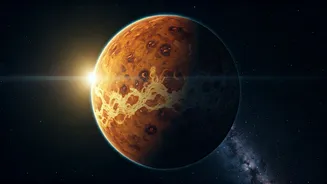
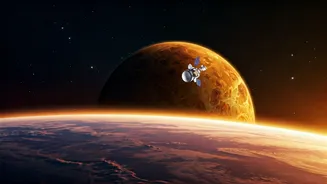
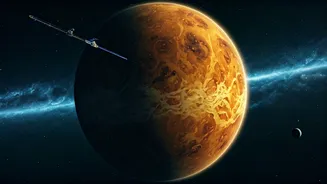
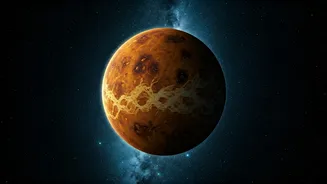
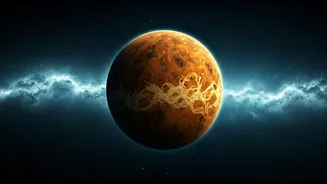
After conquering the Moon and Mars, ISRO's next interplanetary frontier is Venus. The planned Venus Orbiter Mission, named Shukrayaan (from the Sanskrit words for Venus and 'craft'), represents a major step in India's space exploration ambitions. Following
government approval in September 2024, the mission is officially on the roadmap, with a targeted launch date of March 2028. This orbiter mission is designed to conduct a comprehensive investigation of Venus from a high elliptical orbit, carrying around 100 kg of scientific instruments to peer through the planet's thick, toxic clouds. It builds upon the legacy of Chandrayaan and Mangalyaan, positioning India among the select few nations actively planning a return to our mysterious planetary neighbour.
Unlocking the Secrets of a Toxic World
Venus is an enigma. Though similar to Earth in composition, it's the hottest planet in our solar system, with a thick atmosphere of carbon dioxide and clouds of sulfuric acid. Shukrayaan's primary goal is to decipher why this world, often called Earth's 'evil twin', turned out so differently. The mission's objectives are ambitious. It will use a high-resolution synthetic aperture radar to map the surface and shallow subsurface, looking for evidence of active volcanoes and lava flows. Other instruments will study the complex, super-rotating atmosphere, analyze its composition, and investigate how the solar wind interacts with the Venusian ionosphere. One of the biggest questions is whether Venus ever hosted oceans and, if so, what caused its catastrophic runaway greenhouse effect.
A Cautionary Tale for Earth
The importance of studying Venus extends far beyond simple curiosity. The planet serves as a natural laboratory for understanding how planetary climates evolve and can dramatically change. By studying its extreme greenhouse effect, where heat is trapped by a dense carbon dioxide atmosphere, scientists can refine models for Earth's own climate. Understanding the processes that transformed Venus from a potentially habitable world into an inferno provides crucial insights into the boundaries of habitability. In an era of increasing focus on exoplanets, Venus offers a vital, close-to-home example of an Earth-sized planet's evolutionary path, helping us understand what makes a planet hospitable to life—or what can erase that potential entirely.
A Renewed Global Race to Venus
ISRO is not alone in its renewed interest in Venus. After decades of being relatively overlooked in favour of Mars, a new international focus on the cloud-covered planet is emerging. NASA is planning two missions, VERITAS and DAVINCI, scheduled for the 2029-2031 timeframe. The European Space Agency (ESA) also has its EnVision mission targeting a launch in the early 2030s. China, too, has expressed plans for a Venus mission. This flurry of activity makes Shukrayaan's timing crucial. By launching in 2028, India has the opportunity to get there ahead of several other major players, securing a leading role in this new era of Venus exploration and contributing unique data that will complement the findings of subsequent international missions.