

The Upper-Body Battle
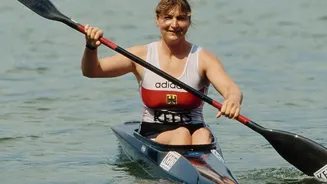
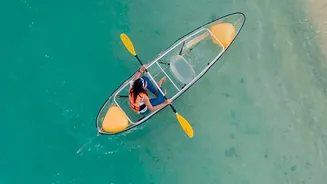
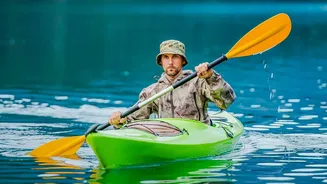
At first glance, kayaking seems like the obvious winner for an upper-body workout. The repetitive motion of pulling a double-bladed paddle through the water heavily recruits the muscles in your back, shoulders, and arms. Your latissimus dorsi (lats),
the large muscles of your back, are the primary drivers for a powerful stroke. Your shoulders, chest, and arms—including biceps and triceps—all play crucial roles in propelling and steering the kayak, leading to significant strength and endurance gains in your upper half. While paddleboarding also works the upper body, the nature of the stroke is different. Using a single, long paddle requires a combination of pulling with the lower arm and pushing with the upper arm. This engages the shoulders, back, and arms, but often as part of a more integrated, full-body movement rather than the isolated, intense workout that kayaking provides for the upper body. If your primary goal is building a powerful back and defined shoulders, kayaking has a distinct edge.
The Core of the Matter
This is where stand-up paddleboarding truly shines. The very act of standing on an unstable board on water forces your core into constant action. Your abdominal muscles, obliques, and lower back are continuously firing to maintain balance, making SUP an exceptional workout for building core stability. Every paddle stroke, every ripple in the water, and every shift in your weight is a new challenge for your midsection. Kayaking also requires a strong core, but in a different way. While seated, a kayaker's power and rotation originate from the torso. Twisting your body with each stroke engages your obliques and abs to transfer power from your larger back muscles to the paddle. However, the stability of sitting in a kayak means the deep, stabilizing muscles of the core aren't challenged in the same relentless way they are on a paddleboard. For a workout that’s like a plank on water, paddleboarding is the undisputed champion of core engagement.
Don't Forget the Lower Body
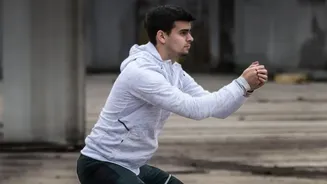
Many assume both sports neglect the legs, but that's a misconception. In paddleboarding, your legs are your foundation. To stay balanced, you must maintain a slight squat, which keeps your quads, hamstrings, and glutes constantly engaged in an isometric hold. Your feet and ankles are also working overtime, making tiny adjustments to keep you steady. This results in a surprising lower-body endurance workout. Kayaking involves the lower body more subtly. While you are seated, your legs and hips are key for stability and power transfer. By pressing against the footpegs and engaging your hip flexors and glutes, you create a solid base that allows for more powerful torso rotation and paddle strokes. Your legs aren't the prime movers, but they are an integral part of the system. While paddleboarding offers a more direct and sustained leg workout, both sports require more lower-body involvement than you might think.
The Final Verdict: Which Is Right for You?
The best choice between kayaking and paddleboarding depends entirely on your specific strength goals. Stand-up paddleboarding offers a superior full-body workout, with an unmatched emphasis on core strength and stability. It challenges your balance from head to toe, engaging major muscle groups as well as the small, stabilizing muscles that are often neglected in traditional gym workouts. It's a fantastic choice for anyone looking to build functional strength, improve posture, and get a workout that feels more like play. Kayaking, on the other hand, is a powerhouse for developing the upper body and rotational core power. If your goal is to build a strong back, muscular shoulders, and powerful arms, the focused, repetitive nature of the kayak stroke delivers more targeted results. It's an excellent option for building strength endurance and is generally more efficient for covering long distances on the water.