
A Digital Doomsday Scenario
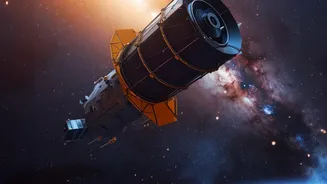
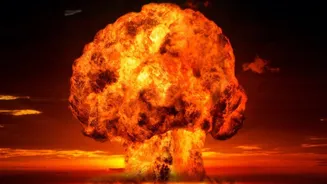
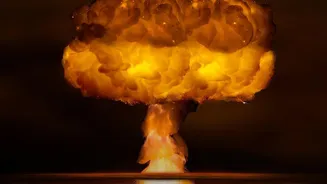
What if the sky, filled with invisible data streams, suddenly went dark? According to a recent study by researchers from the University of Wisconsin-Madison and Princeton, a single nuclear weapon detonated in low-Earth orbit (LEO) could be catastrophic.
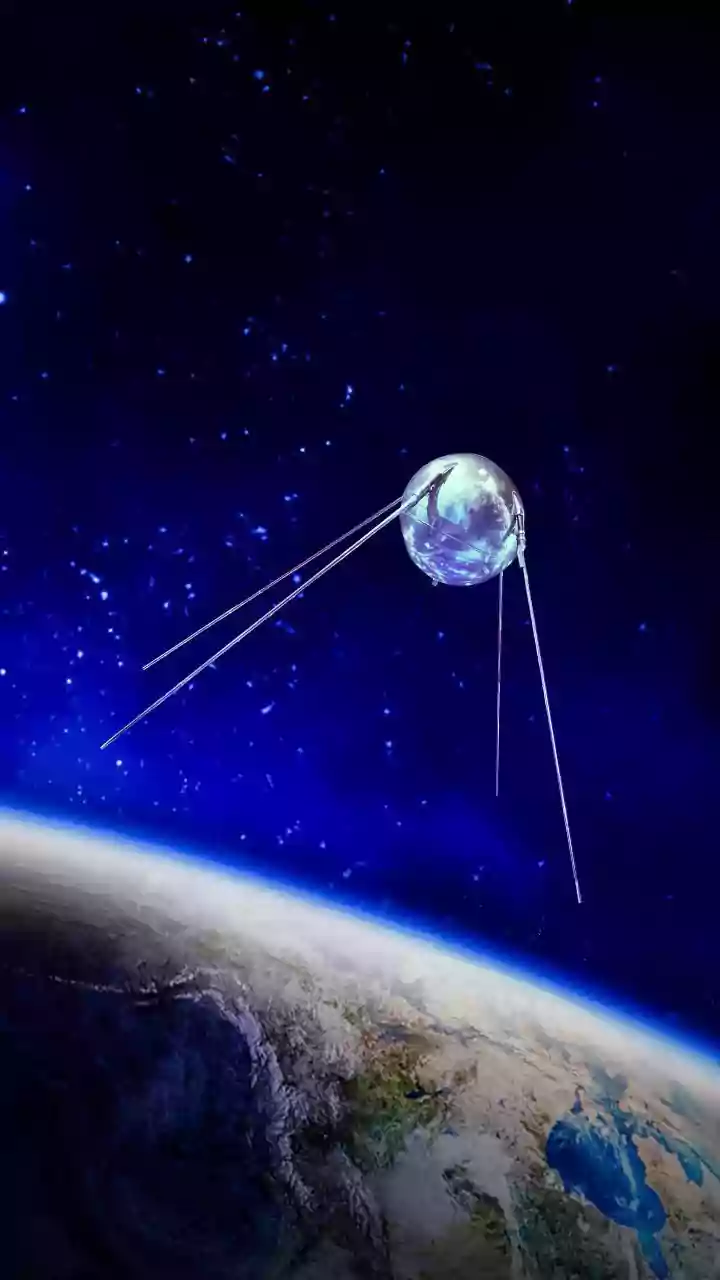
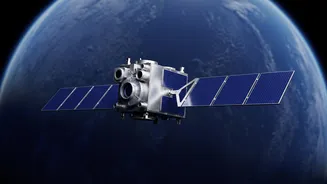
Their computer model, which has been submitted for peer review, simulates a 1-megaton nuclear explosion at an altitude of 500 kilometres. The results are staggering: within just one week, an estimated 98% of the roughly 13,300 active satellites in LEO would be disabled. This isn't a sci-fi fantasy but a quantified risk based on the physics of a high-altitude nuclear explosion, threatening the entire global space infrastructure.
The Real Killer: An Artificial Radiation Belt
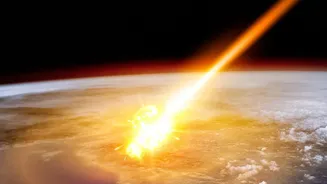
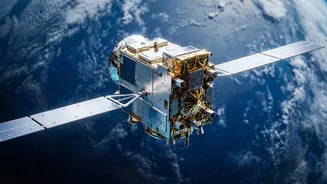
Counterintuitively, the immediate blast isn't the main threat. The model shows that the initial burst of X-rays would disable only about 3% of satellites in its line of sight. The far greater danger comes after. The explosion would release a massive cloud of high-energy electrons from radioactive fission products. Trapped by the Earth's magnetic field, these particles would form a new, artificial radiation belt that lingers for months or even years. Satellites in LEO, which circle the Earth every 90 minutes or so, would repeatedly fly through this deadly environment. With each pass, their sensitive electronics would absorb a cumulative dose of radiation, leading to inevitable failure. Even satellites with triple the standard radiation shielding would not be safe, with models showing 97% failing within two weeks.
Echoes of Starfish Prime
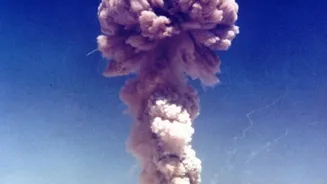
This terrifying scenario has a historical precedent. On July 9, 1962, the United States conducted the Starfish Prime test, detonating a 1.4-megaton warhead 400 kilometres above the Pacific Ocean. At the time, only a few dozen satellites were in orbit. The resulting artificial radiation belt was much stronger than expected and caused at least six satellites to fail, including the UK's first satellite, Ariel 1, and the pioneering communications satellite Telstar 1, which was launched the day after the test. The explosion also caused an electromagnetic pulse (EMP) that knocked out streetlights and telephone links in Hawaii, nearly 1,450 kilometres away. Starfish Prime was a shocking lesson in the unforeseen consequences of nuclear weapons in space, leading to the 1963 Partial Nuclear Test Ban Treaty.
A World Without Orbits
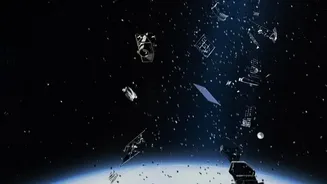
In 1962, the loss of a few satellites was a niche scientific problem. Today, with over 17,000 satellites in LEO, the consequences would be unimaginable. Global positioning systems (GPS), crucial for everything from shipping and aviation to ride-sharing apps and precision agriculture, would cease to function. Financial markets, which rely on satellites for synchronizing transactions, would face chaos. Weather forecasting would be severely degraded, and global communications would be disrupted on a massive scale. For India, where companies like Reliance are planning vast satellite constellations to expand connectivity, such an event would cripple development and isolate communities. The study warns that recovering from such a collapse would not be as simple as launching new satellites. The lingering radiation belt and the high risk of collisions from thousands of dead, uncontrollable spacecraft would make LEO a no-go zone for years, if not decades.