

Beyond Our Solar System's Blueprint
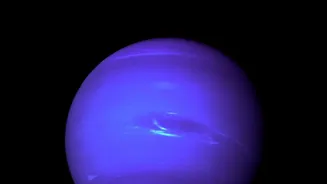
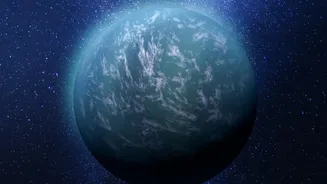
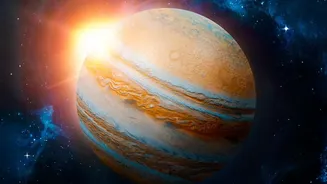
Our cosmic neighbourhood is surprisingly limited. It features small, rocky planets like Earth and gas giants like Jupiter, but nothing in between. Yet, when we look out into the galaxy, the most common type of planet is the 'sub-Neptune' — worlds larger
than Earth but smaller than Neptune. These planets, often found in orbits that make them warmer than our own Neptune, have no direct comparison here at home. This makes them deeply mysterious. Are they rocky worlds with thick atmospheres or small gas planets with strange chemical makeups? For years, astronomers could only guess at the composition of these common but alien worlds.
A Methane-Scented Breakthrough
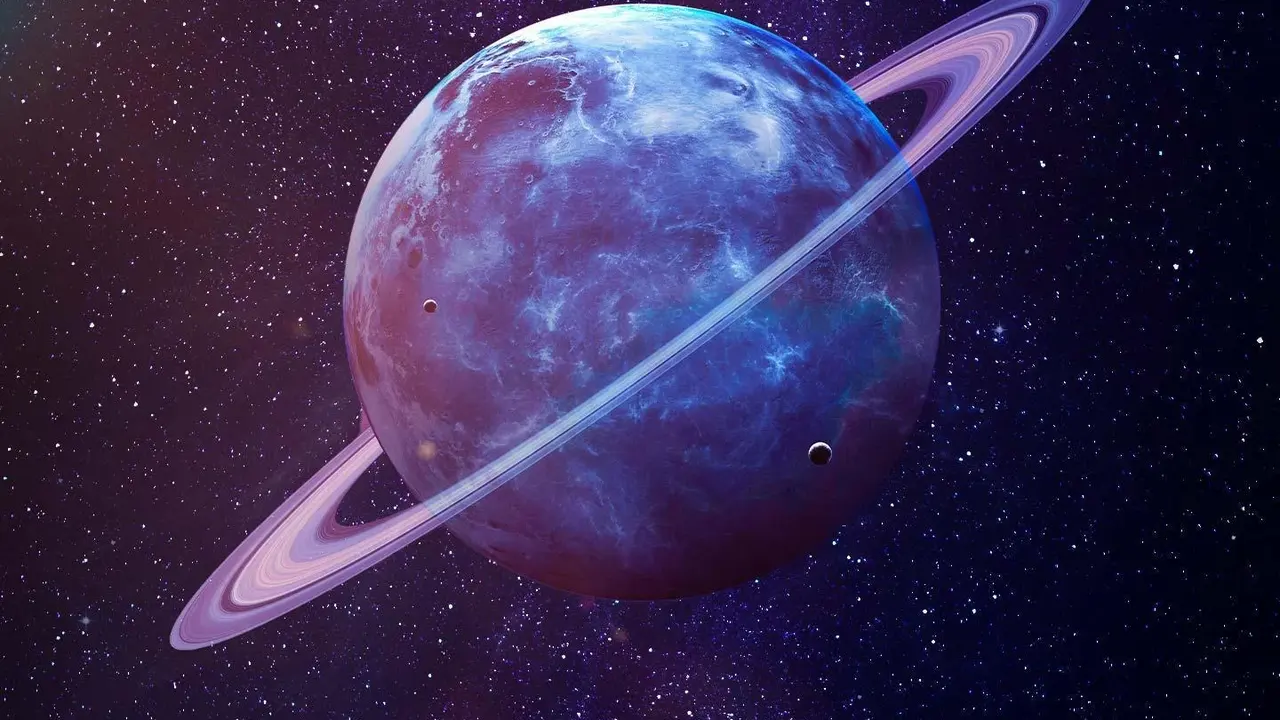
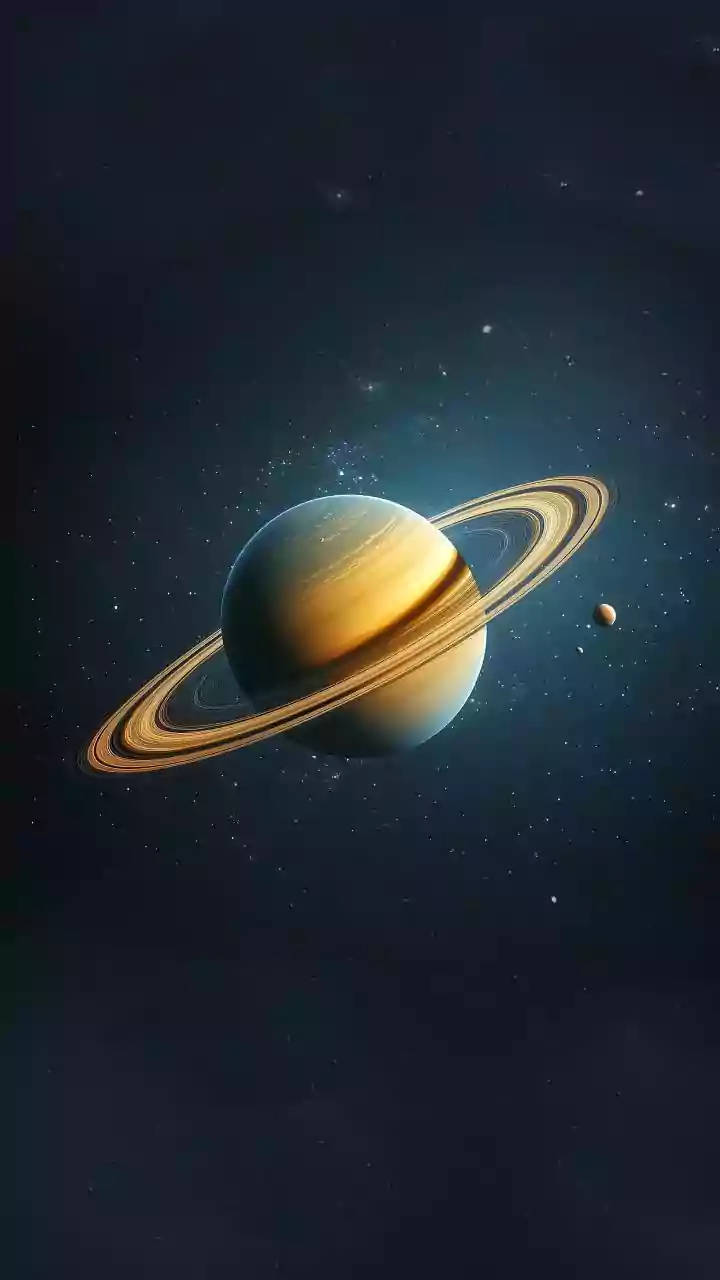
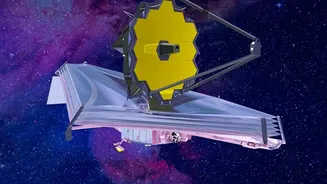
That guesswork is now giving way to data. Using the James Webb Space Telescope (JWST), scientists have made a series of groundbreaking detections of methane on these 'warm Neptunes' and other similar planets. For years, methane was expected to be a common atmospheric ingredient, but it remained stubbornly elusive to older telescopes. Now, JWST has changed the game. On the exoplanet K2-18 b, a sub-Neptune located 120 light-years away, the telescope confirmed the presence of methane and carbon dioxide. More recently, observations of TOI-199b, a rare 'temperate' gas giant about the size of Saturn, also revealed an atmosphere rich in methane. These discoveries, made possible by JWST's incredible sensitivity, are finally allowing scientists to build a chemical inventory of these distant worlds.
Why This Chemical Fingerprint Matters
Finding methane is significant for two main reasons. First, it offers fundamental clues about the planet itself. Methane is a carbon-bearing molecule, and its presence, absence, or abundance can tell astronomers about a planet's formation history, its temperature, and the chemical reactions happening in its atmosphere. It helps them refine their models of how planetary systems are born and evolve, creating a more complete picture of the cosmic zoo. Second, and more tantalizingly, methane is considered a potential 'biosignature'. Here on Earth, a significant amount of atmospheric methane is produced by living organisms. This has led to speculation that its presence on other worlds could, under the right circumstances, be a hint of biological activity.
The Cautious Search for Life
However, scientists are quick to pour cold water on any premature conclusions. Methane can also be produced by purely geological or chemical processes that have nothing to do with life, such as volcanic activity or reactions in a planet’s atmosphere. The case of K2-18 b illustrates this perfectly. Alongside the confirmed methane, an initial analysis hinted at a possible detection of dimethyl sulfide (DMS), a gas that on Earth is almost exclusively produced by marine life. While this created headlines, subsequent analysis has shown the DMS signal to be weak and highly debatable. The scientific consensus is that extraordinary claims require extraordinary evidence, and we are not there yet. The real value is in understanding the context — finding methane is one piece of a much larger puzzle.
The Telescope That Opened a Window
None of this would be possible without the James Webb Space Telescope. Its ability to see in infrared light is perfectly suited for a technique called transmission spectroscopy. As an exoplanet passes in front of its star from our point of view, a tiny fraction of the starlight shines through the planet's atmosphere. Different gas molecules absorb specific wavelengths of light, leaving a unique chemical fingerprint in the starlight that reaches the telescope. By analyzing this filtered light, JWST can effectively 'read' the composition of a world's atmosphere from light-years away, a feat that was simply beyond the reach of previous observatories.