





Critical Thinking and Complex Problem-Solving
AI is a master of processing data and recognizing patterns, but it often lacks true contextual understanding and the ability to question its own outputs. The real value in the modern workplace lies in asking the right questions, evaluating information
with a discerning eye, and navigating ambiguity where there is no playbook. This involves analyzing problems from multiple angles, identifying logical fallacies, and synthesizing information to form a well-reasoned judgment. While an AI can provide an answer, a critical thinker can determine if it's the right answer and, more importantly, if it solves the right problem.
Emotional Intelligence and Empathy
Perhaps the most fundamentally human skill, emotional intelligence (EI) is the ability to perceive, understand, and manage emotions in yourself and others. AI can simulate empathetic language, but it cannot genuinely feel, build trust, or read the subtle non-verbal cues that define human interaction. This skill is irreplaceable in roles that depend on connection, such as leadership, sales, teaching, and healthcare. As automation handles more routine tasks, the demand for social and emotional skills is set to grow significantly, making EI a key differentiator.
Creativity and Originality
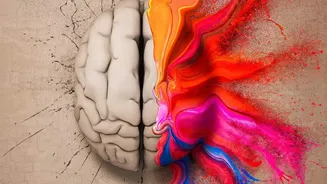
Generative AI can produce content, music, and images by recombining existing data in novel ways. However, true creativity involves more than recombination; it's about original thought, reframing problems, and generating truly new ideas. It’s the human imagination that can connect disparate concepts, challenge the status quo, and envision something that doesn't yet exist. In a business context, this translates to innovation, strategic vision, and the kind of brand storytelling that resonates on a cultural level. While AI can be a powerful tool for creation, it is the human with taste, vision, and originality who directs it toward a meaningful goal.
Leadership and Social Influence
Leadership is not about processing data; it's about inspiring people. It involves motivating a team, navigating complex social dynamics, fostering a positive culture, and persuading stakeholders. These actions are rooted in trust, respect, and emotional connection—qualities an algorithm cannot earn. An effective leader can provide a pep talk, mentor a struggling team member, and unite a group around a shared purpose, skills that remain firmly in the human domain. As organizations continue to transform, the ability to lead people through uncertainty will be more valuable than ever.
Adaptability and Lifelong Learning
The rapid pace of technological change means that the specific tools and platforms we use today may be obsolete tomorrow. The most durable skill, therefore, is the ability to adapt and learn continuously. This involves not just acquiring new technical knowledge but also cultivating a mindset of flexibility, resilience, and curiosity. Future-proofing your career is less about mastering one specific skill and more about becoming an agile learner who can thrive even when the rules are changing and the environment is unpredictable. It is the commitment to personal development and evolution that will ensure relevance in the long run.