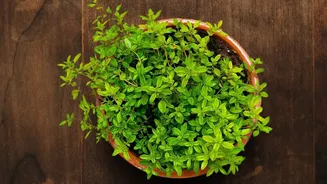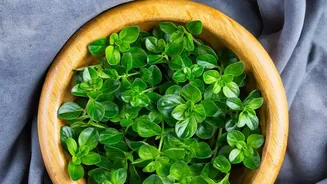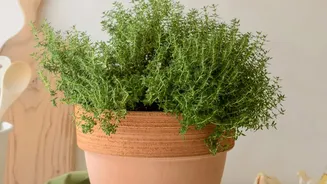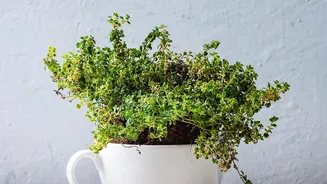




The aromatic charm of fresh thyme is a welcome addition to any kitchen. This hardy Mediterranean herb is surprisingly easy to grow in pots, provided you understand its three fundamental needs: plenty of light, excellent drainage, and a careful hand with
water.
Let There Be Light
Thyme thrives in bright, direct sunlight. As a plant native to the hot, sunny climates of the Mediterranean, it requires at least six to eight hours of direct sun each day to grow dense and flavourful. An ideal spot is a south-facing windowsill, balcony, or patio where it can soak up the rays. If you don't have a location with enough natural light, especially during winter, your thyme may become 'leggy'—with long, pale stems and sparse leaves. To combat this, you can supplement with a full-spectrum grow light placed about 6 to 12 inches above the plant for 12 to 16 hours daily.
The Perfect Potting Setup
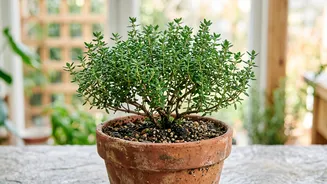
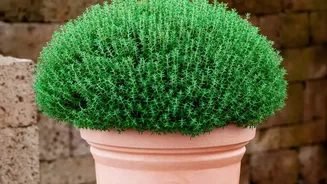
Proper drainage is non-negotiable for thyme, as it despises 'wet feet'. The most common reason potted thyme fails is due to root rot caused by soggy soil. To prevent this, start with the right container. A terracotta pot is an excellent choice because its porous material allows soil to dry out more evenly between waterings. Whatever material you choose, ensure it has at least one large drainage hole. The soil itself should be light and gritty. Avoid using heavy garden soil, which compacts easily. Instead, create a fast-draining mix by combining a standard potting mix with materials like coarse sand, perlite, or fine grit. A simple recipe is two parts potting mix to one part grit. This ensures that excess water flows through quickly, keeping the roots healthy.
The Art of Restrained Watering
Overwatering is the single biggest threat to potted thyme. Unlike thirsty herbs like basil or mint, thyme is drought-tolerant and prefers its soil to dry out completely between waterings. A reliable watering schedule is to check the soil every few days. Stick your finger one to two inches deep; if it feels dry, it's time to water. Another method is to judge by the weight of the pot—it will feel noticeably lighter when dry. When you do water, do so thoroughly until water runs out of the drainage hole, then allow it to drain completely. Indoors, this might mean watering only every 7 to 10 days. Drooping leaves can be a sign of both under and overwatering, so always check the soil moisture before adding more water.
Harvesting for Flavour and Health
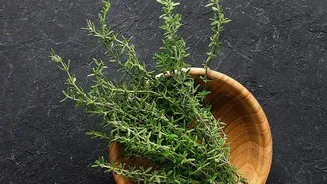
Regularly harvesting your thyme not only provides fresh sprigs for your cooking but also encourages the plant to become bushier and more compact. The best time to harvest for peak flavour is in the morning, just after the dew has dried but before the intense heat of the day. This is when the essential oils in the leaves are most concentrated. Use clean scissors or snips to cut the top, leafy sections of the stems, always leaving the tough, woody base of the plant intact. Try to leave at least a few inches of growth so the plant can continue to thrive. Regular, light trimming is far better for the plant's health than one large harvest.
Avoiding Common Pitfalls
Beyond the big three, a few other considerations will keep your thyme happy. Thyme requires very little fertilizer; in fact, overly rich soil can lead to weak growth and less aromatic leaves. A single feeding with a half-strength balanced fertilizer in the spring is usually sufficient. Keep an eye on airflow, especially indoors, as stagnant, humid conditions can encourage mould. Finally, thyme becomes woody over time, typically after three or four years, which can lead to a decline in flavour and vigour. When you notice growth becoming sparse and mostly woody, it's a good time to replace the plant, which can easily be done from cuttings of a younger plant.