




The AI Gatekeeper Is Your First Hurdle
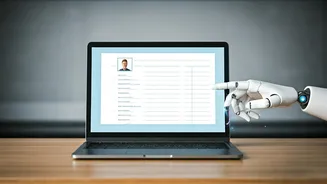
Before a human recruiter ever sees your application, it almost certainly has to pass an AI-powered filter called an Applicant Tracking System (ATS). Most large and mid-sized companies now rely on ATS to manage the high volume of job applications. These
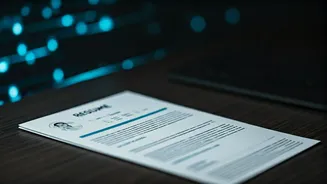
systems scan and parse your resume, extracting information about your skills, experience, and education. They then score your application based on its relevance to the job description. Research shows that up to 75% of resumes are rejected by ATS simply because they aren't formatted or optimised correctly. Simple formatting, standard section titles like "Work Experience" and "Skills," and the use of relevant keywords are essential to making it past this initial automated screening. Think of this step as a technical check; if the machine can't read your resume or doesn't find the right terms, your application ends before it even begins.
Why Recruiters Crave the Human Touch
While passing the ATS is crucial, the ultimate goal is to impress a human hiring manager. Here, the game changes entirely. With so many candidates using AI to polish their resumes, applications are starting to look the same. Hiring managers report that while AI can create a flawless-looking resume, it often lacks authenticity and feels robotic. A 2025 report found that 62% of employers are more likely to reject a resume that appears to be AI-generated without any personal customisation. What recruiters really want to see is genuine interest and effort. A personalised resume, tailored specifically to the role and the company, demonstrates that you’ve done your homework and are truly invested in the opportunity. This personal touch is what separates you from the flood of generic, AI-generated applications and makes a recruiter pause and take a closer look.
Use AI as an Assistant, Not an Author
The solution isn't to abandon AI altogether. Instead, the smartest job seekers use it as a powerful assistant. Think of AI as a collaborator that can handle the tedious parts of resume writing, freeing you up to focus on the strategy and storytelling. You can use AI tools to analyse a job description and identify the most important keywords and skills to include. It can help you rephrase your accomplishments to be more impactful, suggesting stronger action verbs and quantifiable results. For example, instead of writing "Responsible for marketing efforts," AI can help you craft a more compelling statement like, "Led a digital marketing campaign that increased lead generation by 40% in six months." The key is to provide the raw material—your unique experiences and achievements—and let AI help you refine and polish it. Always review and edit the AI-generated content to ensure it sounds like you and accurately reflects your experience.
How to Craft a Winning Personalised Resume
Creating a resume that appeals to both AI and humans requires a balanced approach. Start by customising for each specific job. Mirror the language in the job description, integrating keywords naturally into your summary and experience sections. Instead of just listing responsibilities, focus on quantifiable achievements using an X-Y-Z format: "Accomplished [X] as measured by [Y], by doing [Z]." This provides concrete proof of your impact. A powerful professional summary at the top should replace an outdated objective, immediately stating the value you bring to the employer. Finally, ensure your formatting is clean, simple, and professional. Stick to standard fonts and avoid tables, columns, or graphics that can confuse ATS scanners. By tailoring your content and keeping the format simple, you create a document that sails through the initial AI filter and captures the attention of a human reviewer.