

A New Star in the Heavens
In early October 1604, sky-watchers across Europe, China, and Korea noted the sudden arrival of a 'new star' in the constellation Ophiuchus. For over a year, this object, which we now call SN 1604, was a dazzling fixture in the night sky. At its brightest,
it outshone the planet Jupiter and was even visible during the daytime for several weeks. This event, now known as Kepler's Supernova, was the last supernova to be definitively observed within our own Milky Way galaxy. Its appearance generated immense excitement and debate among astronomers and the public alike, who were witnessing a dramatic change in what was thought to be a perfect and unchangeable cosmos.
Observing on the Cusp of a Revolution
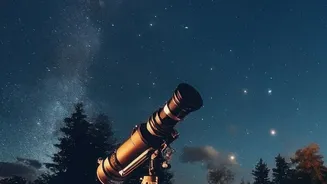
The headline's mention of the 'telescope era' is a fascinating point. The supernova of 1604 appeared just a few years before the telescope was turned toward the heavens. Galileo Galilei would not make his groundbreaking telescopic observations until 1609. This means that the famous German astronomer Johannes Kepler, for whom the supernova is named, studied the event meticulously using only the naked eye and traditional astronomical instruments. Although Kepler wasn't the very first to spot it, his detailed book on the subject, 'De Stella Nova' ('On the New Star'), became the definitive record of the event. The observations were therefore a monumental achievement of pre-telescopic astronomy, happening right on the edge of a technological revolution.
What Kepler Deduced Without a Telescope
Without the aid of a telescope, Kepler and his contemporaries made a crucial discovery that shook the foundations of astronomy. The accepted model of the universe at the time, from the ancient Greek philosopher Aristotle, held that the heavens beyond the Moon were perfect and unchanging. Any new phenomena like comets or 'new stars' were thought to be atmospheric events, occurring close to Earth. However, by carefully trying to measure its parallax—the apparent shift in an object's position when viewed from different locations—Kepler could find none. This lack of a measurable shift proved that the new star was not in Earth's atmosphere but was located far away, in the realm of the 'fixed stars'. This was direct evidence that the heavens were not immutable, providing powerful support for the sun-centered model of the universe proposed by Copernicus.
What We Know Today: A 'Standard Candle'
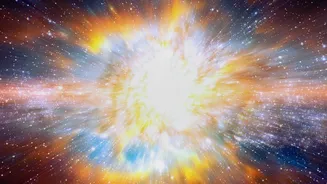
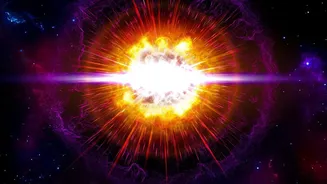
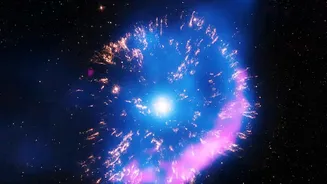
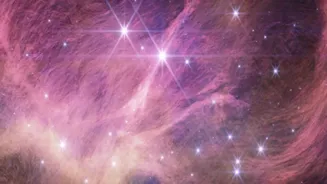
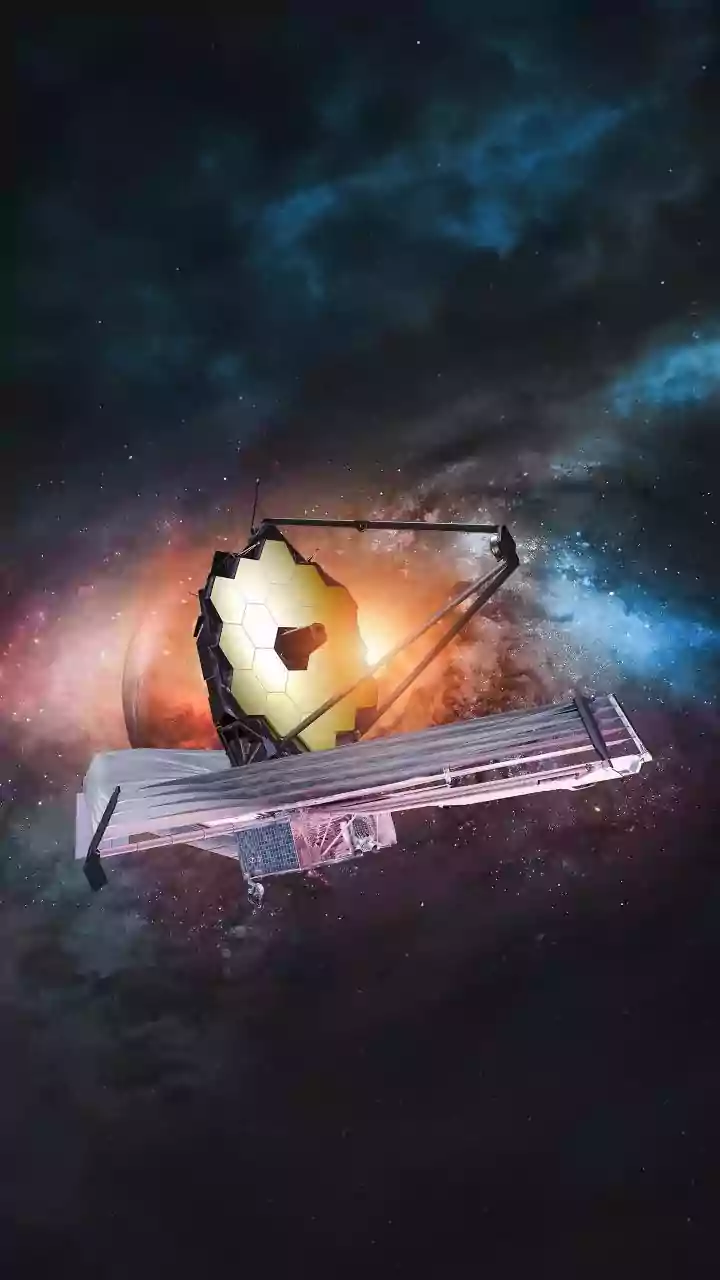
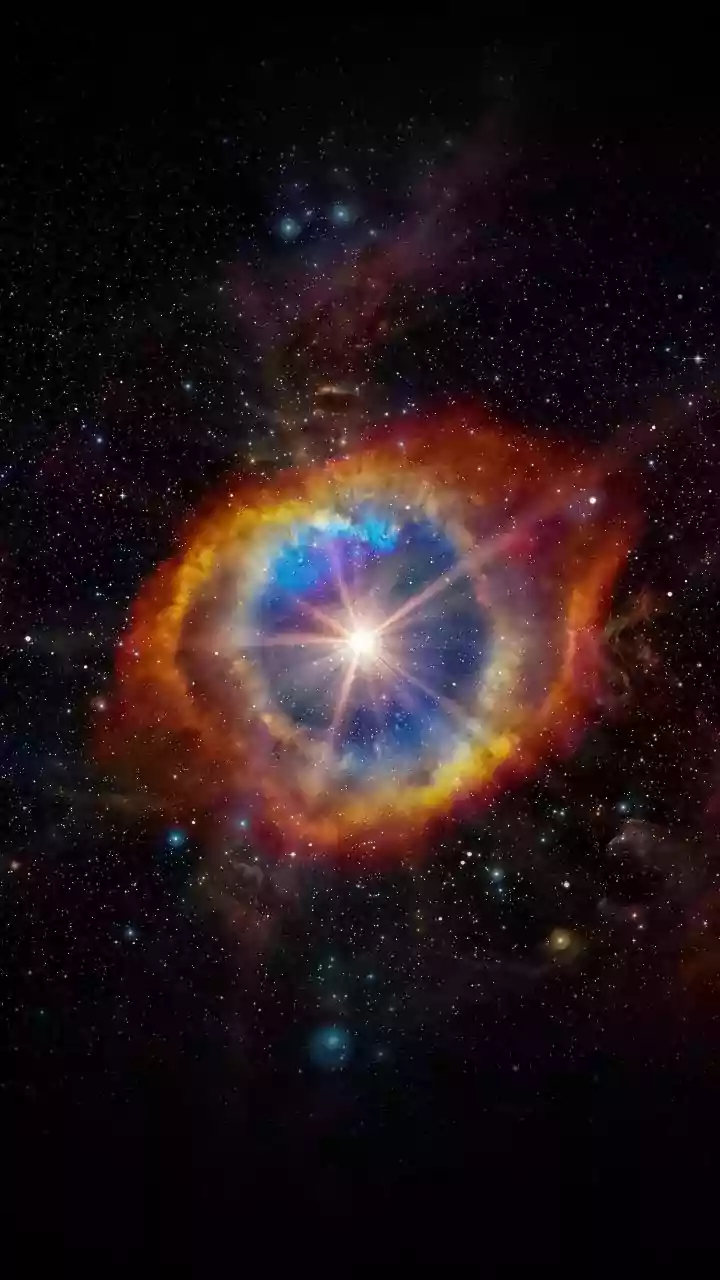
Today, modern observatories like NASA's Hubble, Chandra, and Spitzer space telescopes have studied the expanding cloud of gas and dust left behind by the explosion, known as a supernova remnant. These observations have confirmed that SN 1604 was a Type Ia supernova. This type of explosion occurs in a binary star system when a small, dense star called a white dwarf pulls too much material from its companion star, triggering a catastrophic thermonuclear explosion. Type Ia supernovae are incredibly important to modern astronomy because they always explode with roughly the same intrinsic brightness. This makes them invaluable 'standard candles' that allow astronomers to measure vast distances across the universe and study its expansion.
The Lasting Legacy of SN 1604
Kepler's Supernova was more than just a beautiful sight; it was a turning point. It provided some of the final, crucial naked-eye data that would help dismantle an ancient, Earth-centric worldview and pave the way for modern, evidence-based astronomy. What Kepler and others saw as the birth of a star was actually its violent death—an explosion that created a remnant that is still expanding at millions of miles per hour today. The event stands as a remarkable bookend: the last great cosmic mystery of the pre-telescopic age and a scientific puzzle whose remnants continue to provide vital clues about the nature of our universe four centuries later.