




The Connection: How Your Desk Job Causes Headaches
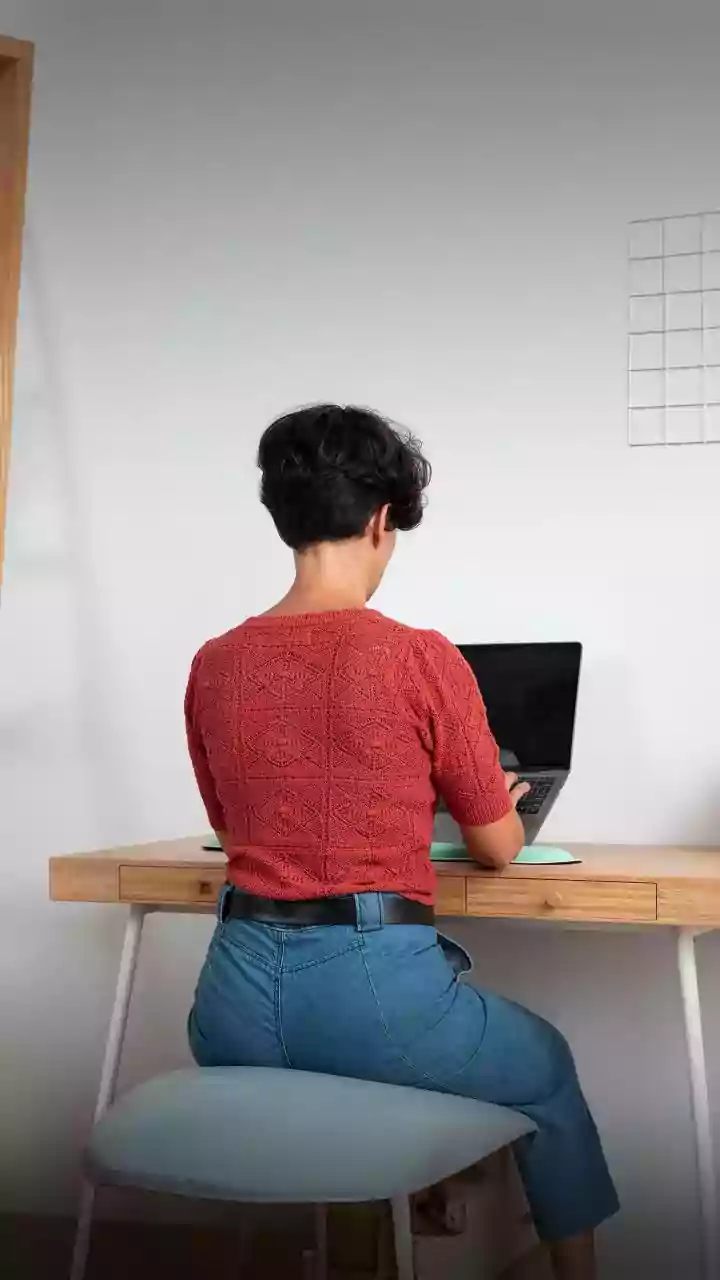
Hours spent hunched over a keyboard or staring down at a laptop screen often lead to a condition known as “forward head posture” or “tech neck.” When your head juts forward, out of alignment with your shoulders and spine, the strain on your neck muscles
increases dramatically. For every inch your head moves forward, its effective weight on your cervical spine can increase by roughly 4.5 kilograms. This sustained tension in the muscles of the neck, shoulders, and the base of the skull can radiate upward, creating the classic pressure and pain of a tension headache. This is often referred to as a cervicogenic headache, meaning a headache that originates from the neck. Over time, this poor posture becomes a chronic habit, leading to more frequent and severe headaches that can disrupt focus and productivity.
What Are Isometric Exercises?
Unlike traditional exercises that involve movement (like lifting a weight or stretching), isometric exercises involve contracting a muscle without any visible change in the joint angle or muscle length. Think of it as pushing or pulling against an immovable object. In the context of neck strengthening, you use your own hand to provide resistance. By engaging the neck muscles in a static hold, you can build strength and endurance in the deep stabilising muscles that are crucial for maintaining good posture. This method is particularly effective because it strengthens the muscles without putting them through a potentially aggravating range of motion, making it a safe starting point for many people experiencing neck-related pain.
How Isometrics Help Relieve Tension
The goal of targeted isometric exercises is to re-train and strengthen the deep cervical flexors and other postural muscles that have become weak and overstretched. When these muscles are stronger, they can more effectively support the weight of your head, keeping it in proper alignment with your spine. This reduces the chronic strain on the superficial muscles, like the upper trapezius, which are often tight and overworked. By restoring this muscular balance, isometrics help to dismantle the underlying cause of posture-induced headaches. Strengthening these key muscles improves your default posture, meaning less stress on your neck throughout the workday and a significant reduction in the frequency and intensity of tension headaches.
Four Simple Isometric Exercises to Start Today
You can perform these gentle exercises right at your desk. Sit tall in your chair with your feet flat on the floor and your head in a neutral position. For each exercise, apply gentle pressure and hold the contraction for 5-10 seconds before relaxing. Repeat each exercise 5 times. 1. Forward Press: Place your palm flat against your forehead. Gently press your head forward into your hand, while your hand provides equal resistance to prevent your head from moving. 2. Backward Press: Clasp your hands behind your head. Gently press your head backward into your hands, while your hands resist the movement. Keep your chin tucked slightly. 3. Side Press (Left): Place your right palm on the left side of your head. Gently press your head to the left, using your hand to provide resistance and keep your head upright. 4. Side Press (Right): Place your left palm on the right side of your head. Gently press your head to the right, using your hand to resist the movement.
Building a Sustainable Routine
The key to reversing posture-induced pain is consistency. Aim to perform these isometric exercises once or twice a day. You can easily integrate them into your workday by setting a reminder to take a short break every hour. Combine these exercises with other good habits, such as ensuring your monitor is at eye level, taking frequent breaks to stand and walk around, and performing simple stretches like chin tucks and shoulder rolls. While these exercises are a powerful tool, they are part of a broader strategy that includes ergonomic adjustments and overall postural awareness. Over time, these small, consistent efforts can lead to significant and lasting relief.