




A New Kind of Lunar Orbit
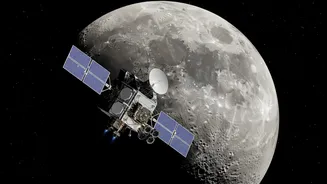
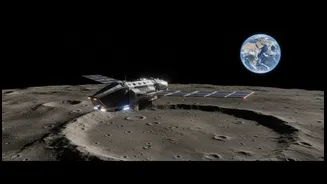
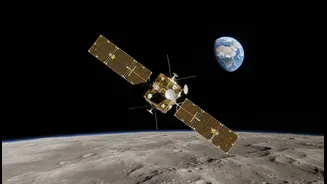
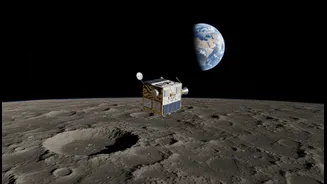
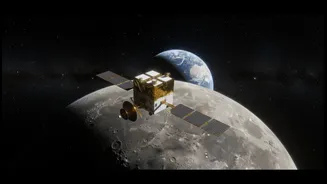
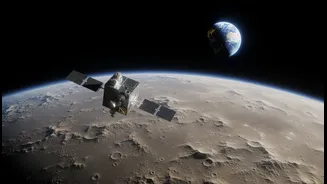
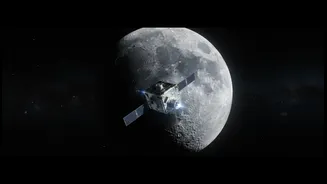
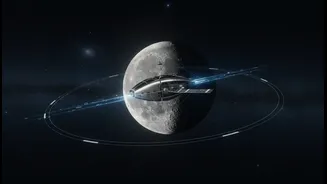
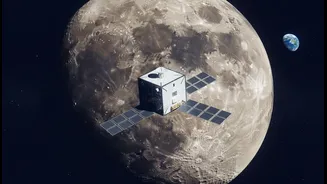
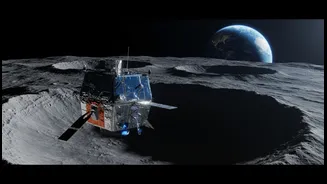
The primary goal of the CAPSTONE mission was to be the first to fly in a unique and promising orbit called a Near-Rectilinear Halo Orbit (NRHO). Unlike a simple circle, this highly elliptical path is carefully balanced between the gravity of the Earth
and the Moon. This stability means spacecraft in an NRHO need very little fuel for station-keeping, making it an ideal staging area for long-term missions. The orbit also ensures a constant line-of-sight to Earth for uninterrupted communications. By successfully flying in this orbit for its entire mission, CAPSTONE proved that the complex computer models were correct and that the NRHO is a viable and efficient place to operate. This validation is crucial for the Artemis program, as this orbit was selected for the future Lunar Gateway space station.
The Challenge of Navigating Deep Space
On Earth, we take GPS for granted. But in the vastness of cislunar space—the area around the Moon—there is no such system. Historically, spacecraft have relied on constant communication with the Deep Space Network on Earth, where operators track the craft's signal to determine its position and send back course corrections. This process is slow, resource-intensive, and creates a bottleneck. As more missions head to the Moon, from government-led expeditions to commercial landers, the demand on these Earth-based antennas will become unsustainable. For humanity to build a sustained presence on the Moon, spacecraft need a way to figure out where they are and where they are going on their own. This is the problem that CAPSTONE’s secondary objective was designed to solve.
A GPS for the Moon
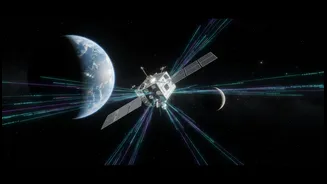
The key technology tested by CAPSTONE is called the Cislunar Autonomous Positioning System (CAPS). This innovative software allows spacecraft to determine their position without relying on ground control. It works through peer-to-peer navigation. During its mission, CAPSTONE sent a signal to NASA’s Lunar Reconnaissance Orbiter (LRO), another spacecraft already orbiting the Moon. By measuring the time it took for the signal to be returned, CAPS could calculate CAPSTONE's distance from LRO and determine its own position and trajectory. This successful demonstration was a major milestone, proving that spacecraft can navigate autonomously in deep space. The system effectively creates a two-satellite GPS network, a concept that could be expanded as more spacecraft arrive at the Moon.
A Resounding Success with Extended Goals
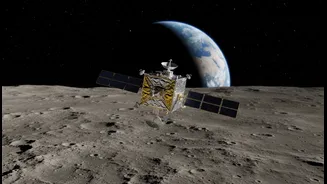
Launched in June 2022, CAPSTONE reached its lunar orbit in November of that year and completed all of its primary mission objectives within six months. NASA then extended the mission, transforming the small satellite into a flexible testbed for other advanced technologies. During this extended phase, CAPSTONE tested autonomous guidance software that allows a spacecraft to calculate its own maneuvers without ground input. It also demonstrated delay/disruption tolerant networking (DTN), a special communications protocol designed to work despite the long delays and interruptions common in deep space. By hosting new software on the existing spacecraft, NASA was able to cost-effectively evaluate how these different autonomous systems work together in a real lunar environment. NASA's official activities with the craft concluded in June 2026 after all primary and extended goals were met.
Paving the Way for Artemis and Beyond
The success of the CAPSTONE mission has far-reaching implications. By validating the stability of the NRHO, it has reduced the risk for the Lunar Gateway, which will serve as a command center and waystation for Artemis astronauts traveling to the lunar surface. The demonstration of the CAPS autonomous navigation system is even more significant. It lays the groundwork for a future where lunar missions are more independent, efficient, and resilient. Spacecraft will be able to manage their own navigation, freeing up the Deep Space Network to handle critical science data instead of routine tracking. This leap forward in autonomous technology is not just for the Moon; it is essential for enabling future crewed missions to Mars and other destinations across the solar system, where the communication delays are too great for real-time control from Earth.