
The Heart of the Matter: Choosing Your Teas
All 'true' teas originate from a single plant: Camellia sinensis. The incredible diversity in flavour, colour, and aroma comes from how the leaves are processed. For a tasting, aim to select three to five different teas to showcase this variety. Start
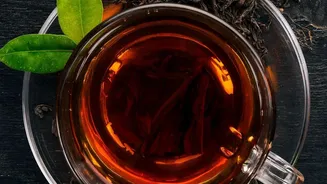
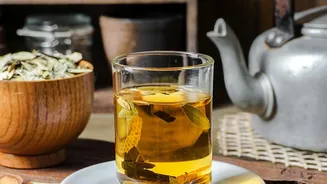
with the main categories: White Tea, the least processed and most delicate, with buds often harvested in early spring. Green Tea is unoxidized; the leaves are heated to prevent browning, preserving a fresh, vegetal character. Oolong Tea is partially oxidized, sitting somewhere between green and black teas, offering a huge spectrum of flavours from floral to toasty. Black Tea is fully oxidized, which creates deep, malty, and robust flavours. Including these types will give your guests a fantastic journey across the flavour spectrum.
The Art of the Brew: Temperature and Time
Brewing is where tea comes alive, and the two most important factors are water temperature and steeping time. Getting this right is the secret to a delicious cup and the single biggest mistake most people make. Delicate teas need cooler water, while robust ones can handle the heat. As a rule, never use boiling water for green or white tea, as it will scorch the leaves and create a bitter taste. For a simple setup, boil your kettle and let it cool for a few minutes before pouring.Here’s a quick guide:- White Tea: Use water between 160–185°F (70–85°C). Steep for 3 to 5 minutes. This tea is delicate, but it needs time for its subtle flavours to unfold.- Green Tea: Ideal temperature is 160–180°F (70–80°C). Steep for just 1 to 3 minutes. Any longer and it can quickly become astringent.- Oolong Tea: This varies widely, but a good range is 185–205°F (85–96°C). Steep for 3 to 5 minutes. These leaves are often good for multiple infusions.- Black Tea: This is the most forgiving. Use water just off the boil, around 200–212°F (93–100°C), and steep for 3 to 5 minutes.
Setting the Scene: What You'll Need
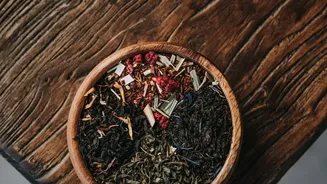
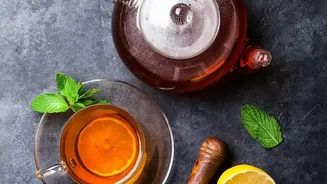
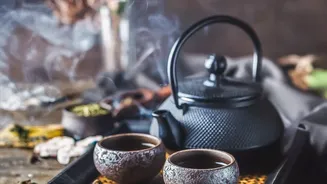
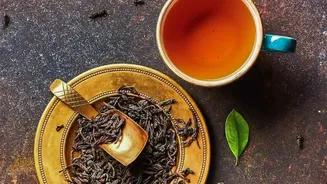
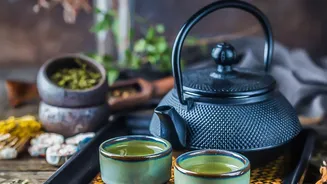
You don’t need a lot of fancy equipment to host a beautiful tasting. The essentials are simple: your chosen teas, a kettle or pot to heat water, and a cup for each guest. White or light-coloured cups are best as they allow everyone to appreciate the colour of the brewed tea. You'll also need a way to steep the leaves, whether it's one teapot you use for all the teas (rinsing between each) or individual infusers for each cup. Small bowls to display the dry leaves are a nice touch, allowing guests to examine their shape and aroma before brewing. Finally, have some notecards and pens ready. This encourages guests to jot down their thoughts on aroma, colour, and taste for each tea, making the comparison more interactive and fun.
From Sip to Savour: Guiding the Tasting
To best appreciate the nuances, it's wise to taste the teas in a specific order: from lightest to boldest. Start with white tea, move to green, then oolong, and finish with black tea. This prevents the stronger flavours from overwhelming the more delicate ones. As you serve each tea, encourage your guests to follow a simple three-step process: look, smell, and sip. First, observe the colour of the liquor in the cup. Next, inhale the aroma. Finally, take a small, slightly noisy sip, allowing the tea to wash over your entire palate to capture all the flavours. Ask questions like, 'What does it smell like?' or 'What flavours do you notice?'. There are no wrong answers; it's all about personal discovery.
Simple Snacks and Palate Cleansers
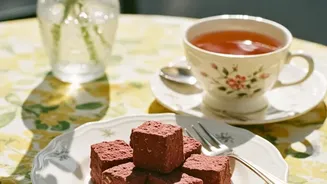
While the tea is the star, having some simple snacks can enhance the experience. The key is to choose foods that won't overpower the tea's flavour. Plain water crackers, unsalted nuts, or a very light, simple butter cookie are excellent choices. These act as palate cleansers between different teas. If you want to offer more substantial pairings, consider the tea's profile. Light green teas pair well with seafood and salads, while robust black teas can stand up to rich foods like dark chocolate or hearty cheese. Delicate white teas are best with the mildest of foods, like a light white fish or basmati rice, so their subtle notes aren't lost.