




Master the Soil Mix
The foundation of good drainage lies beneath the surface. Heavy, clay-based soils retain too much water, leading to root rot. For monsoon season, a light, well-aerated potting mix is non-negotiable. Create a blend using garden soil or cocopeat, compost,
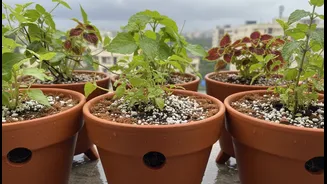
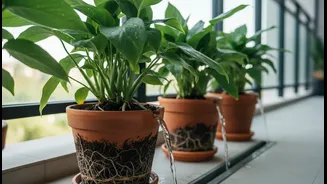
and a coarse material like perlite or sand. A good recipe is 40% soil/cocopeat, 40% compost, and 20% perlite or coarse sand. This combination ensures that while the soil holds essential moisture, any excess water from heavy showers can easily drain away, preventing the roots from sitting in water.
Choose the Right Pots
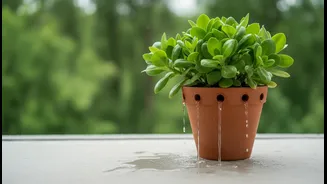
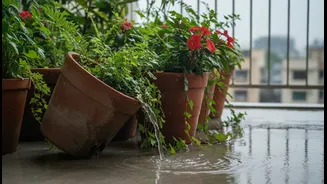
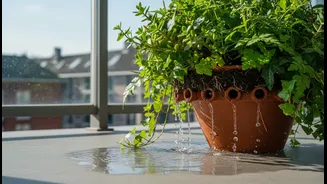
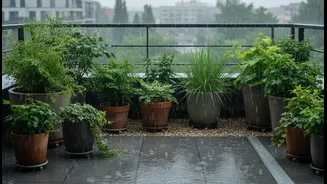
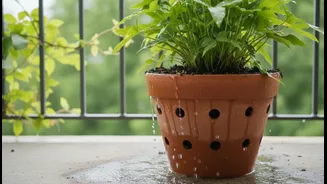
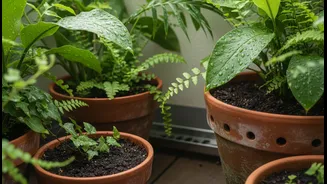
Not all pots are created equal, especially during the monsoon. Terracotta or clay pots are porous and allow excess moisture to evaporate through their walls, making them a great choice. Regardless of the material, ensure every pot has multiple drainage holes at the bottom. If your favourite decorative pot has no holes, you have two options: drill them yourself or use the cachepot method. Simply place a smaller pot with drainage holes inside the larger decorative one, ensuring you empty any collected water from the outer pot regularly.
Elevate Your Pots for Better Airflow
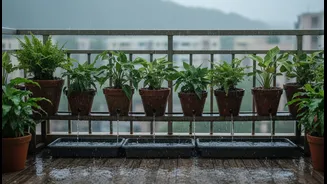
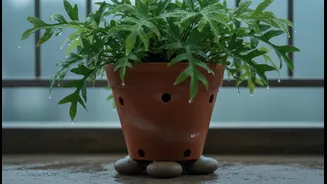
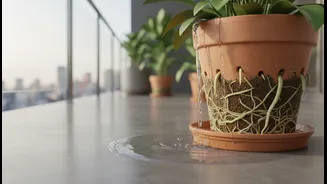
One of the simplest yet most effective drainage solutions is to lift your pots off the ground. When a pot sits directly on the balcony floor, the drainage holes can easily become blocked or the water can't escape effectively. Using 'pot feet', bricks, or even simple wooden blocks to elevate your containers by just an inch or two makes a world of difference. This small gap allows for better air circulation under the pot and ensures that excess water can drain freely, preventing waterlogging and protecting your balcony surface from stains.
Create an Internal French Drain
While the old advice of adding a thick layer of gravel or broken pot shards at the bottom of pots is now contested by some experts, a modified version can still be useful. Before adding your soil mix, placing a layer of gravel or small stones can help prevent the fine soil from immediately clogging the drainage holes. This creates a small reservoir where water can collect before exiting, but the key is to ensure your soil mix itself is well-draining so water doesn't get trapped above this layer, creating what's known as a 'perched water table'.
Aerate the Soil Mid-Season
Constant, heavy rainfall can compact the top layer of soil in your pots, reducing air supply to the roots and slowing down drainage. You can combat this by gently aerating the soil. Use a small hand fork, a chopstick, or a skewer to carefully poke several deep holes into the soil, being mindful to avoid the plant's main root ball. This action creates small channels that break up compaction, allowing air to penetrate the root zone and helping trapped water to evaporate and drain more effectively.
Check the Balcony's Slope and Outlets
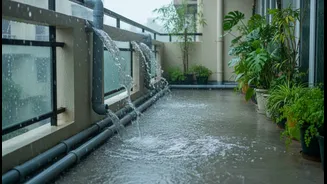
Sometimes the problem isn't just the pots, but the balcony itself. Check that your balcony has a gentle slope towards the main drainage outlet to prevent water from pooling in corners. Keep the main drain itself clear of leaves, soil, and other debris that can cause blockages. If you have a large balcony, you might consider installing linear or channel drains to manage large volumes of water more efficiently. A clean and functional balcony drain is crucial for preventing a build-up of water that can affect all your plants.
Strategic Watering and Shelter
During the monsoon, you must change your watering habits. The rain will do most of the work for you. Only water your plants when the top 1-2 inches of soil feel dry to the touch. Overwatering is the most common mistake during this season. For plants that are particularly sensitive to excess moisture, like succulents, consider moving them to a sheltered spot under an overhang or a roof where they get the humidity without the direct, relentless downpour.