






More Than Just a Soup
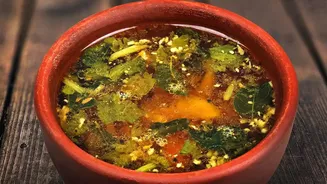
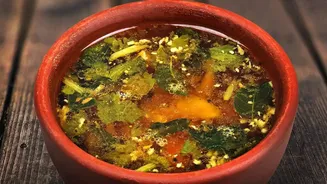
Rasam is a thin, tangy broth that holds a cherished place in South Indian cuisine. While many varieties exist, pepper rasam—known as milagu rasam in Tamil—is the go-to version when someone feels under the weather. It’s lighter than a curry and less dense
than a dal, often served mixed with hot steamed rice or simply sipped warm from a tumbler. This dish is more than just a meal; it’s a ritual, a comforting tradition passed down through generations, embodying the intimate connection between food and care in Indian households.
The Power of Its Parts
The magic of pepper rasam lies in its simple, yet potent, ingredients, each chosen for flavour and traditional properties. Black pepper, the star of the dish, is prized for its warming quality. It contains piperine, a compound that gives pepper its characteristic heat. Cumin and garlic are added for their aromatic depth and are traditionally used to aid digestion and soothe the body. Tamarind provides the rasam’s signature tangy base and is rich in antioxidants. Turmeric, with its earthy notes and vibrant colour, and asafoetida, for its savoury kick, round out this powerful blend of spices. Together, they create a broth that is both deeply flavourful and nourishing.
An Authentic Pepper Rasam Recipe
This recipe delivers a classic pepper rasam, perfect for a cold day. For the Spice Powder: - 1.5 tsp black peppercorns - 1.5 tsp cumin seeds - 4-5 cloves of garlic, lightly crushed For the Rasam: - 1 small lime-sized ball of tamarind, soaked in 1 cup of warm water - 1 large tomato, chopped - 1/4 tsp turmeric powder - A pinch of asafoetida (hing) - Salt to taste - 3 cups of water - A handful of fresh coriander leaves, chopped For Tempering (Tadka): - 1 tsp ghee or sesame oil - 1/2 tsp mustard seeds - 1-2 dried red chillies - 1 sprig of curry leaves Method: 1. Coarsely crush the peppercorns, cumin seeds, and garlic using a mortar and pestle. Set aside. 2. Squeeze the soaked tamarind to extract its juice into the water. Strain the liquid into a pot and discard the pulp. 3. To the pot, add the chopped tomato, turmeric powder, asafoetida, and salt. Bring the mixture to a simmer over medium heat and cook for about 5-7 minutes, until the raw smell of the tamarind disappears. 4. Add the crushed spice powder and the remaining 3 cups of water. Let the rasam heat up until it becomes frothy and is about to boil, then immediately turn off the heat. Avoid boiling it vigorously, as this can make it bitter. 5. For the tempering, heat the ghee or oil in a small pan. Add the mustard seeds and wait for them to splutter. Then add the dried red chillies and curry leaves, and fry for a few seconds. 6. Pour the hot tempering into the rasam, add the chopped coriander leaves, and cover the pot for a few minutes to let the flavours meld.
How to Best Enjoy Your Rasam
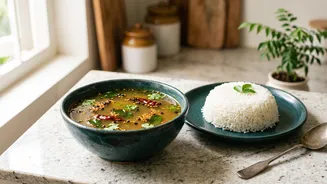
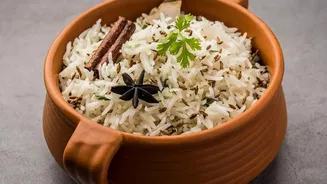
Pepper rasam is wonderfully versatile. The most traditional way to enjoy it is poured over a mound of hot, fluffy rice, sometimes with a dollop of ghee to mellow the spice. You can mash the rice slightly to let it better absorb the broth. Alternatively, pour it into a small bowl or steel tumbler and sip it slowly like a soup. This method is especially comforting when you have a sore throat or feel congested. No matter how you serve it, the warming, pungent aroma is an experience in itself, offering comfort long before the first sip.