







The Science of the Siesta
When you mix flour and water and begin to knead, you're creating an intricate network of proteins called gluten. Think of this network as millions of tiny, tangled elastic bands. The more you knead, the tighter and more developed this network becomes.
Immediately after kneading, these gluten strands are tense and coiled up, which is why the dough feels tight and springs back when you try to roll it. Resting the dough is like giving those tense gluten strands a chance to relax. During this rest period, the gluten network loosens up, making the dough more pliable and extensible, or stretchy. At the same time, another crucial process is happening: hydration. The flour continues to absorb water, distributing moisture evenly throughout the dough. This leads to a smoother, more homogenous texture, eliminating any dry, lumpy spots.
From Frustration to Flawless Flatbreads
So, what does this scientific siesta mean for your final product? The benefits are tangible and transform your cooking experience. First, a relaxed, well-hydrated dough is significantly easier to roll. Instead of fighting back, it yields willingly to the rolling pin, allowing you to create thin, even circles without them shrinking. This even thickness is the key to uniform cooking. An evenly rolled roti or paratha will cook consistently across its surface on a hot tawa, preventing those annoying patches that are either burnt or undercooked. Furthermore, the even distribution of moisture ensures that steam can build up properly within the dough as it cooks. This is what creates that magical puff, resulting in soft, layered rotis that stay tender for hours. A short rest also improves flavour and texture, allowing enzymes to begin breaking down starches into simpler sugars, adding a subtle depth to the final taste.
The Roti and Paratha Rule
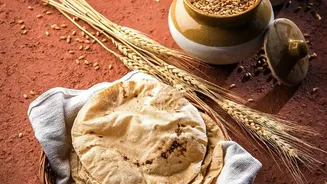
For everyday Indian flatbreads like rotis, chapatis, and parathas, the resting process is simple and doesn't require a long wait. A resting period of 20 to 30 minutes is generally considered ideal. After kneading your atta to a soft, pliable consistency, simply place it in a bowl and cover it to prevent it from drying out. You can use a tight-fitting lid, a damp tea towel, or even a piece of plastic wrap. This cover traps moisture, preventing a dry 'skin' from forming on the surface of the dough, which would interfere with smooth rolling. For puris, a slightly shorter rest of 15-20 minutes is often sufficient. While you can technically use the dough immediately, taking this short break makes a world of difference in the final texture and ease of handling.
Beyond the Tawa
This principle isn't just for Indian breads. Resting is a fundamental step in almost all baking, from pizza to artisanal bread loaves. Pizza dough is rested to make it easy to stretch into a thin, even base without tearing. Bread dough undergoes multiple resting periods (sometimes called proofing) to allow the yeast to work its magic, developing flavour and creating the light, airy texture we love. In fact, some professional baking techniques, like 'autolyse', involve a designated rest period for just flour and water before even adding salt or yeast, specifically to kickstart hydration and gluten relaxation. While the timings and specific goals may differ—a bread dough might rest for hours, while a pie crust rests in the fridge—the core reason remains the same: to relax gluten and manage hydration for a better final product.
Simple Pitfalls to Sidestep
While resting dough is a simple technique, there are a couple of common mistakes to avoid. The most frequent error is not covering the dough. Left exposed to air, the surface will quickly dry out and form a crust, leading to cracks when you roll and an unpleasant texture. Always cover the dough with a damp cloth, a lid, or plastic wrap. Another potential issue, particularly with yeast-leavened doughs, is resting for too long at room temperature, which can lead to over-fermentation, where the gluten structure weakens and the dough can collapse. For simple atta dough, while over-resting isn't as critical, letting it sit for many hours can sometimes make it a bit too sticky or change the texture. Sticking to the recommended 20-30 minute window generally gives the best and most consistent results.