



First, What Is Tteokbokki?
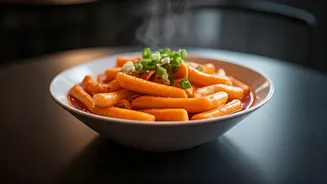
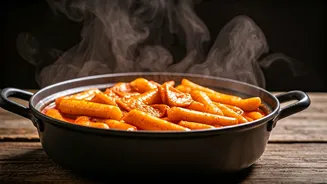
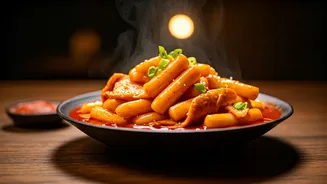
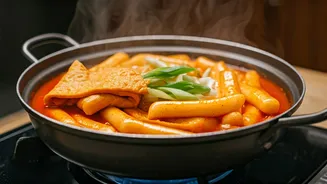
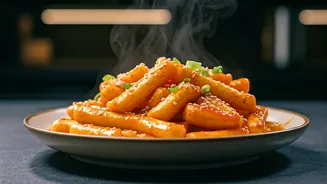
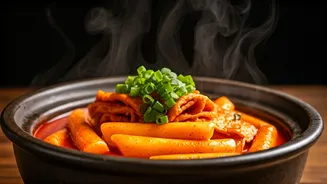
Before we get into the why, let’s cover the what. Pronounced ‘tok-bok-ki’, this is one of South Korea's most popular street foods. The star of the dish is tteok, or rice cakes, which are typically long, cylindrical, and satisfyingly chewy. These are simmered
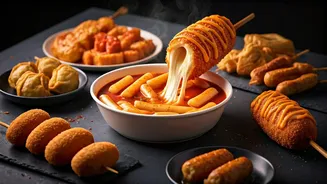
in a vibrant sauce made primarily from gochujang (a fermented Korean chilli paste), which gives the dish its signature spicy, sweet, and deeply savoury flavour. Often, fish cakes (eomuk), boiled eggs, and scallions are added to the mix, turning it from a simple snack into a hearty, shareable meal. Think of it as a comforting, spicy, and texturally interesting stew that’s meant to be eaten hot and with friends.
The K-Wave Kick-starter
The most obvious reason for tteokbokki’s meteoric rise is Hallyu, or the Korean Wave. For years, young Indians have been consuming K-dramas and K-pop with voracious enthusiasm. In countless shows, from 'Vincenzo' to 'True Beauty,' characters are seen gathering around a bubbling pan of tteokbokki after a long day, during a celebration, or simply as a comforting late-night snack. This constant, organic placement has done more than any marketing campaign could. It presented tteokbokki not just as food, but as a cultural artifact associated with friendship, comfort, and the lives of beloved characters. When you see your favourite idol or actor slurping up noodles and rice cakes, the desire to experience it yourself becomes irresistible.
A Surprisingly Familiar Palate
While K-dramas opened the door, the flavour is what keeps people coming back. At first glance, Korean food might seem alien, but tteokbokki’s flavour profile strikes a deeply familiar chord with the Indian palate. We are a nation that understands and loves complex heat. The spicy kick of gochujang, balanced by a subtle sweetness and a rich umami depth, is not far from the flavour dynamics of many Indian gravies. It’s spicy, but not just for the sake of it; there’s a layered complexity that we appreciate. The chewy texture of the rice cakes might be new, but it provides a satisfying mouthfeel that’s incredibly moreish. It’s a novel experience built on a familiar foundation of spice and comfort.
Made for Sharing
Indian food culture is inherently communal. We gather around daals, curries, and biryanis, sharing from common pots. Tteokbokki fits this social dining model perfectly. It’s typically served in a large, shallow pan or bowl placed in the centre of the table, with everyone digging in. This act of sharing a warm, bubbling pot of food fosters conversation and connection. It’s an interactive experience, a world away from a plated, individual meal. For a generation that values experiences over possessions, sharing a pot of tteokbokki with friends is an activity in itself. It’s a chance to bond, chat, and create a shared memory over a delicious, comforting meal—a ritual that feels both modernly global and culturally Indian.
The Visual Appeal
Finally, in the age of social media, we eat with our eyes first—and tteokbokki is incredibly photogenic. The deep, vibrant red of the sauce, the glossy sheen on the rice cakes, and the optional topping of glistening, melted cheese make for a visually stunning dish. It’s bold, it’s colourful, and it looks exactly as delicious as it tastes. This has made it a star on Instagram Reels and TikTok videos, with countless tutorials on how to make it at home and mesmerising shots from restaurants. The dish’s visual appeal creates a powerful feedback loop: people see it online, they get curious, they try it, they post it themselves, and the cycle of popularity continues to grow.