



In the vast cosmic theater, some objects defy easy categorization. Meet the brown dwarf: too small to be a star, yet too massive to be a planet. Now, a new study from NASA's SPHEREx telescope is revealing just how unique these celestial loners truly are.
The Cosmic Middle Child
First, what exactly is a brown dwarf? Often called 'failed stars', these objects form from collapsing clouds of gas and dust, just like stars. However, they never accumulate enough mass to kickstart the sustained hydrogen fusion that makes stars like our sun shine. Instead of being stellar powerhouses, they are more like celestial embers, glowing dimly from the heat left over from their formation and from fusing a heavier form of hydrogen, called deuterium, early in their lives. Weighing in at about 13 to 80 times the mass of Jupiter, they occupy a fascinating middle ground, possessing characteristics of both giant planets and small stars.
An Eye in the Infrared Sky
Observing these dim objects has always been a challenge, as they emit most of their light in the infrared spectrum, invisible to the human eye. This is where NASA’s SPHEREx mission comes in. Launched in March 2025, the Spectro-Photometer for the History of the Universe, Epoch of Reionization and Ices Explorer (SPHEREx) is designed to survey the entire sky in near-infrared light. It creates a map of the cosmos in 102 different color bands, providing an unprecedented level of detail. This capability makes it perfectly suited for hunting down and analyzing the faint, cool glow of brown dwarfs scattered throughout our galaxy.
A 'Menagerie' of Atmospheres
The recent study, published in The Astrophysical Journal, analyzed 37 nearby brown dwarfs across a vast temperature range, from a scorching 2,200 degrees Celsius down to a frigid minus 20 degrees Celsius. The detailed spectra captured by SPHEREx revealed that their atmospheres are chemically rich, containing molecules like water, methane, carbon monoxide, and carbon dioxide. The key finding, however, was the sheer variety. According to Zafar Rustamkulov, the study's lead author, 'No two brown dwarfs are alike. Even at the same temperature, their spectra look quite distinct'. This directly challenges previous models that suggested more uniformity.
Clouds, Chemistry, and Change
So why are they so different? The answer appears to lie in their atmospheric dynamics, which are proving to be as complex and unpredictable as weather on Earth. As a brown dwarf ages and cools, its atmospheric chemistry changes. The SPHEREx data showed that some of these objects are caught in a dynamic transition where their exotic clouds thin out, allowing methane-rich conditions to emerge. Current atmospheric models struggle to replicate this diversity, particularly for those in this transitional phase. It suggests that factors like age, composition, and perhaps even their formation history create a unique atmospheric fingerprint for each brown dwarf.
Why These 'Goth' Worlds Matter
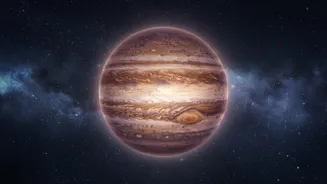
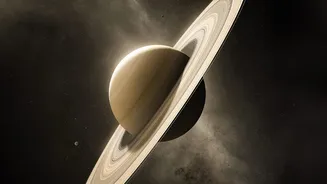
Studying these 'goth' worlds, as Rustamkulov playfully called them for their tendency to 'fade into eternity alone', is about more than just cataloging cosmic oddities. Because most brown dwarfs are free-floating and not obscured by the glare of a host star, they serve as perfect laboratories for understanding planetary atmospheres. The insights gained from their complex weather and chemistry can be applied to gas giants in our own solar system, like Jupiter and Saturn, as well as massive exoplanets orbiting other stars. This research turns astronomers into 'accidental meteorologists', as coauthor J. Davy Kirkpatrick noted, helping them understand the fundamental processes that shape worlds far beyond our own.