




Prioritise Your Bed's Position
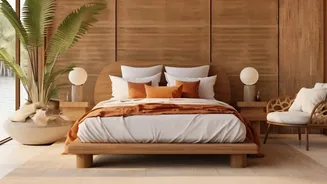
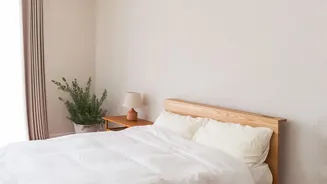
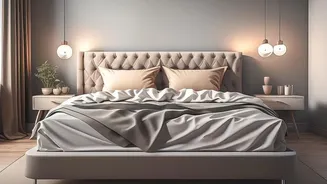
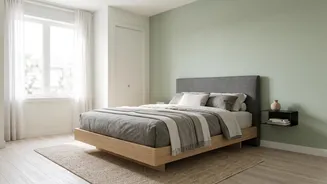
The bed is the largest piece of furniture, so its placement is critical. Avoid blocking the window at all costs. Instead, place your bed on the wall opposite or adjacent to the window. This allows light to flow into the room unobstructed, creating an
immediate sense of openness. Positioning the bed so it is bathed in morning light can also make waking up a more pleasant experience. If your room is very narrow, placing the bed along the longest wall can help elongate the perception of space, making the layout feel more balanced. Maintaining clear pathways for light to travel is the primary goal.
Choose Low-Profile and Leggy Furniture
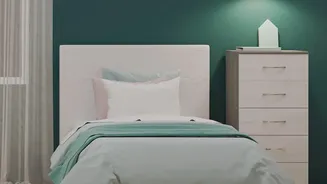
Heavy, bulky furniture can absorb light and make a room feel crowded. Opt for pieces with a lower profile, like a shorter headboard and a sleek dresser. Furniture that is raised on legs—such as bedside tables or consoles—is an excellent choice for small spaces. When you can see the floor underneath, it creates an illusion of more space and allows light to move more freely around the room. This principle applies to TV units and storage as well; floating or wall-mounted shelves and cabinets free up floor space, making the room feel lighter and less cluttered.
Harness the Power of Mirrors
Mirrors are an essential tool for amplifying light. A well-placed mirror can dramatically brighten a room and create the illusion of depth. The most effective strategy is to position a large mirror on the wall opposite a window. This will capture the incoming daylight and bounce it back into the room, making the entire space feel brighter and more expansive. You can use a large, floor-length mirror propped against a wall or hang a decorative mirror as a focal point. Even mirrored wardrobe doors can double the sense of space and light, proving that mirrors are a small bedroom's best friend.
Embrace Smart, Vertical Storage
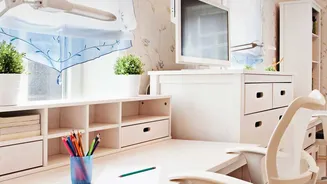
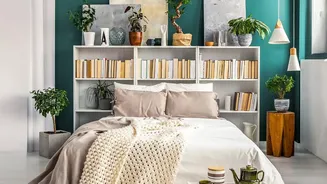
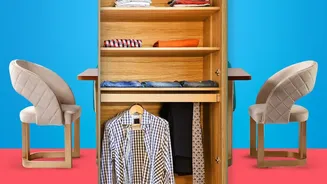
Clutter can quickly shrink a small room and create shadows where light should be. To keep your bedroom organised without sacrificing floor space, think vertically. Tall, narrow bookshelves draw the eye upward and make ceilings feel higher. Wall-mounted shelves are perfect for books and decor without adding bulk. When it comes to wardrobes, sliding doors are far superior to swinging ones in a tight space, as they don't require clearance to open. Another key solution is a bed with integrated storage, such as hydraulic lift-up bases or built-in drawers, which can often eliminate the need for an extra cupboard.
Use a Light and Airy Colour Palette
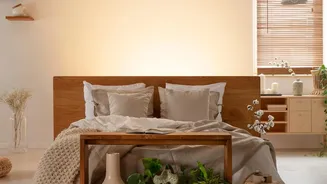
The colours of your walls and furniture play a huge role in how light interacts with the space. Light and neutral palettes are highly effective at making small rooms feel bigger. Soft whites, creamy off-whites, pale greys, and light beiges reflect light rather than absorb it, creating an airy, open feeling. Painting the walls and ceiling the same light colour can blur the boundaries of the room, making it feel more expansive. This doesn't mean the room has to be boring; you can introduce pops of colour through accent pillows, artwork, or a single piece of furniture, while keeping the main surfaces light to maximise brightness.
Rethink Your Window Treatments
Heavy, dark curtains can stop natural light in its tracks. To make the most of your window, choose lightweight and simple window treatments. Sheer or gauzy curtains in a light colour like off-white or oatmeal will provide privacy while still allowing soft, diffused light to filter through. Another great option is a roller shade or blind that can be pulled up tight to the top of the window, almost disappearing and leaving the glass fully exposed. To create an illusion of height, hang your curtain rod higher and wider than the window frame. This trick makes the window appear larger and the ceiling taller, further enhancing the sense of space.