
Why Your Pepper Needs a Second Look
Black pepper's popularity and relatively high price make it a prime candidate for food fraud. Unscrupulous sellers may mix it with cheaper, look-alike substances to increase their profit margins. These adulterants not only cheat you on flavour and quality
but can sometimes pose health risks. The most common culprits are dried papaya seeds, but other fillers like lightweight berries, seed husks, or even sawdust in ground pepper can be found. Another practice is coating old peppercorns with mineral oil to make them appear fresh and glossy. While spotting every possible impurity at home is difficult, a few quick visual and physical tests can reveal the most frequent offenders, empowering you to make better choices. The best defence starts with buying whole peppercorns rather than pre-ground powder, as whole spices are much harder to fake.
The Papaya Seed Imposter
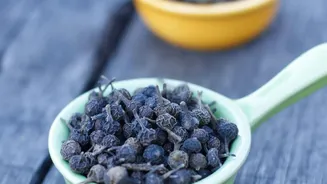
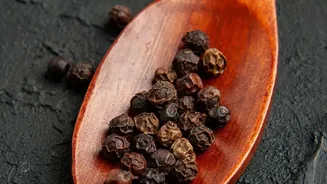
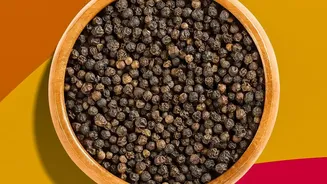
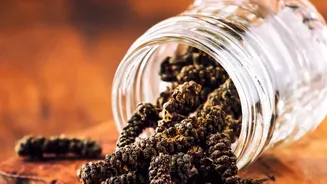
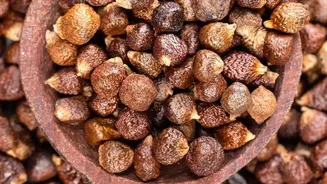
Dried papaya seeds are the most common adulterant because they look strikingly similar to black peppercorns at a casual glance. However, a closer look reveals key differences. Spread some of your whole pepper on a white plate. Genuine peppercorns are typically dark brown to black with a distinctly rough and wrinkled surface. Papaya seeds, in contrast, are often slightly oval or shrivelled, with a smoother texture, and may have a greenish-brown tint. If you press a peppercorn firmly, it should be hard and resist breaking. A papaya seed, being softer, will crush more easily. While a few stray look-alikes might not mean the whole batch is bad, a significant number of these imposters is a clear red flag.
A Simple Purity Test in Water
One of the most reliable at-home methods, recommended by the Food Safety and Standards Authority of India (FSSAI), is the water test. Simply drop a spoonful of whole peppercorns into a clear glass of water. Good-quality, dense peppercorns will sink to the bottom. Most adulterants, including dried papaya seeds and hollow, immature pepper berries, are lighter and will float on the surface. This simple test is an excellent first step to quickly gauge the purity of your pepper. If you see several 'berries' floating, scoop them out and examine them more closely for the visual characteristics of papaya seeds. For this test to be accurate, use at least a tablespoon of pepper so a single odd berry doesn't mislead you.
Spotting an Unnatural Sheen
To make old or low-quality stock look appealing, some suppliers coat peppercorns with mineral oil. This gives them an unnatural, glossy black shine. While it may look premium, this coating is a significant concern. Rub a few peppercorns between your palms or on a piece of white paper. If they leave behind a greasy, oily residue, they have likely been coated. You may also detect a faint smell of kerosene or petroleum. Consuming mineral oil, which is a petroleum derivative, can lead to health issues. According to European food safety agencies, certain types of mineral oil aromatic hydrocarbons (MOAH) are a particular worry as they may have carcinogenic properties. Pure, unadulterated pepper should have a dull, matte surface, not a shiny, greasy one.
When Sight and Touch Aren't Enough
Beyond visual cues, your sense of smell and taste are powerful tools. Crush a few peppercorns between your fingers or with a heavy object. Genuine black pepper should release a strong, sharp, and pungent aroma. If the smell is weak, dusty, or musty, the pepper is likely old or of poor quality. Papaya seeds, when crushed, have a comparatively bland or even repulsive flavour and lack the characteristic spicy kick of piperine, the active compound in pepper. Always trust your senses. If something looks, feels, or smells off, it's better to be cautious. These simple checks can't detect every type of adulteration, like chemical contaminants, but they are highly effective at weeding out the most common physical fillers you're likely to encounter.