



The New Lunar Gold
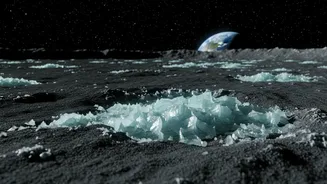
Water is the most valuable currency for future space ambitions, and the Moon may have it in abundance. This isn't just about finding something for astronauts to drink. Water (H2O) can be split into hydrogen and oxygen. Oxygen is essential for life support,
and both elements are the primary components of rocket fuel. The ability to source water on the Moon would mean future space missions could refuel at a lunar base instead of having to carry all their fuel from Earth. This drastically reduces launch weight and cost, making the Moon a potential pit stop for deeper space missions, including those to Mars. Recent studies by ISRO and other institutions suggest that the amount of subsurface ice could be five to eight times larger than what's on the immediate surface, making the prospect of extraction even more tantalizing.
Journey to the Coldest Craters
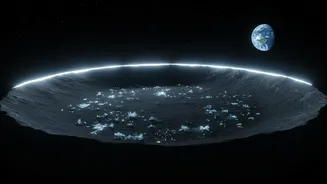
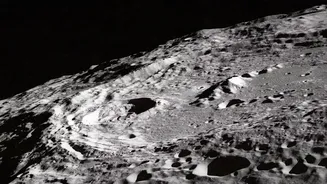
The most promising locations for this water-ice are the Moon's Permanently Shadowed Regions (PSRs), primarily at the south pole. These are craters and depressions that haven't seen direct sunlight in billions of years. Temperatures inside these craters can plummet to as low as -248 degrees Celsius, creating a perfect 'cold trap' that preserves ice. However, these extreme conditions present immense challenges. Without sunlight, solar-powered rovers cannot function, and the cryogenic temperatures are brutal on electronics and mechanical systems. Exploring these dark, frozen landscapes requires a new generation of robust technology capable of surviving and operating in one of the most hostile environments in our solar system.
ISRO’s Advanced Toolkit
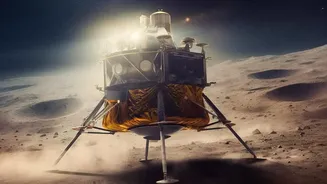
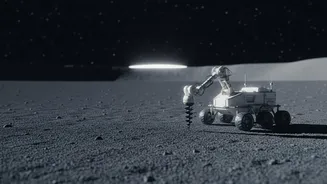
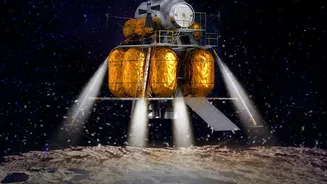
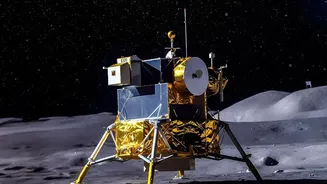
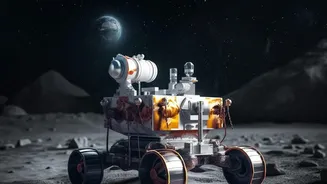
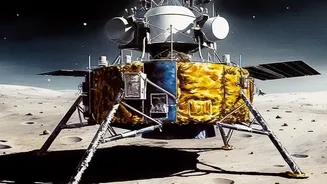
India's answer to this challenge is the Lunar Polar Exploration Mission (LUPEX), a collaborative effort between ISRO and the Japan Aerospace Exploration Agency (JAXA). ISRO is developing the lander, while JAXA is responsible for the launch vehicle and the rover. Scheduled to launch no earlier than 2028, this mission is specifically designed for prospecting in the lunar south pole. The rover will be equipped with a drill capable of penetrating up to 1.5 meters below the surface to collect samples. Onboard instruments from ISRO, JAXA, NASA, and the European Space Agency will work together to analyze these samples on the spot. This includes a Ground Penetrating Radar to find promising drill locations and spectrometers to measure the quantity and composition of the water and other volatile compounds.
How to Mine on the Moon
The process of using local materials in space is called In-Situ Resource Utilisation (ISRU), and it's central to the LUPEX mission. Once the rover's instruments, including a NASA-provided Neutron Spectrometer, detect a high concentration of hydrogen (a sign of water), it will deploy its drill. The collected subsurface soil, or regolith, will be heated in a specialized onboard oven. As the ice in the sample turns to vapour, instruments like a mass spectrometer will analyze its composition. This will confirm not only the presence of water but also its purity and whether other useful or potentially hazardous compounds like mercury are present. This process of drilling, extracting, and analyzing a sample directly on the Moon is a crucial technological demonstration for future, larger-scale mining operations.