


What You Are Actually Seeing
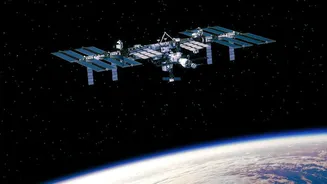
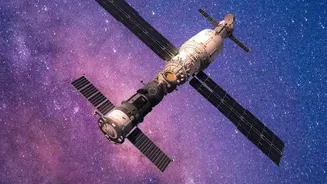
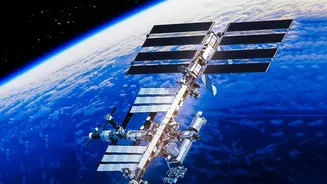
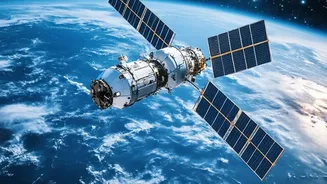
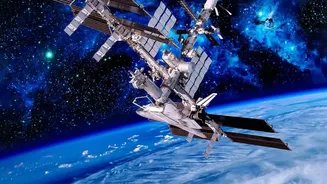
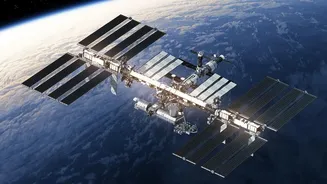
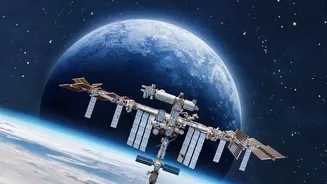
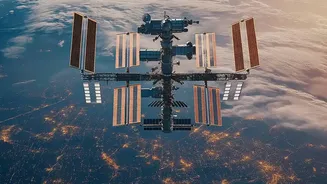
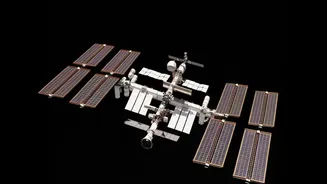
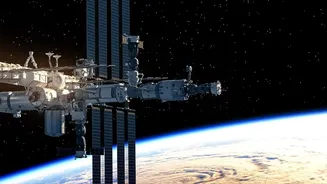
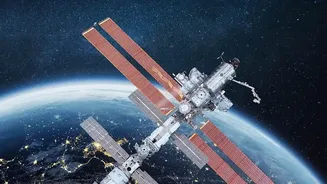
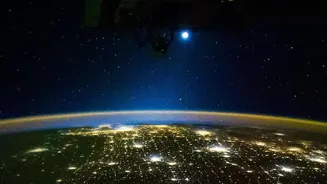
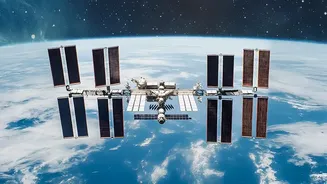
The International Space Station (ISS) is a massive orbiting laboratory, the largest human-made structure in space. Orbiting about 400 kilometres above Earth, it travels at a staggering 7.7 kilometres per second, completing a full circle of our planet
roughly every 90 minutes. What you see from the ground isn't the station's own lights, but rather sunlight reflecting off its extensive solar panels and modules. This makes it one of the brightest objects in the night sky, often outshining every star and planet except for Venus. The sight is a silent, steady, and brilliant point of light gliding gracefully across the heavens, a powerful reminder of the human presence in space.
The Perfect Time to Look Up
Timing is everything for a successful ISS sighting. The best opportunities occur shortly after sunset or just before sunrise. This is the magic window when the sky is dark enough for the station to be visible, but the ISS itself, at its high altitude, is still bathed in sunlight. During the middle of the night, the station is in Earth's shadow and invisible to us. Likewise, during the day, the bright sky washes it out completely. A successful flyover can last for several minutes, appearing as a bright dot rising from one part of the horizon (usually the west) and cruising silently across the sky before disappearing. Clear skies are, of course, essential for a good view.
Your Personal ISS Spotting Assistants
The secret to easily spotting the ISS lies in a handful of excellent smartphone apps designed for this very purpose. These tools use your phone's location to provide precise predictions for when the station will be visible from your specific area. Some of the most popular and reliable options include: NASA's Spot The Station: This is the official app from NASA. It’s straightforward, offering accurate flyover schedules, real-time tracking on a map, and customizable alerts. ISS Detector: A favourite among many stargazers, this app provides alerts and can even check the local weather forecast, letting you know if clouds will obstruct the view. Its premium versions can also track other objects like the Hubble Space Telescope and Starlink satellite trains. Heavens-Above: This long-standing and highly respected tool provides precise pass predictions for the ISS and a vast number of other satellites. It offers a live sky chart to show you what’s overhead at any moment and includes a night mode to preserve your night vision.
Setting Up Smart Notifications
The key feature of these apps is their ability to send you a notification minutes before a visible pass is about to happen. To set this up, you'll first need to download one of the apps and grant it permission to access your location and send notifications. In the app's settings, you can typically customize the alerts. For example, you might choose to be notified only for passes that will be very bright or high in the sky. NASA's app sends push notifications with the date, time, and duration of the viewing. ISS Detector is well-known for its reliable alerts. Once configured, your phone will do the work, giving you a heads-up to go outside and look up at just the right moment.
Tips for an Unforgettable Sighting
Once your app alerts you to an upcoming flyover, you're just a few steps away from an amazing experience. First, find a spot with a clear view of the sky, away from tall buildings or trees. Give your eyes a few minutes to adjust to the darkness. You don't need any special equipment; the ISS is easily visible to the naked eye. It will look like a fast-moving airplane but will not have blinking lights. Its light will be steady and bright. While binoculars can enhance the view, they are not necessary for your first sighting. The apps will tell you the direction in which the station will appear (e.g., 'from the southwest') and where it will disappear, allowing you to trace its path across the sky.