



The Old Way: Stock Photos and Compromise
For decades, creating a realistic mockup for a client pitch involved a familiar, often frustrating, process. A creative director or designer would need to present a new product, ad campaign, or architectural design in a compelling context. This usually
meant hours spent scrolling through stock photography websites, searching for an image that was *almost* right. The lighting might be off, the setting not quite specific enough, or the perfect angle simply unavailable. The alternative was a custom photoshoot, which was often prohibitively expensive and time-consuming for a project that hadn't even been approved yet. The result was a compromise: a mood board of disconnected images or a Photoshop composite that looked slightly unnatural, leaving the client to "use their imagination" to fill in the blanks. This critical step of selling the vision was often hampered by the very tools meant to enable it.
Enter Generative AI: The Vision Realised
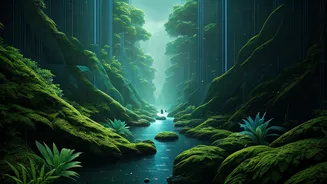
Generative AI tools like Midjourney, DALL-E 3, and Stable Diffusion have fundamentally changed this equation. Instead of searching for a pre-existing image, artists can now create a completely new, bespoke one from a simple text description. They can specify the exact environment, time of day, lighting conditions, and even the architectural style they need. Need to show a new line of trekking gear on a misty, volcanic black sand beach in Iceland at sunrise? Or a luxury watch on the wrist of a person in a futuristic, neon-lit Tokyo cafe? A few carefully crafted prompts can generate dozens of high-fidelity options in minutes. This shift from searching to creating gives artists unprecedented control over the context of their work. It’s no longer about finding the closest fit; it’s about crafting the perfect setting from scratch, tailored precisely to the client's brand and the project's goals.
The Workflow: From Prompt to Pitch Deck
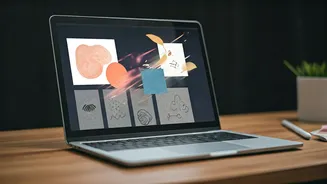
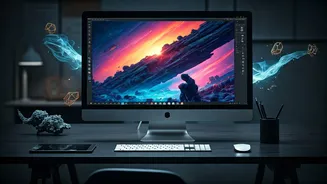
The practical application of this technology is surprisingly straightforward for skilled creatives. The process typically starts with the artist generating a series of background images using an AI platform. This is an iterative process of refining text prompts to dial in the details—adjusting the mood from 'sunny and optimistic' to 'dramatic and moody,' or changing the camera angle from a wide shot to a close-up. Once they have a background that perfectly captures the desired atmosphere, they bring it into a program like Adobe Photoshop. From there, they can composite their actual product, 3D model, or subject into the AI-generated scene. They can then match the lighting and colour grading to create a seamless and photorealistic final image. What once took days of sourcing, shooting, or complex digital painting can now be accomplished in a matter of hours, allowing for more experimentation and a much more polished final presentation.
The Business Advantage: Speed, Cost, and Clarity
The benefits for agencies, studios, and freelance artists are immense. The most obvious advantage is the dramatic reduction in time and cost. The budget for expensive stock photo licences or location shoots for preliminary concepts is virtually eliminated. This speed allows creative teams to present multiple, fully-realised concepts to a client, increasing the odds of hitting the mark on the first try. More importantly, it improves communication and reduces ambiguity. A hyper-realistic mockup leaves little room for misinterpretation. Clients can see exactly what the final product or campaign will look like in its intended environment, which helps them make decisions with greater confidence. This clarity accelerates the approval process, shortens project timelines, and builds stronger client trust, as they feel more involved and understood from the very beginning.
The Artist's Role Is More Crucial Than Ever
Despite fears of technology making creative roles obsolete, this trend demonstrates the opposite. Generative AI is not a replacement for an artist; it’s a powerful new tool in their arsenal. The quality of the output is entirely dependent on the skill of the user. It takes a trained eye to write an effective prompt that understands the principles of composition, lighting, and art direction. It requires taste and curation to select the best AI-generated options from a sea of mediocre ones. And it demands technical skill to seamlessly integrate the generated backdrop with the primary subject. In this new workflow, the artist transitions from a mere image-maker to a 'creative synthesiser'—someone who can blend human vision with machine-generated elements to produce a result that is greater than the sum of its parts. This technology doesn't replace the artist; it amplifies their ability to execute a vision.