








Beyond the Basic Hold: What Are Dynamic Planks?
The traditional forearm plank is an isometric exercise, meaning you hold a static position for a set time. It's great for building a baseline of muscular endurance. [1, 4] Dynamic planks, however, introduce movement while maintaining the plank position.
[4] This could involve moving your arms, legs, or hips. [1] The goal is to challenge your stability, forcing your core muscles to work harder to prevent your torso from rotating or falling. [1] This constant adaptation is what builds functional strength—the kind you use in sports and everyday life, like lifting a heavy box or maintaining balance on an uneven surface. [1, 13] While holding a plank for minutes on end might seem impressive, experts agree that once you can hold good form for about 60 seconds, simply adding more time yields diminishing returns for strength. [1] Dynamic variations offer a more potent stimulus for a truly strong and resilient core.
Why Dynamic Movement Builds a 'Bulletproof' Core
Adding movement to your plank transforms it from a static test of endurance into a full-body stability challenge. Dynamic planks engage a wider array of muscles than their static counterparts. [13, 19] Movements like hip dips or leg lifts fire up your obliques (the muscles on your sides), glutes, and the deep transverse abdominis—your body's natural corset—to a much higher degree. [12, 14, 18] This enhanced muscle activation is key to building what many call a 'bulletproof' core: one that is not just strong, but also intelligent and reactive. It learns to stabilize the spine while the limbs are in motion, which is crucial for preventing lower back pain and improving athletic performance. [1, 4, 19] Because these exercises are more intense and engaging, they also help you avoid the boredom that leads to a breakdown in form—a common issue with long static holds that can put stress on the lower back. [1, 5]
The Foundation: Mastering the Perfect Forearm Plank
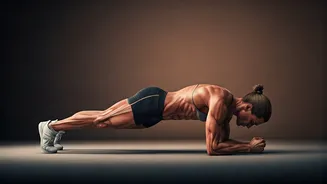
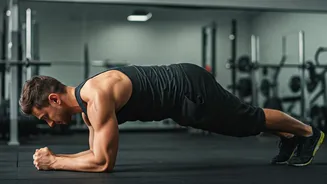
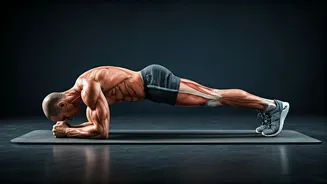
Before you can add movement, you must perfect the foundation. An incorrect plank is ineffective and can lead to injury. [5] To set up a proper forearm plank, start by kneeling on the floor. Lower your forearms so your elbows are stacked directly under your shoulders. [3, 8] You can clasp your hands or keep your forearms parallel. [2] Extend your legs back one at a time, coming onto your toes. Your body should form a single, straight line from your head to your heels. [7] To achieve this, you must actively engage multiple muscle groups. Squeeze your glutes and quads, and gently tuck your pelvis to prevent your hips from sagging. [8, 15] Draw your belly button in toward your spine to activate your deep core muscles. [8, 12] Keep your gaze down at the floor, slightly ahead of your hands, to ensure your neck remains in a neutral position. [6, 8] Breathe steadily. Hold this perfect form before attempting any dynamic variations.
Three Dynamic Planks to Get You Started
Once your static plank is solid, introduce these three variations to challenge your core in new ways. 1. **Plank with Hip Dips:** From a solid forearm plank, slowly rotate your hips and dip your left hip toward the floor until it’s just a few inches away. Return to the center with control, then repeat on the right side. [18, 21] This movement specifically targets your obliques. [18] 2. **Forearm Plank with Alternating Reach:** Widen your feet for a more stable base. Keeping your hips as level as possible, slowly lift and extend your right arm straight out in front of you. [3] Hold for a moment, then return your forearm to the floor and repeat with your left arm. [21] This challenges your body's ability to resist rotation. 3. **Plank Jacks:** From your forearm plank, jump your feet out to the sides, wider than your mat, and then jump them back together, like a horizontal jumping jack. [1] This variation adds a cardiovascular element and further engages your glutes and hips. [2]
Common Mistakes and How to Fix Them
Proper form is everything. Watch out for these common errors that compromise safety and effectiveness. * **Sagging Hips:** This is the most common mistake and a sign that your core has fatigued. [5, 7] It places significant strain on your lower back. [1] **The Fix:** Re-engage your abs by pulling your navel to your spine and squeeze your glutes. If you can't lift your hips, it's time to rest. [5, 8] * **Piking Hips:** Lifting your butt too high in the air makes the plank easier but takes the work away from your core. [7] **The Fix:** Lower your hips until your body returns to that straight line from head to heels. [7] * **Dropping Your Head or Looking Up:** This can strain your neck. [6] **The Fix:** Keep your gaze on the floor just ahead of your hands to maintain a neutral spine. [6, 8]