


1. A Day on Venus is Longer Than a Year
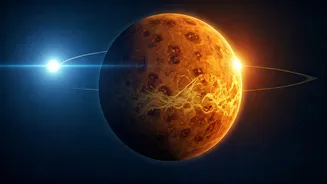
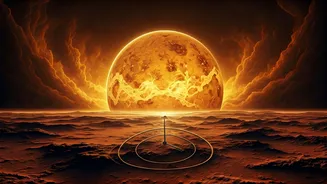
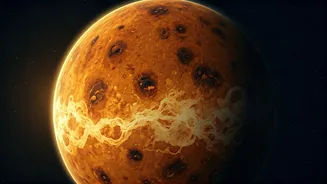
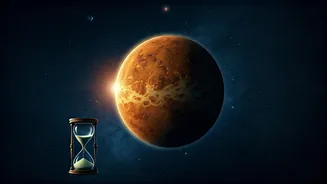
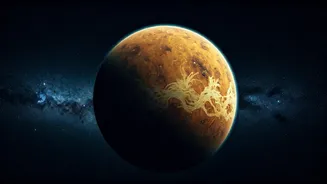
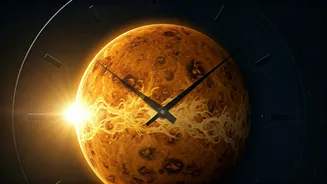
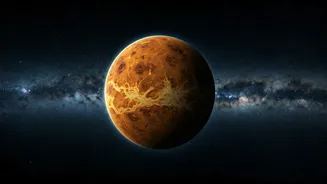
This is the fact that breaks most people’s brains. Let’s get it straight: Venus takes about 225 Earth days to complete one orbit around the Sun. That’s its year. However, it takes 243 Earth days for Venus to rotate once on its axis. So, its day is longer
than its year. Imagine celebrating your first birthday before you’ve even lived through a full day-night cycle. This incredibly slow rotation is a core reason for many of the planet’s other strange features. Astronomers are still debating the exact cause, but leading theories suggest a massive collision in its distant past or the thick atmosphere creating a drag that slowed its spin over billions of years.
2. It Spins the Wrong Way
To make things even stranger, Venus spins backwards. Unlike Earth and most other planets in our solar system, which rotate counter-clockwise (prograde), Venus has what’s called a retrograde rotation. It spins clockwise. If you could stand on the surface of Venus (and survive), you would see the Sun rise in the west and set in the east. Only one other major planet, Uranus, is as weird—it spins on its side. This backward spin is another cosmic mystery. The most popular explanation is that Venus was struck by a large asteroid or planetoid early in its history, which literally knocked it off its original spin and sent it spinning in the opposite direction.
3. The 'Solar Day' is Actually Shorter
Here's where it gets really mind-bending. While a rotational day (a sidereal day) is 243 Earth days, the time from one sunrise to the next (a solar day) is much shorter. Because Venus is rotating backwards while it moves forward in its orbit around the sun, the two motions work against each other in a strange way. The result is that a solar day on Venus is about 117 Earth days long. This means that in one Venusian year (225 Earth days), the planet experiences just under two full sunrises and sunsets. You would live through almost two full “days” in a single year, even though one rotation takes longer than a year. It's a paradox that makes our 24-hour cycle feel wonderfully simple.
4. The Atmosphere is a Crushing Nightmare
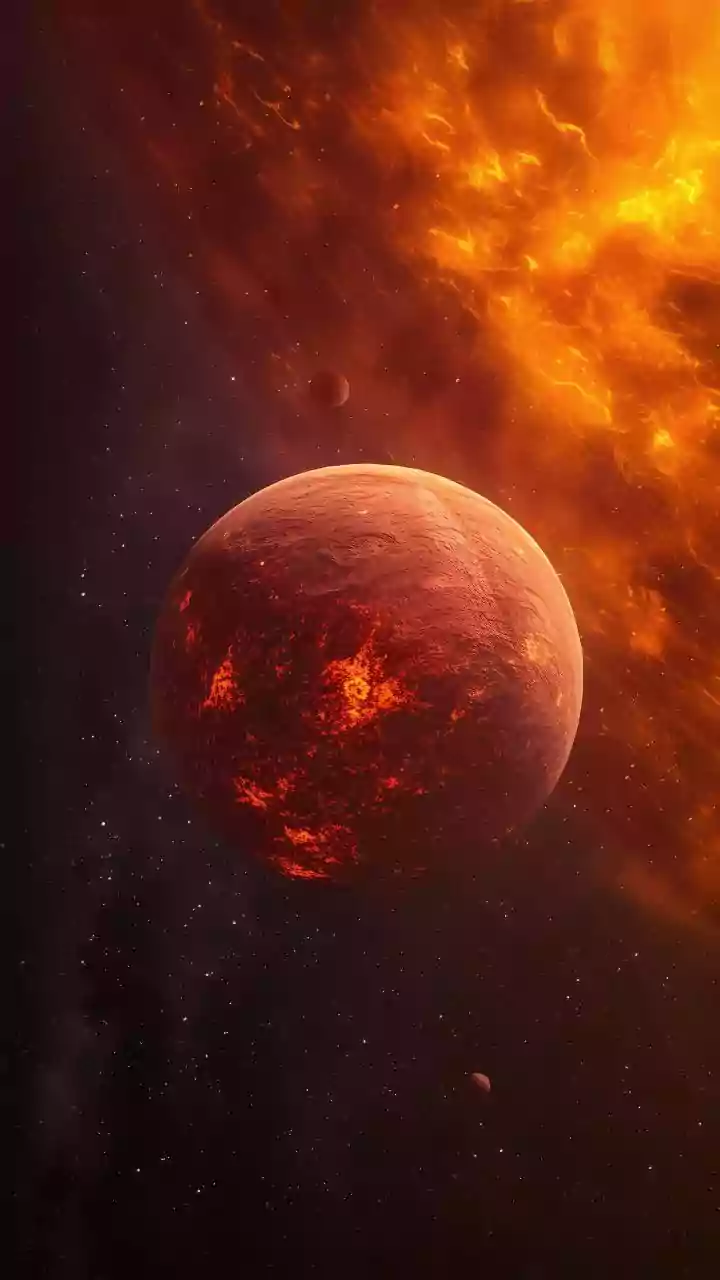
The slow, strange day on Venus is directly linked to its hellish environment. The planet is shrouded in a thick, toxic atmosphere composed mainly of carbon dioxide, with clouds of sulfuric acid. The atmospheric pressure on the surface is over 90 times that of Earth—equivalent to being nearly a kilometre deep in the ocean. This dense blanket traps heat in a runaway greenhouse effect, making Venus the hottest planet in the solar system. Surface temperatures average a scorching 465°C, hot enough to melt lead. The slow rotation means there's no relief; the night side is just as blisteringly hot as the day side.
5. Why We Call It Earth's 'Evil Twin'
For all its hostility, Venus is often called Earth’s twin. The two planets are similar in size, mass, and density, and they are made of similar rocky materials. This makes its current state even more fascinating to scientists. Why did two planets that started so similarly end up so different? Understanding Venus’s slow day and runaway greenhouse effect isn't just about collecting trivia; it's a crucial case study in planetary evolution. It helps us understand what makes Earth’s environment so uniquely stable and precious, and serves as a stark warning about how a planet's climate can go catastrophically wrong.