



The Science Behind the Glow
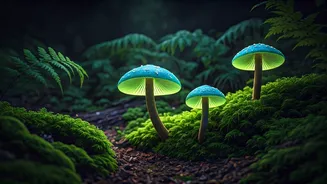
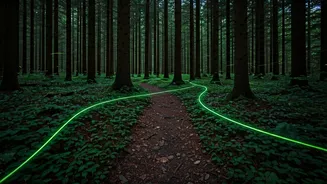
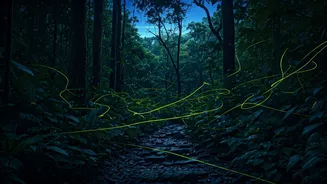
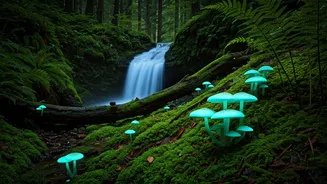
This magical light, often called 'foxfire,' is a natural process known as bioluminescence. It’s the same marvel that makes fireflies glitter. In fungi, this glow is caused by a chemical reaction involving a compound called luciferin and an enzyme, luciferase.
When these two interact with oxygen, they produce energy in the form of a soft, ethereal light. Scientists believe this glow serves a purpose. By illuminating the dark forest floor, the mushrooms may attract insects. These insects then inadvertently pick up and disperse the mushroom's spores, helping the fungus to reproduce and spread to new areas. It’s a clever, silent, and beautiful survival strategy.
Meet India's Glowing Fungi
While over 100 species of fungi are known to be bioluminescent worldwide, a few have been documented right here in India. One of the most significant recent discoveries was *Roridomyces phyllostachydis*. This tiny mushroom, with a cap just a few millimetres wide, emits a continuous green light from its stem, or stipe. First spotted by locals, it was formally identified by scientists in 2020. Other glowing species from the *Mycena* genus, known as 'bleeding mushrooms,' have also been found. They don't just glow; they are a living testament to the incredible biodiversity hidden in our country’s forests, waiting to be discovered.
Prime Spotting Location: Meghalaya
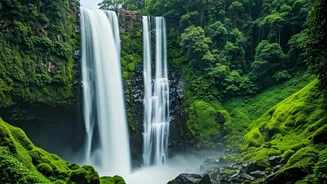
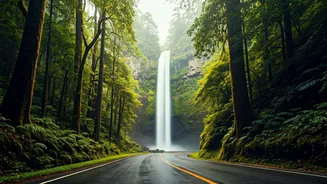
The state of Meghalaya in Northeast India is the epicentre of this phenomenon. The discovery of *Roridomyces phyllostachydis* has put the East Khasi and West Jaintia Hills districts on the global map for fungi enthusiasts. Here, the mushrooms thrive in the damp, humid conditions of bamboo forests, often near the streams and waterfalls the state is famous for. Local communities have known about these glowing fungi for generations, even using them as natural torches to navigate the dense forests at night. For the best chance of a sighting, venture into the forests near Mawlynnong or Shnongpdeng during the monsoon season.
Another Hotspot: The Western Ghats
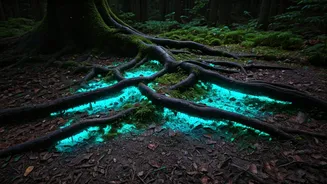
The magic isn't confined to the Northeast. The lush, biodiverse Western Ghats also play host to these glowing wonders, particularly during the heavy monsoon rains from June to October. In Goa, especially in the Mhadei and Bhimgad wildlife sanctuaries, trekkers have reported seeing entire patches of forest floor and decaying logs shimmering with a faint green light. Similar sightings have been recorded in the forests of Maharashtra. These sightings are often of a different species, typically from the *Mycena* genus, proving that this enchanting spectacle is a widespread, if rarely seen, feature of India’s incredible forest ecosystems.
Your Guide to a Glowing Expedition
Want to try and spot them yourself? Timing and patience are everything.
Best Season: Plan your trip during the monsoon (roughly June to October), as the high humidity is essential for the fungi to fruit and glow.
Best Time: Go out on a dark, moonless night. The darker your surroundings, the brighter the glow will appear. You’ll need to let your eyes adjust to the darkness for at least 10-15 minutes.
What to Do: Hire a local guide. They know the forests intimately and can lead you to the exact spots where the mushrooms are known to grow. Walk slowly, turn off your torch, and scan the forest floor, especially decaying logs, bamboo groves, and leaf litter. If you must use a light, cover it with a red filter, as red light is less disruptive to your night vision and to nocturnal wildlife.
What Not to Do: Never pick the mushrooms. They are a fragile part of the ecosystem. Observe, photograph (it’s difficult but possible with a tripod and long exposure), and leave them undisturbed for others to enjoy.