
The Anatomy of a Perfect Bowl
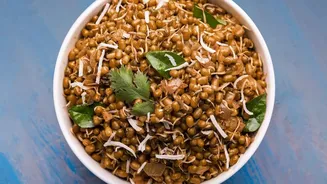
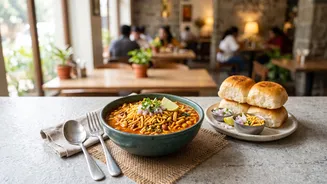
To understand Misal Pav is to understand its components, as the name 'misal' literally means 'mixture' in Marathi. The dish is a carefully constructed assembly of different textures and flavours. At its heart is the 'usal,' a curry made from sprouted
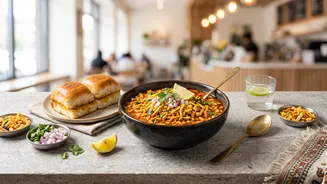
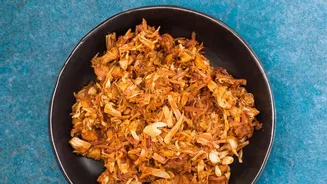
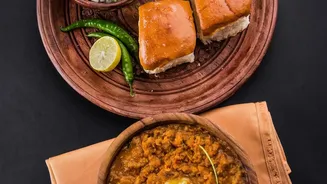
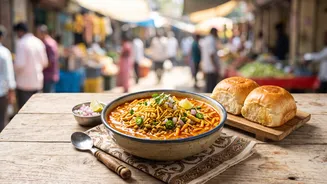
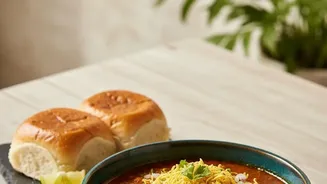
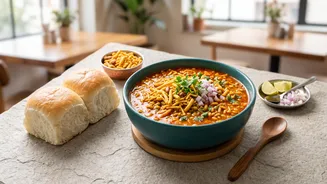
moth beans, known as matki. This nutritious base is then drenched in a fiery, thin gravy called 'kat' or 'tarri,' which provides the signature heat and vibrant red colour. On top of this spicy foundation comes a generous layer of 'farsan'—a crunchy, savoury mix of fried snacks that provides the all-important textural contrast. The dish is finished with a garnish of finely chopped raw onions for sharpness, fresh coriander, and a crucial wedge of lemon to add a bright, tangy kick. All of this is served alongside soft, fluffy bread rolls called 'pav,' which are perfect for soaking up every last drop of the flavourful gravy.
A Tale of Regional Pride
While Misal Pav is a staple across Maharashtra, it is not a monolithic dish. Each region has its own proud variation, sparking friendly debates among food lovers about which version is supreme. The Kolhapuri Misal is legendary for its intense spiciness, using a special 'kanda-lasun' (onion-garlic) masala that gives it a fiery reputation not for the faint of heart. In contrast, Puneri Misal is generally milder and can have a slightly sweet and tangy profile, often including potato and sometimes garnished with poha (flattened rice). Nashik's version strikes a balance between the two, sometimes featuring a unique black gravy ('kala rassa') made with a special blend of roasted spices. These regional differences showcase how a single dish can adapt to local palates and ingredients while retaining its core identity.
More Than Just Breakfast
Misal Pav's story is deeply woven into the cultural fabric of Maharashtra. It originated as a hearty and affordable meal for mill workers and labourers who needed sustained energy for a long day's work. This humble beginning has made it a great social leveller; a dish enjoyed by everyone from students to office workers, served in bustling street-side stalls and dedicated 'misal houses'. It's a breakfast item, a satisfying lunch, and a popular snack all in one. Enjoying misal is often a communal and interactive experience—diners are encouraged to customise their bowl by adding more 'kat' for extra spice or squeezing lemon to their liking, making it a participatory meal rather than a static recipe.
The Art of Eating Misal
There's a certain technique to enjoying Misal Pav to its fullest. The first step is to assemble it correctly. The hot 'usal' and 'kat' go into the bowl first. Then, it's topped with the chopped onions and a liberal amount of crunchy farsan. Before diving in, a squeeze of fresh lime juice is essential to cut through the richness and spice. The best way to eat it is to tear off a piece of the soft pav, use it to scoop up a bit of everything—the soft sprouts, the spicy gravy, the crunchy farsan, and the sharp onion—and enjoy the explosion of flavours and textures in one perfect bite. The pav acts as the ideal vessel, soaking up the gravy while providing a soft counterpoint to the crunchy toppings.