






The Core Engineering Disciplines
A Bachelor's degree (B.E. or B.Tech) in a core engineering field remains the most common route into India's space industry. While Aerospace Engineering is the most direct specialisation, covering spacecraft design, propulsion, and aerodynamics, it's far
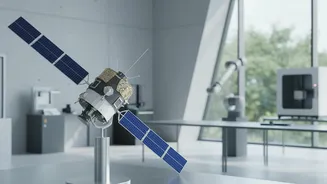
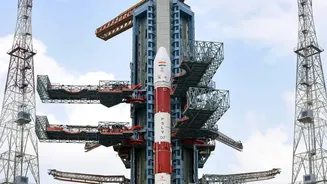
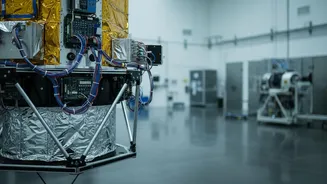
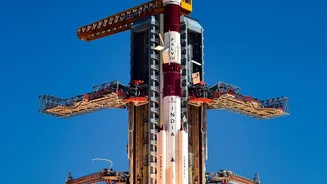
from the only option. Mechanical Engineering is crucial for designing the physical systems, from rocket structures to satellite components. Electronics and Communication Engineering forms the backbone of any space mission, dealing with satellite payloads, navigation, and control systems. Both the Indian Space Research Organisation (ISRO) and private companies like Skyroot Aerospace and Agnikul Cosmos actively recruit graduates from these foundational streams. A strong academic record, typically with a minimum aggregate of 65% or a CGPA of 6.84, is often a prerequisite for entry-level scientist and engineer roles at ISRO.
Computer Science and Software
Modern space exploration runs on code. From the flight software that guides rockets to the AI/ML algorithms that analyse satellite data, Computer Science and IT professionals are indispensable. Roles include developing mission control software, creating complex simulations, ensuring cybersecurity for ground stations, and building the platforms that process vast amounts of data sent from space. Private companies like Pixxel, which builds hyperspectral imaging satellites, heavily recruit software engineers and data scientists to manage their constellations and develop their analytics platforms. Aspiring students should focus on programming languages like Python and C++, and gain expertise in areas like embedded systems, data structures, and machine learning.
The Foundation of Pure Sciences
For those inclined towards research and discovery, a background in pure sciences is vital. A Bachelor's (B.Sc) followed by a Master's (M.Sc) or a PhD in Physics, Astrophysics, or Astronomy can lead to a career as a research scientist. These experts work on fundamental questions about the universe, model celestial phenomena, and contribute to the scientific goals of missions like Chandrayaan or Aditya-L1. A degree in Mathematics is also highly valuable, providing the essential skills for orbital mechanics, trajectory calculations, and complex data modelling. Institutions like the Indian Institute of Astrophysics (IIA) and the Physical Research Laboratory (PRL) are key hubs for space science research.
Specialised and Emerging Fields
As the industry evolves, so do the required specialisations. A Master's (M.Tech) or PhD can provide a competitive edge. Fields like Material Science are critical for developing advanced alloys and composites that can withstand the extreme conditions of space. Chemical Engineering is key for creating new and more efficient rocket propellants. Another rapidly growing area is Remote Sensing and GIS (Geographic Information System). Professionals in this domain interpret satellite imagery for applications in agriculture, disaster management, and urban planning, with companies like SatSure being major recruiters.
Beyond Science and Engineering
The privatisation of space has created a need for professionals with diverse skill sets. The growth of over 300 space startups in India means there are now roles in business development, marketing, finance, and human resources within space companies. Furthermore, as private companies launch satellites and build rockets, a new domain of Space Law and Policy has emerged. Legal experts are needed to navigate international treaties, licensing, and regulatory compliance, with bodies like IN-SPACe shaping this field. An engineering degree paired with an MBA is also a pathway for management roles within the industry.
Where to Study and What to Develop
The Indian Institute of Space Science and Technology (IIST) in Thiruvananthapuram, which has a direct link to ISRO, is a premier institution. Beyond IIST, the IITs, NITs, and other top-tier engineering colleges are major talent pools for both ISRO and private firms. Regardless of the degree, gaining practical experience through internships, participating in student satellite projects, and developing strong problem-solving and teamwork skills are crucial for standing out in this competitive and rapidly growing sector.