




A Perfect Pair for Winter Wellness
The combination of sesame and jaggery is a cornerstone of Indian winter diets for good reason. According to Ayurvedic tradition, both ingredients are considered 'warming' foods, helping the body generate and retain heat during colder months. Jaggery,
an unrefined sugar, provides a natural energy boost to combat winter lethargy, while also being a source of iron and magnesium. Sesame seeds are nutritional powerhouses, packed with calcium, healthy fats, and protein. This duo works in synergy; sesame offers minerals and healthy fats, while jaggery provides quick energy and aids digestion. Together, they help boost immunity, strengthen bones, and keep seasonal ailments like colds and coughs at bay. This ancient wisdom is why sweets like til-gur ladoos are more than just a treat—they are a form of seasonal nourishment.
A Sweet for Every Celebration
The tradition of eating til and gur is deeply woven into India's winter festivals. Most notably, Makar Sankranti, the harvest festival celebrating the sun's northward journey and the promise of longer days, is incomplete without these sweets. In Maharashtra, the greeting 'tilgul ghya, goad goad bola' (take this sesame and jaggery and speak sweet words) embodies the spirit of the festival, where exchanging tilgul is a gesture of goodwill and burying past grievances. This festival, known by various names across the country like Lohri in Punjab and Pongal in Tamil Nadu, often features these key ingredients. The sticky jaggery holding countless sesame seeds together is seen as a symbol of friendship and togetherness, making these sweets the edible centerpiece of winter celebrations.
Gajak, Chikki, and Ladoos Explained
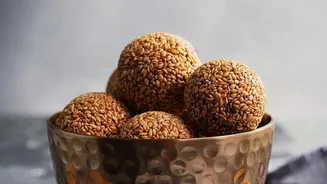
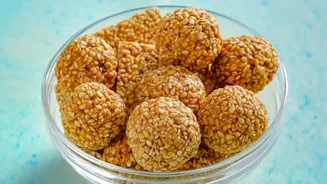
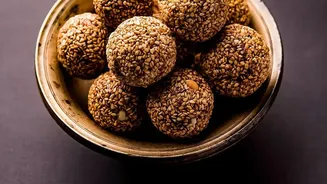
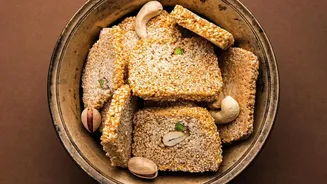
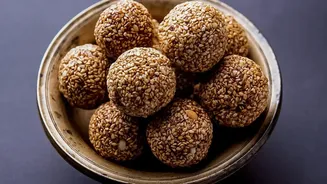
While the base ingredients are often the same, the world of til-gur sweets is incredibly diverse. Gajak, a specialty from Rajasthan and Madhya Pradesh, is made by hand-hammering a hot mixture of sesame seeds and jaggery for hours. This process creates thin, flaky, and brittle layers that snap cleanly. Chikki, most popular in Maharashtra and Gujarat, is typically made with peanuts but also has a sesame variant. It’s a harder, denser brittle made by setting the nut and jaggery mixture into flat, crunchy slabs. Til Ladoos are perhaps the most common homemade version, where roasted sesame seeds are mixed with molten jaggery and rolled into round balls. Other regional variations include Tilkut, a softer, crumblier sweet from Bihar and Rajasthan, and Revdi, small, coin-sized sesame candies.
The Joy of Homemade Til-Gur
Beyond the health benefits and cultural significance, there is a simple joy in preparing til-gur sweets at home. The process itself is a sensory experience, from the nutty aroma of roasting sesame seeds to the earthy sweetness of melting jaggery. Making Til Ladoos, for example, is a straightforward process: roast the sesame seeds, melt the jaggery into a bubbling syrup, mix them together, and quickly roll them into balls while the mixture is still warm. It’s a tradition that brings families together in the kitchen, a practice passed down through generations. These homemade treats, free from preservatives and full of love, offer a taste of nostalgia and a connection to the rhythms of the season, reminding us that sometimes the simplest ingredients create the most profound comfort.