



The Short Answer: Most UPI Payments Are Still Free for You
First, the good news: for the overwhelming majority of users, UPI remains free. The government and the National Payments Corporation of India (NPCI) have confirmed that customers will not be charged for making normal UPI payments. Specifically, all person-to-person
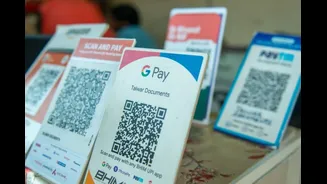
(P2P) transfers are completely free, regardless of the amount. So, sending money to friends, family, or your landlord will not cost you anything. Furthermore, person-to-merchant (P2M) transactions, like paying at your local kirana store or for a cab ride, also remain free for you, the customer.
So, What's the Fuss About? The New Merchant Fee
The confusion stems from a new rule effective October 15, 2026, which introduces a Merchant Discount Rate (MDR) on certain transactions. This is a fee that eligible merchants must pay for processing some UPI payments. It is not a charge levied on the customer. This MDR is set at 0.4% for specific merchant transactions above ₹2,000. For very large transactions of ₹75,000 or more, the fee is capped at a maximum of ₹300. The key takeaway is that this is a cost for the business receiving the money, not for the individual sending it. The government has explicitly advised banks to ensure merchants do not pass this cost on to customers.
Which Transactions Attract This Merchant Fee?
The 0.4% MDR applies specifically to Person-to-Merchant (P2M) UPI payments that are over the ₹2,000 threshold. However, there are many important exceptions. Payments to small merchants who receive up to ₹1 lakh per month via UPI QR codes will continue to have zero MDR. Additionally, certain essential sectors have a much lower, flat fee structure. For instance, payments above ₹2,000 for railways, fuel, telecom bills, and insurance premiums will attract a flat fee of ₹5 for the merchant, not the 0.4% rate. This tiered structure is designed to support the payment ecosystem's costs without burdening most small businesses or essential services.
What About Wallet (PPI) Transactions?
This is another area of potential confusion. Payments made from a Prepaid Payment Instrument (PPI), such as a digital wallet, to a merchant for over ₹2,000 have had an interchange fee structure for some time. This fee is part of the backend settlement between the wallet provider and the merchant's bank to cover processing costs. It is not a direct charge to the customer making the payment. Over 99% of UPI transactions are direct bank-to-bank transfers, which are not affected by PPI-related interchange fees. For your daily use, if you are paying directly from your linked bank account, these charges do not apply to you.
Understanding Your Transaction Limits
It's important not to confuse transaction fees with transaction limits. Banks and UPI apps set daily transaction limits for security reasons. For most users, this limit is typically ₹1 lakh per day, though it can be higher for specific categories like education or healthcare payments. Hitting your daily limit simply means you cannot make more UPI payments until the 24-hour cycle resets. It is a security measure and has nothing to do with charges. There are no monthly quotas or limits on the number of free UPI transactions an individual can make.